Mount Taihei
Mount Taihei is a 1,170-meter-high mountain, located northeast of Akita City. It is now a mountain in its prime. The base pluton is granite. First, rocky mass, or pluton, was covered with volcanic ejecta and then uplifted by crust movement, and was subsequently eroded by rivers. This pluton dates from the Cretaceous period, 88 to 89 million years ago.
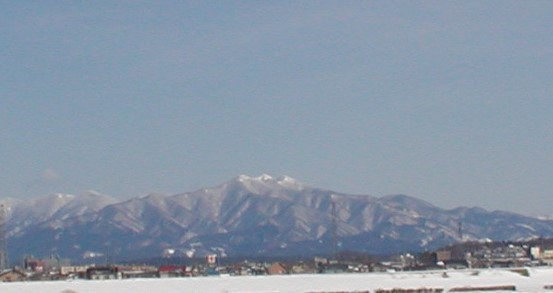
At the foot of Mount Taihei, there were rolling hills, thick bushes, and forests that were inhabited by many animals. In addition, rivers flowed through the valleys of the hills, and several species of fish lived there.
Food and water were plentiful, so those hills and tablelands were the most desirable habitat for indigenous people who lived as hunters. There are many ruins that are believed to have been inhabited by ancient people of the Middle Jōmon period (3520–2470 BC).
Later, even after people started farming, the Taihei area was rich in natural blessings, and hamlets were built, and the people settled on the fertile land suitable for agriculture deposited by rivers.
The God of the Mountain
The people who lived in the foothills of Mount Taihei had a sense of awe to the mountains, and they became conscious of the existence of “Mountain God” and came to express their gratitude to the God for the blessings of the agricultural and mountain villages. The belief in the “Mountain God” spread throughout the area.
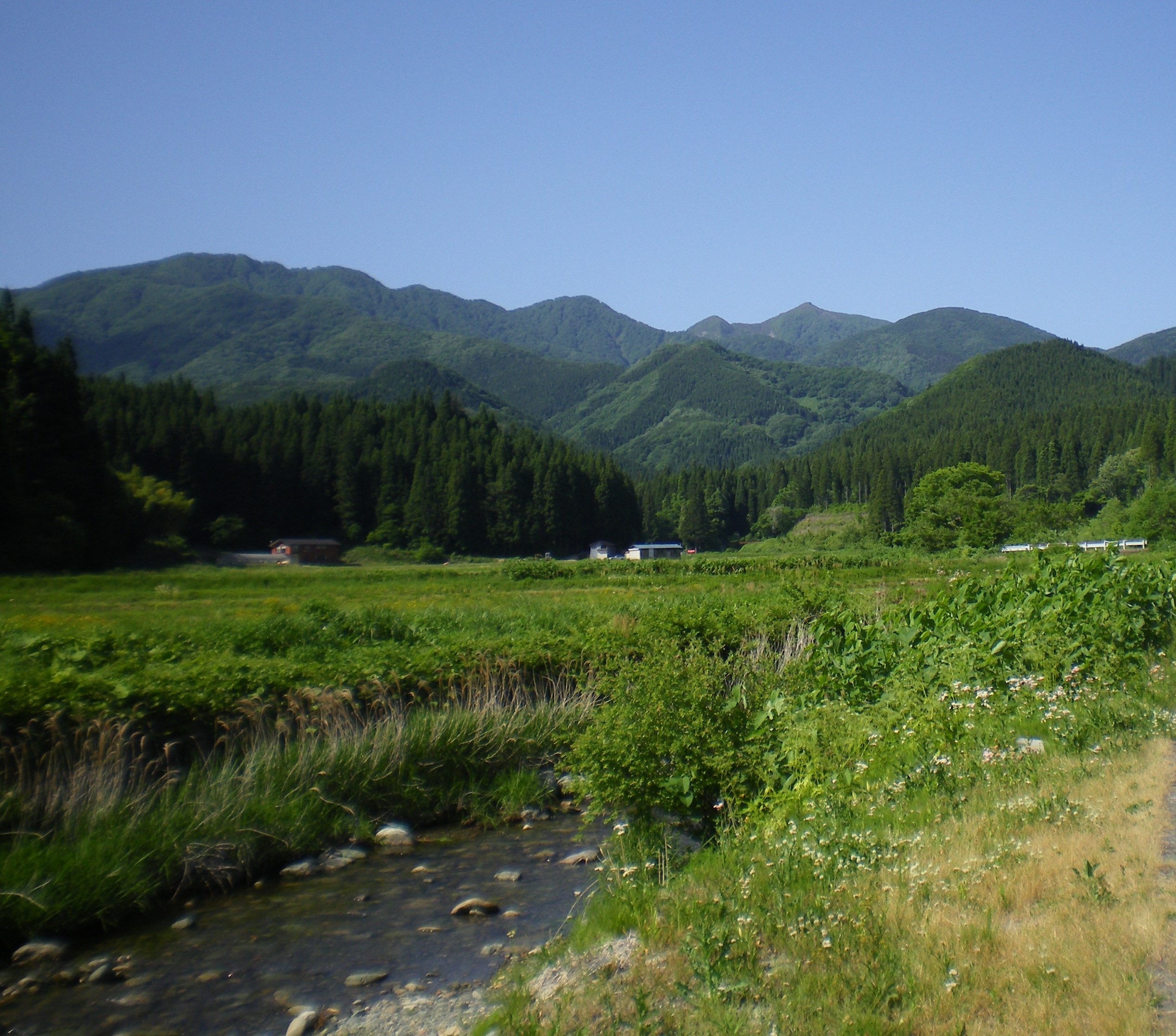
In every village, there was a small shrine dedicated to the “Mountain God” on the way to the mountain, and the people would enter the mountain after praying to the God for their safety there. Woodmen believed that the mountain god was the spirit of the trees, and that the god inhabited the trees. Hunters believed that the mountain god was the supreme one who ruled over all mountain creatures, and that the prey was a gift from the god.
The Divinity of Mount Taihei
Mount Taihei can be seen from areas far from the mountain’s foot, and can be seen from the coasts of the Sea of Japan too. Those days the mountain served as a directional target for travellers and a navigational landmark for ships on the sea.
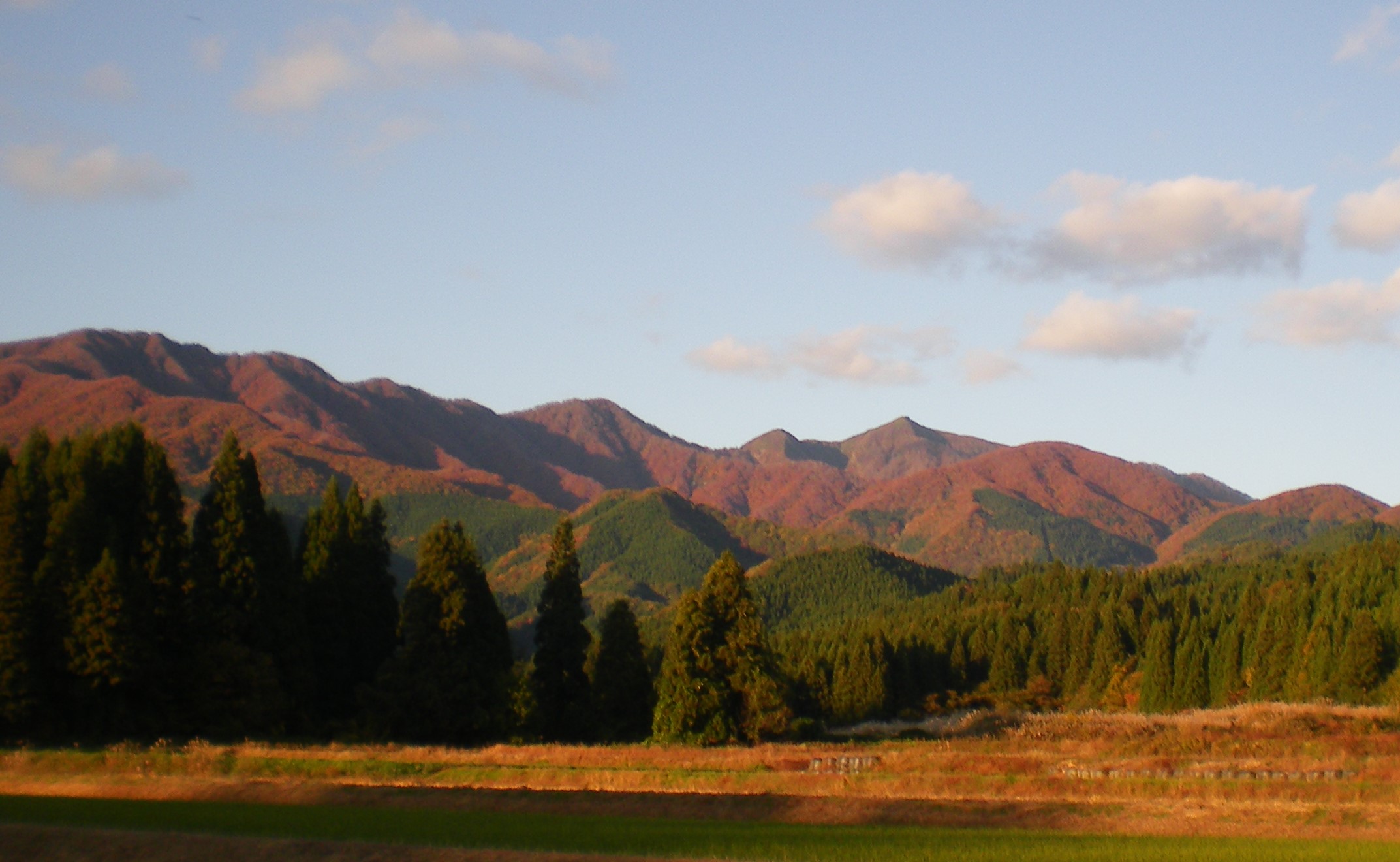
Mount Taihei, a high and beautiful mountain, became an object of worship as a god-like being for local residents. Fascinated with the beauty and glory of the mountain in the rising sun or in the setting sun, the people in the area worshipped the mountain’s divinity as the food for the mind.
En no Gyōja
The summit of Mount Taihei found the first climber in its mountain history in May, 673. It was En no Gyōja who successfully reached the top and stood there, shouting “Hurray” three times. He built a little hall of the Ascetic, and practiced asceticism of shugendō.
And they enshrined the Healing Buddha for those suffering from illness in the Taihei area, worshipped there and prayed for their healing.
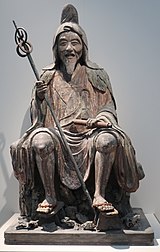
En no Gyōja, or En no Ozunu, was a seventh-century priest who later came to be considered the “founder” of shugendō, a religion combining traditional Shintō with imported Buddhism, and practiced ascetic training in mountains. He travelled to virtually every corner of the country, and persuaded many others to follow the ascetic practices of shugendō, as his cult was known.
En no Gyōja was born on January 1st, 634, in Gose, Nara Prefecture. He studied about Buddhism, and had his ascetic training in Mount Katsuragi. Then he moved to Mount Ōmine (Nara Prefecture), where he continued his ascetic training. The Yoshino/ Ōmine area is a sacred place that has been registered as part of a UNESCO World Heritage Site.
Currently, there are some shrines related to shugendō on the summit of Mount Taihei and in the Taihei area. Cultural events such as Bangaku and Bonden Festivals have been held in those shrines.
Buddhism in the Taihei area
Around the 9th century, the Hall of Amida Buddha was built in the Taihei area. The statues of the Great Buddha Amida Nyorai and the Four Heavenly Kings were put inside as its principal images. Both of the statues were carved by the Great Teacher Jikaku. The people worshipped and prayed there so that they would go to the paradise of Amida Buddha to the west as the resting place after their death.
Around 1200, Taira no Tadamori’s youngest grandson renovated the Hall of Amida Buddha to enshrine the statues of the Great Buddha Amida Nyorai and the Four Heavenly Kings. Then he named the Hall “Bankoku-zan Anraku-ji.”
In the 14th century, a temple of the Sōtō sect of Zen Buddhism was first built in the Taihei area. Currently, the five Sōtō sect temples are engaged in activities to spread Buddhism.
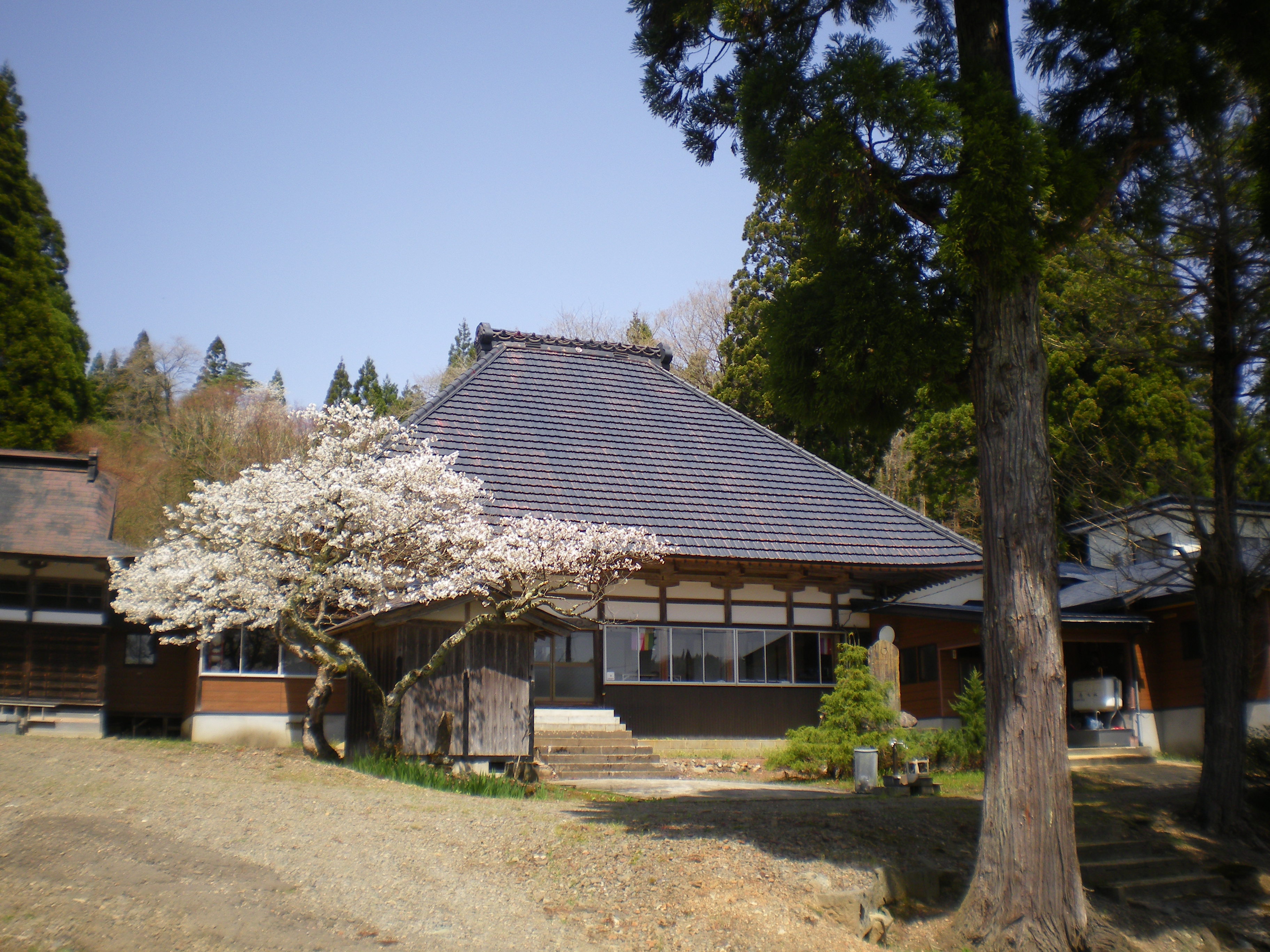
Haiku about Mount Taihei
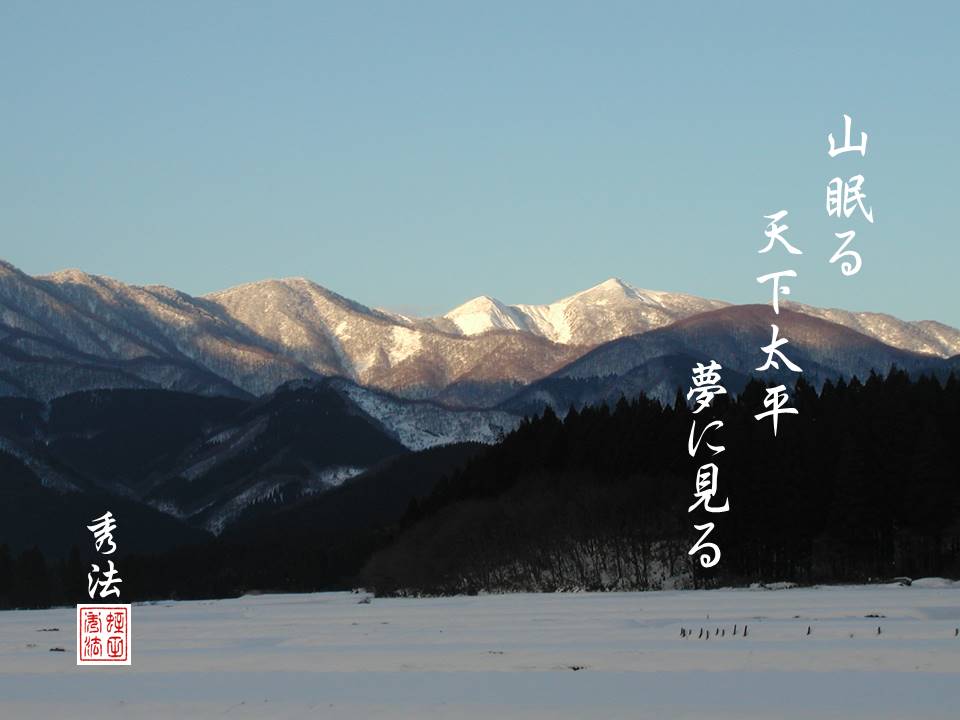
山眠る天下太平夢に見る
yama nemuru
tenka taihei
yume ni miru
yama: the mountain
nemuru: sleep
yama nemuru: season word (winter)
tenka: the world
taihei: peace
yume: dream
yume ni miru: dream a dream
Here is a piece of English haiku related to the Japanese haiku above.
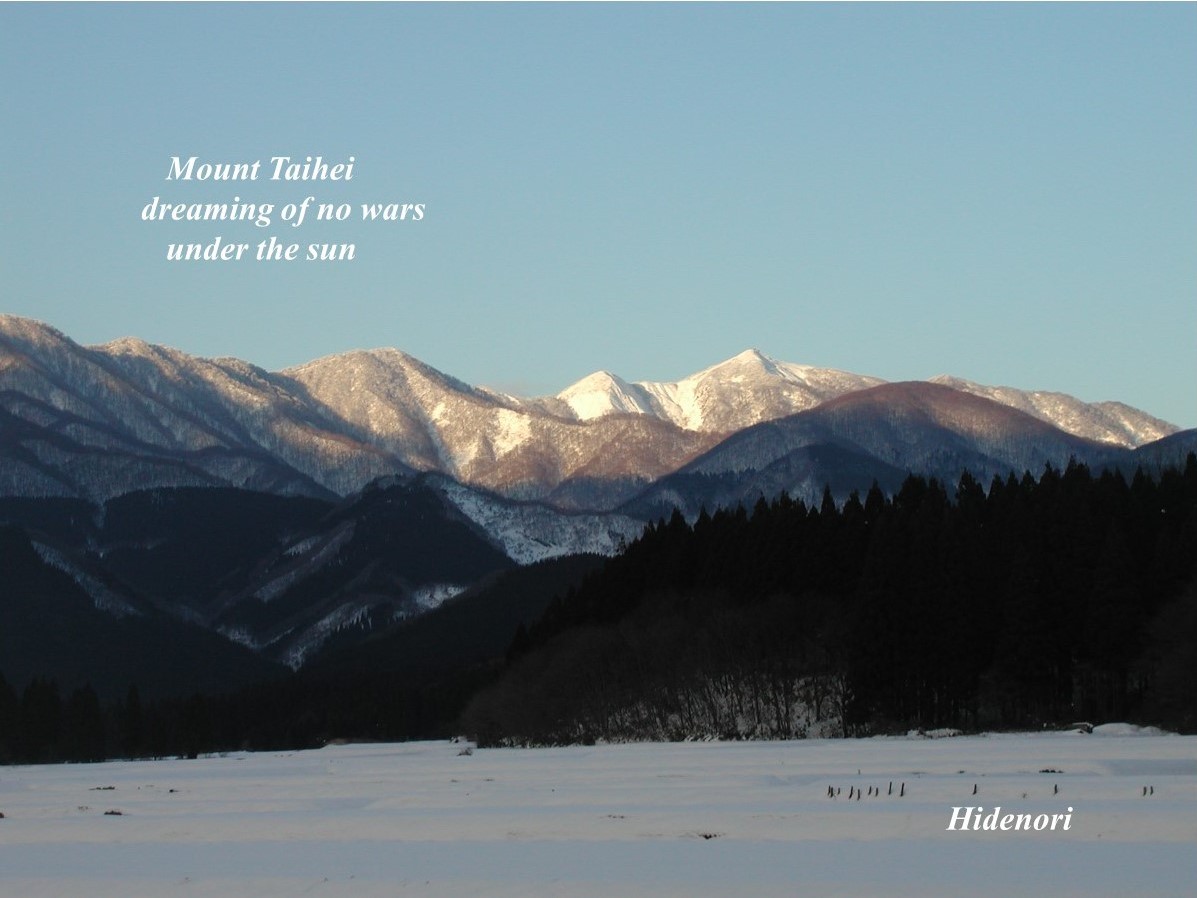
Note: Mount Taihei = Pacific Mountain
Mount Taihei: Taihei-zan (太平山, Pacific Mountain)
Taihei-zan: Taihei 太平 (peace) + zan 山 (mountain)
Pacific: pac- (平和=peace) + (-ific -化する)
Akita International Haiku Network
Hidenori Hiruta

 Akita International Haiku Network
Thank you for the history, the poetry, and the photographs. I can see why some believe as they do.