En no Gyōja 「役 行者 634-701」
En no Gyōja, or En no Ozunu, is said to have been born on January 1st, 634, in Gose, Nara Prefecture. It is also said that his mother was not blessed with a child for a long time, and that she prayed to Benzaiten, or Saraswati, and was given En no Gyōja.
In 673, En no Gyōja came to Yamaya in Akita Prefecture from Yoshino in Nara Prefecture, and successfully climbed the top of Mount Taihei. He built a little hall of the Ascetic, and practiced asceticism of shugendō. They enshrined the Healing Buddha for those suffering from illness in Akita, worshipped there and prayed for their healing.
Later, En no Gyōja was nicknamed “Miyoshi” after “Yoshino” in Nara Prefecture. This is because “Yoshino” is called “Mi-yoshino” in the literary language.
Currently, the little hall of the Ascetic turned into the shrine, where En no Gyōja is deified as one of the enshrined deities of the shrine. The name of deity is Miyoshino-ō-kami, or the Great God Miyoshi.
New Year’s Day 2010
It was on the morning of January 1st, 2010, that my house found a madder eastern sky when New Year’s day broke. The heavenly sky seemed to invite me to visit Mount Taihei in the east.

新年の太平の山眠りけり
shinnen no
taihei no yama
nemuri-keri
shinnen: New Year
no: postpositional use of “of”, “’s”.
taihei: peace
no: postpositional use of “of”
nemuri ← nemuru (verb): to sleep
keri: auxiliary verb for past and exclamation
Here is English haiku related to the Japanese haiku above.

Benzaiten, or Saraswati 「弁財天、弁才天、弁天」
On January 1st, 2010, I also visited Kainosawa Hot Springs in Yamaya area. Besides the facilities of hot springs, there is a wonderful large garden, where cherry blossoms and azaleas are blooming in spring and summer. The garden has a tea house, other buildings and statues of Buddhism too.
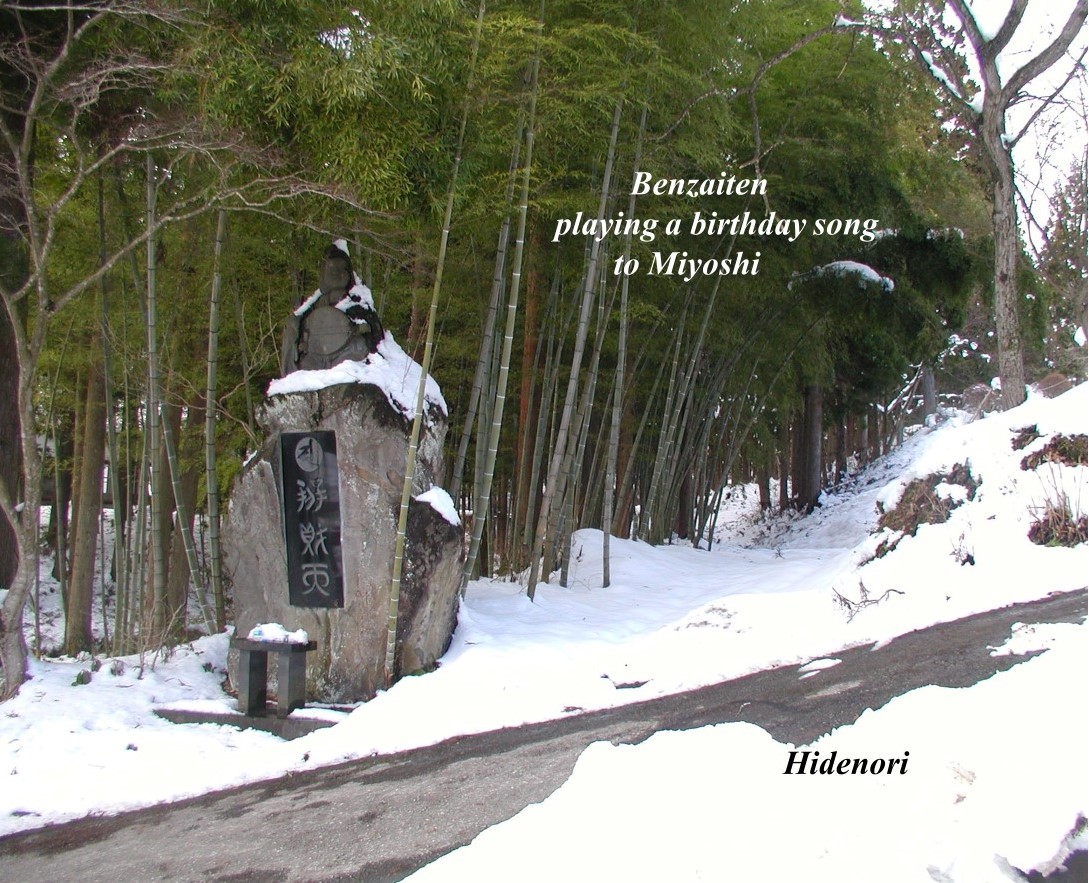
I stopped and worshipped in front of Benzaiten, a female deity of India. She is one of the seven gods of good luck, who is said to sail into port on a ship laden with treasures on New Year’s Eve to bring good luck to everyone. She seemed to play four stringed lute so as to celebrate En no Gyōja’s birthday.

弁財天三吉の生れ祝ひけり
Benzaiten
Miyosi no umare
iwai-keri
Benzaiten: Saraswati
Miyoshi: En no Gyōja
no: postpositional use of “of”, “’s”.
umare: birth
iwai ← iwau (verb): to celebrate
keri: auxiliary verb for past and exclamation
Here is English haiku related to the Japanese haiku above.
Note: SEKIYA Haruo 「関谷春雄 1929-2018」
Sekiya Haruo was born as the eldest son of the Sekiya family in 1929. His family is said to have been related to the Ishida family who produced Ishida Mitsunari「石田三成1560-1600」. He was a man of fortune and culture. He was successful in his marketing business.
Later, he owned the forest and wild fields at Kainosawa of Yamaya area in 1968, and built Sekiya villa in 1972. He began to cultivate the wild fields into paddy fields and to make a garden. He also found two hot springs in 1979 and in 1996. In the end, he made a paradise as culture and Buddhism are blended.
Yamaya Bangaku「山谷番楽」
Here is a photo of Yamaya Bangaku.
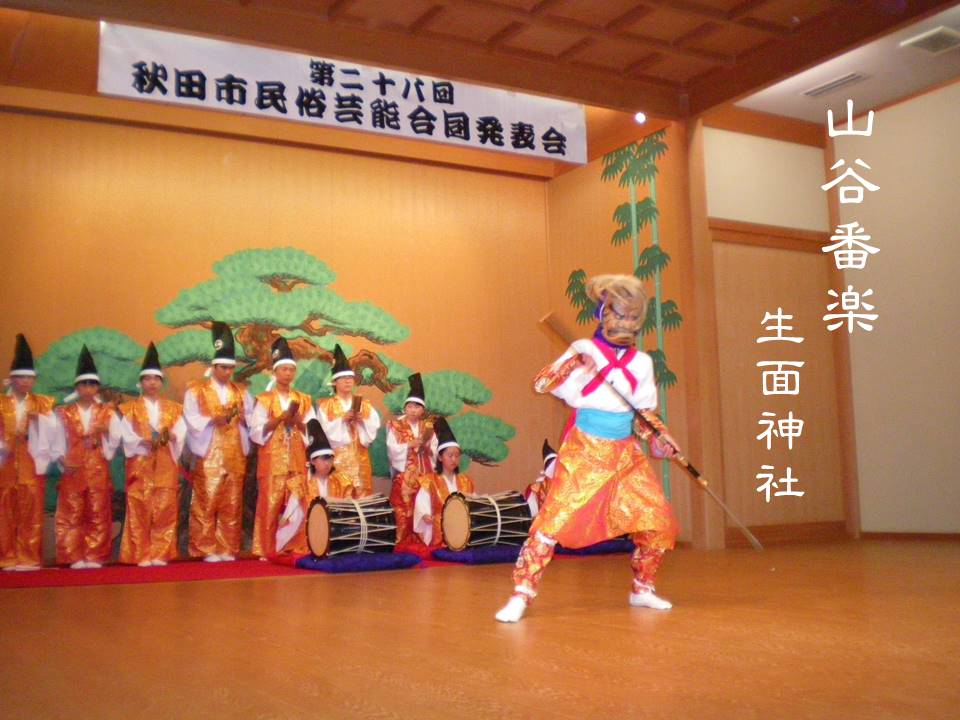
Fifteen masks were used in performing a sacred music and dancing called “Bangaku.” They are called “Live mask”「生面」in Yamaya area. The masks themselves have been deified and worshiped as the deities of Seimen-jinja Shrine「生面神社」. Some of them were carved into in the Kamakura period, so the sacred music and dancing has been passed down to the followers of the shrine from the yamabushi, or the Ascetic, in those days. Today, the children in Yamaya area are learning how to perform their sacred music and dancing, giving their performances. Yamaya Bangaku was designated as an intangible folk cultural property in Akita City in 1967.
Here is another photo of Yamaya Bangaku.
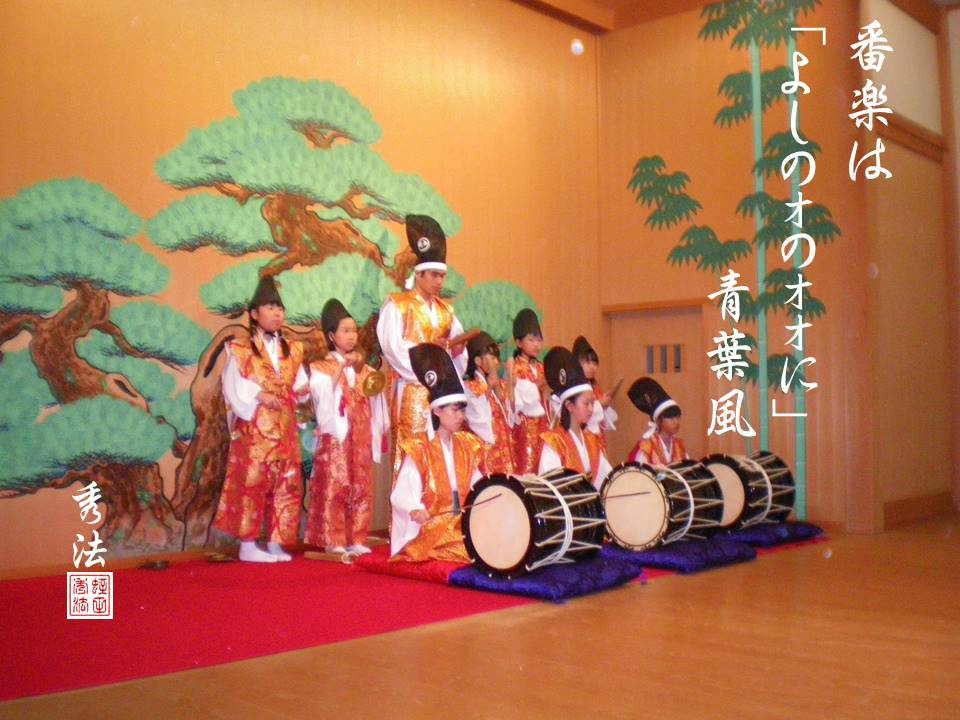
Bangaku
dedicated to Miyoshi
summer breeze
A certain member of Yamaya Bangaku Preservation Society, remembers finding the words “Yoshino-ono-oo-ni”「吉野オのオオに」in the old documents when she was a teacher at Yamaya Elementary School. The presentation of “Sambasō dance”「三番叟」is orally introduced with those words above mentioned, which reminds me of En no Gyōja from Yoshino.
Hidenori Hiruta
Akita International Haiku Network

 Akita International Haiku Network