Sugae Masumi 「菅江真澄」
Sugae Masumi was born in Aichi Prefecture in 1754. He acquired a wide range of knowledge in his youth, including Japanese studies, literature, herbal studies (natural history), and painting techniques. He was a traveler, naturalist and author.
In 1783, he left his hometown as a traveler and, after spending just over a year in Nagano Prefecture, he departed for the northwestern Honshū of Japan. He moved north through Niigata Prefecture and the northwestern district of Yamagata Prefecture along the coasts of the Sea of Japan. He traveled on through Nikaho City and Yurihonjō City, and wintered in Yuzawa City, Akita Prefecture. In 1785, he arrived in Aomori Prefecture after taking a journey through Yokote City, Semboku City, Kitaakita City, Akita City, Oga City and Noshiro City in Akita Prefecture. After that, he also traveled in Iwate Prefecture as well as Miyagi Prefecture.
In 1788, he visited and stayed in Matsumae, Hokkaidō for about 4 years. He traveled to the east and west coasts of the Oshima Peninsula and wrote about the lifestyle of the Ainu people and their relationship with the Japanese people.
In 1792, Masumi returned to Aomori Prefecture from Matsumae and traveled around there for 9 years. In 1801, he visited Akita Prefecture again and spent 28 years there in his latter life. He passed away in Kakunodate, Semboku City in 1829. He left a large number of literary works backed by high culture.
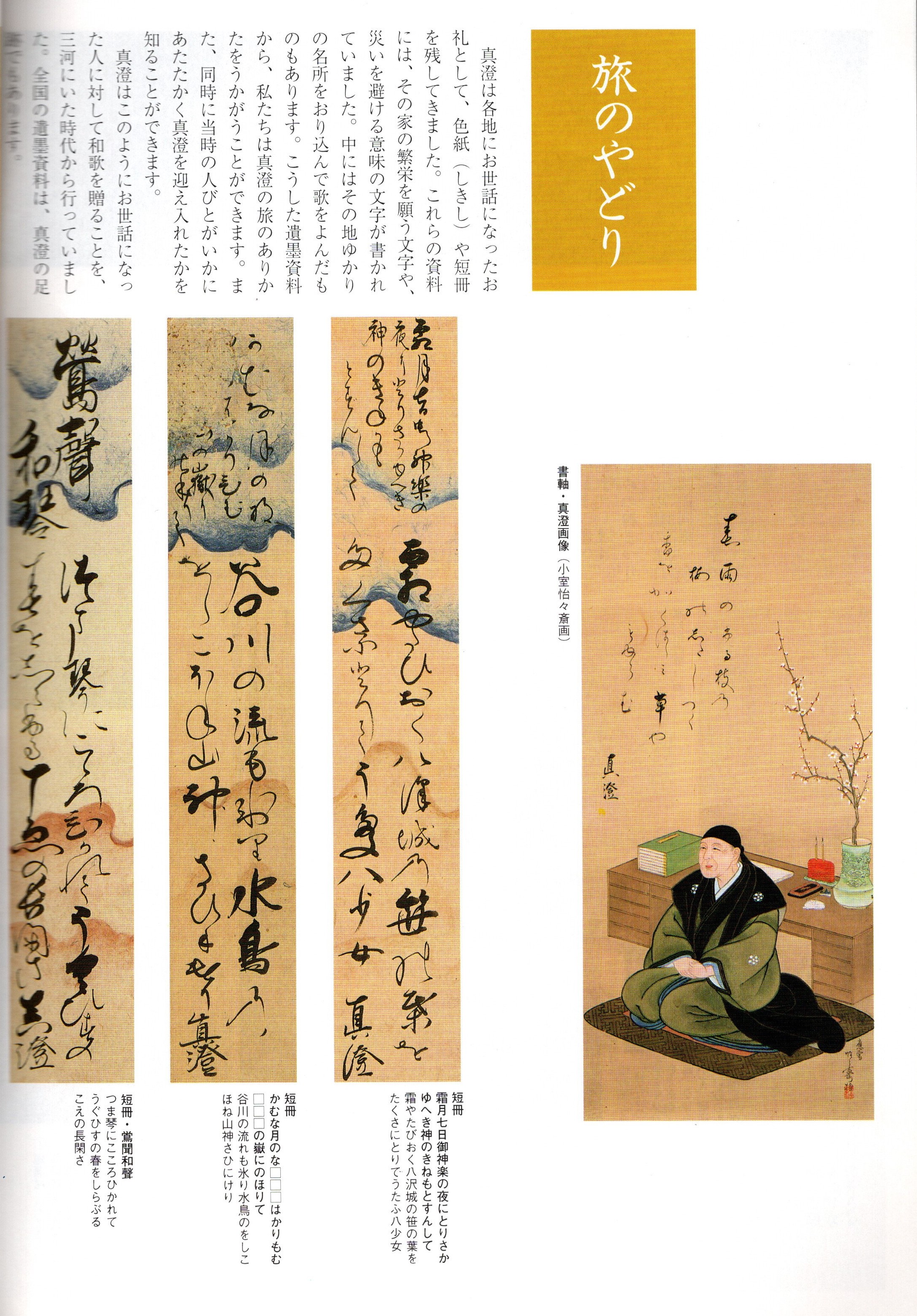
Masumi left a square card paper or a strip of paper with waka poems written on as a token of gratitude for those who welcomed and helped him in various places. Masumi usually wrote and gave waka poems since his younger days.
Findings
***
Katte no Oyumi 『勝手の雄弓』
In September, 1811, Sugae Masumi took a trip to Katte Shrine located a little away from the foot of Mount Taihei in Akita City with his two companions. Here are a few excerpts from his diary Katte no Oyumi, The Bow of Katte.
Hearing that Katte Shrine was derived from Katte Shrine on Mount Yoshino in Yoshino Town, Nara Prefecture, Masumi was reminded of the story in the military tale Taiheiki (太平記)from the Nanboku-chō period, North and South court period, in which Emperor Go-Daigo dismounted from his horse in front of Katte Shrine and composed waka poems when he fled to Yoshino. Since then, Masumi long wanted to visit the shrine.
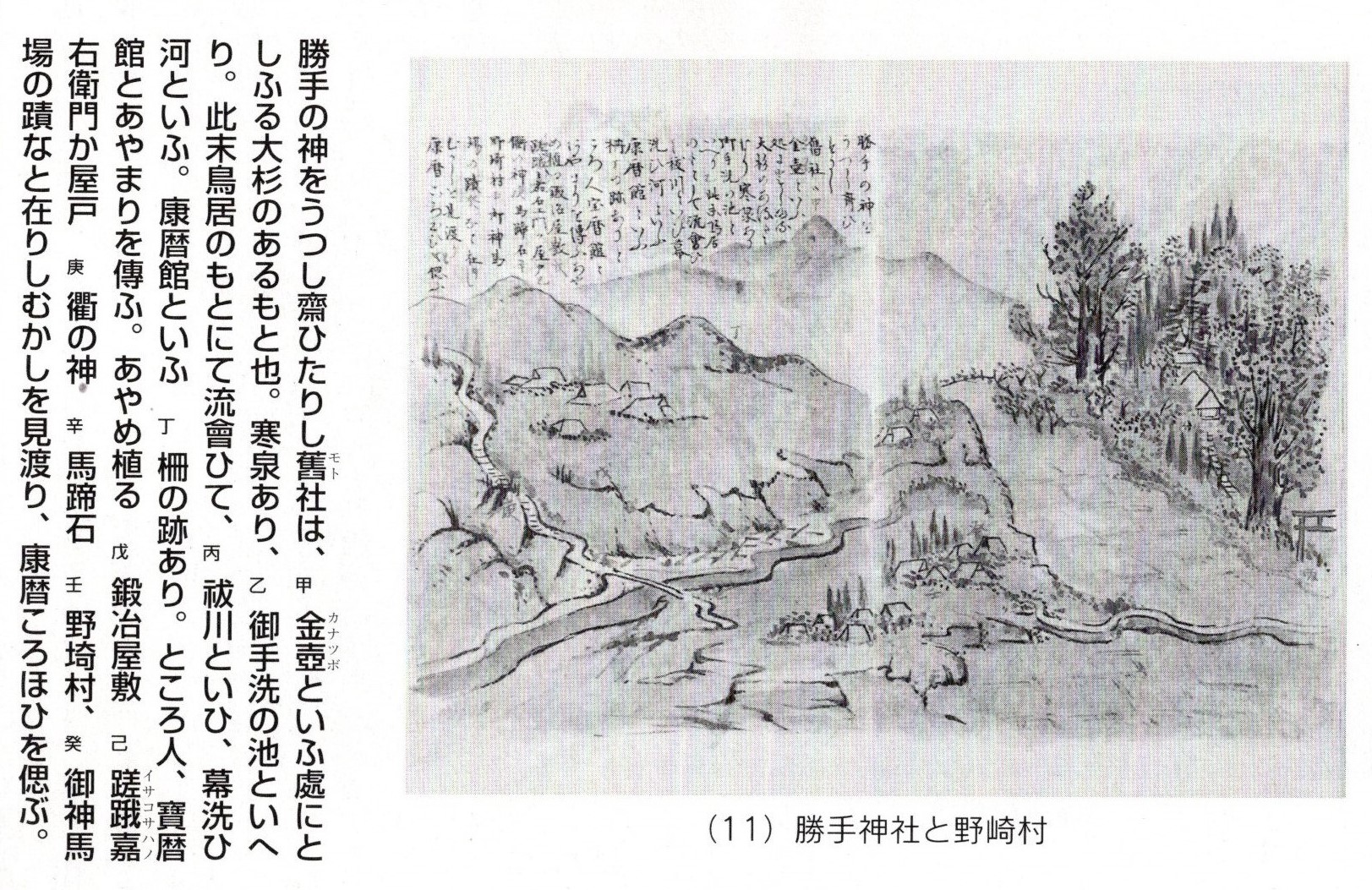
The old shrine, which enshrined a replica of Katte no Kami, was located beneath a large, old cedar tree and had clear water flowing there.
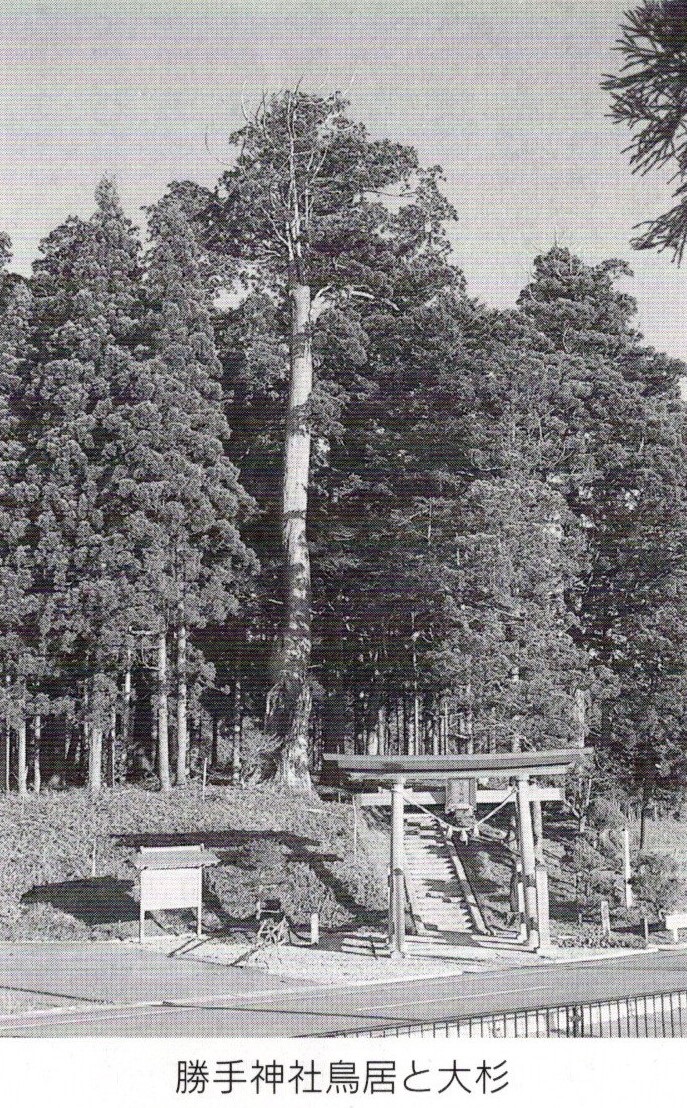
Here is a photo of the present-day entrance of the shrine.
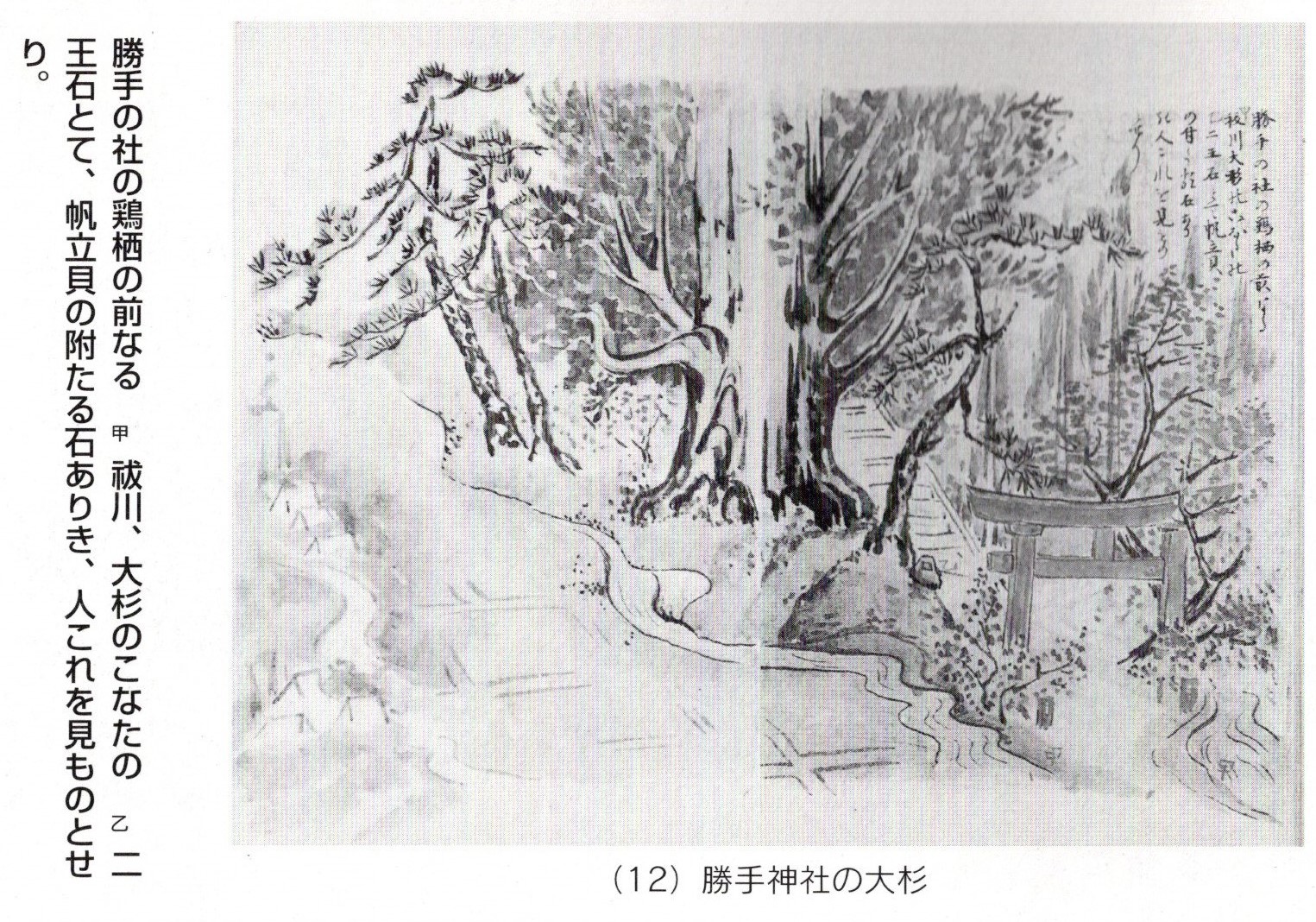
Masumi wrote in his diary, “Inside the shrine is what is said to be the decayed face of a Buddha, resembling a demon mask. This is said to be the image of a deity of the Katte Shrine, and is said to have been carved by Ennin.”
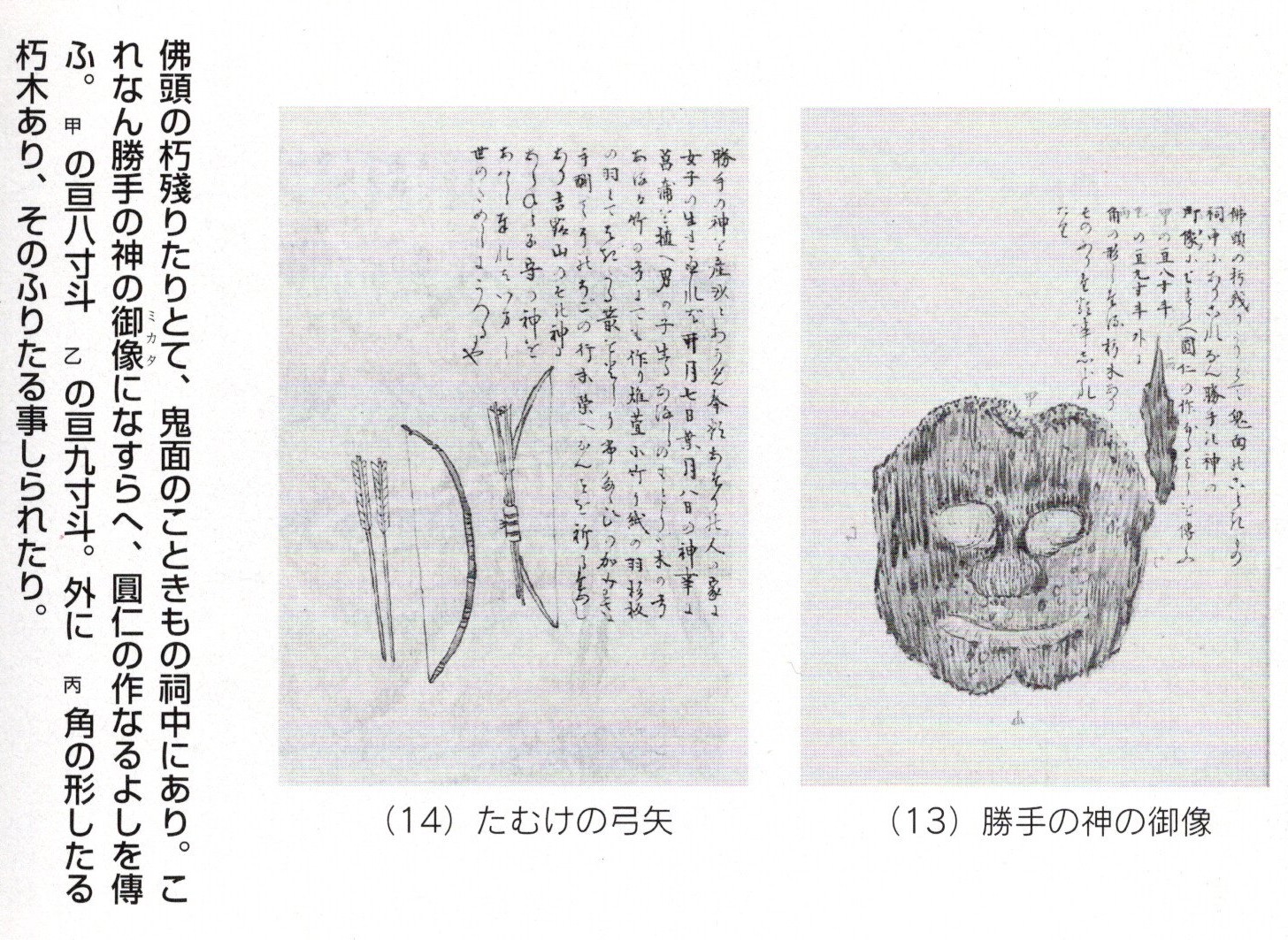
In this area, Katte no Kami was regarded as the tutelary god, or the guardian deity of their birthplace, and so there was a custom of planting irises when a girl was born and offering a bow and arrow when a boy was born.
As Masumi wrote in his diary, we can see the deep faith in Katte Shrine in this area.
Here are three photo haiku by Hidenori Hiruta.
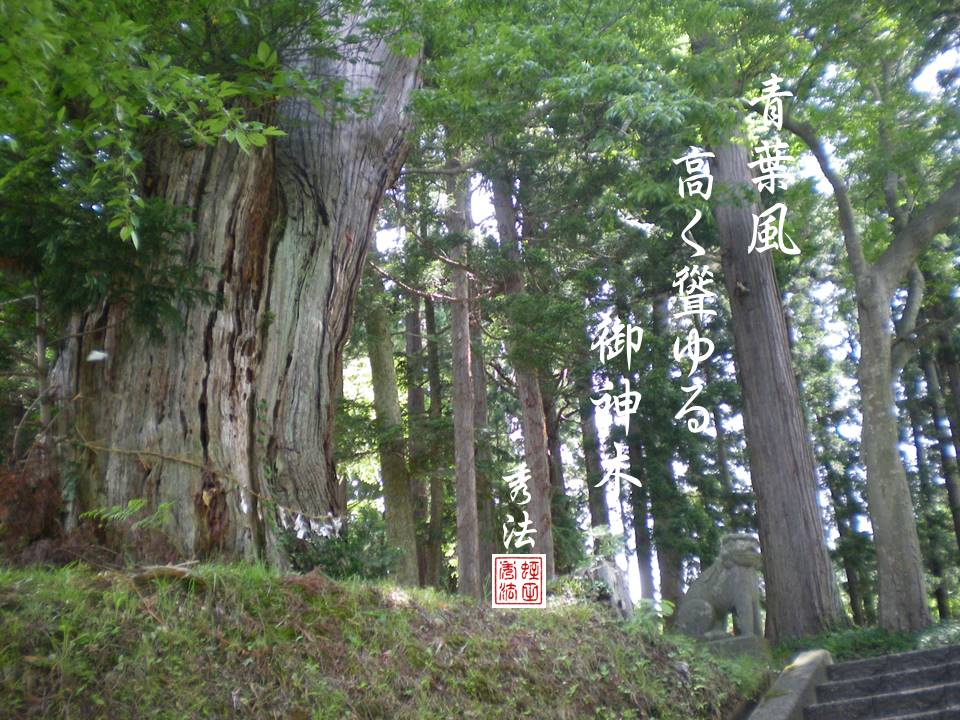
The sacred tree
rises up high
summer breeze
Goshin-boku (御神木), or the sacred tree of Katte Shrine is a cedar tree. Ukenori-no-mikoto(受鬘命), which used to be the deity of Yoshino Katte Myōjin Shrine in Mount Yoshino, is one of the enshrined deities that dwell in this sacred tree.
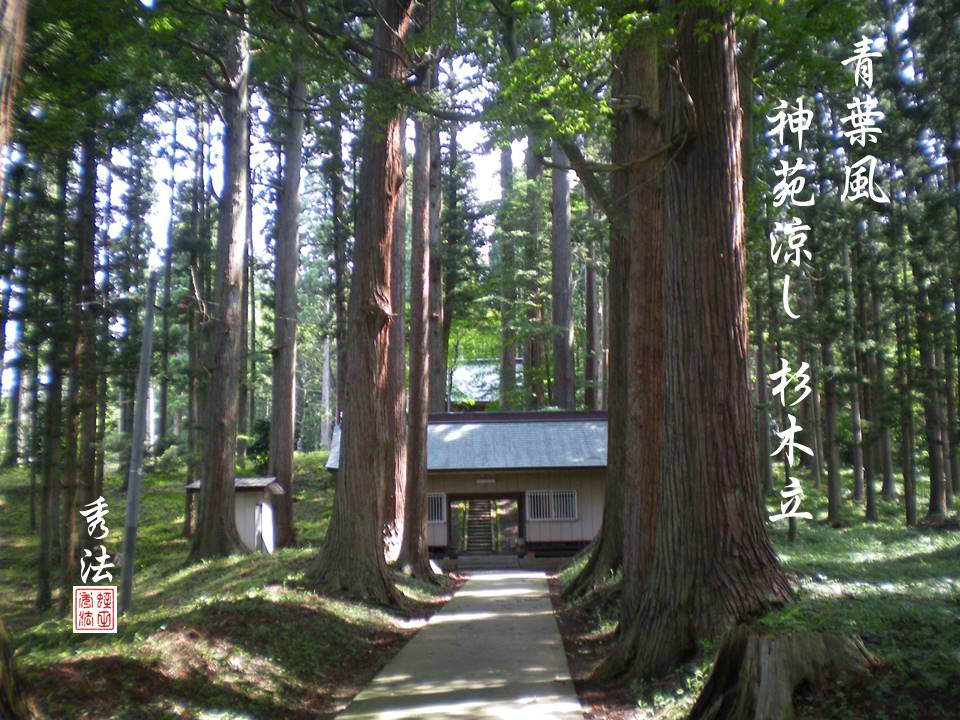
Summer breeze
over cedar trees
a sacred forest
The cedar trees were planted over 300 years ago. The cedar grove has been a sacred area separated from the secular world where human beings live. The divinities descended to earth through the sacred cedar tree are inhabiting in the shrine, worshiped with awe.
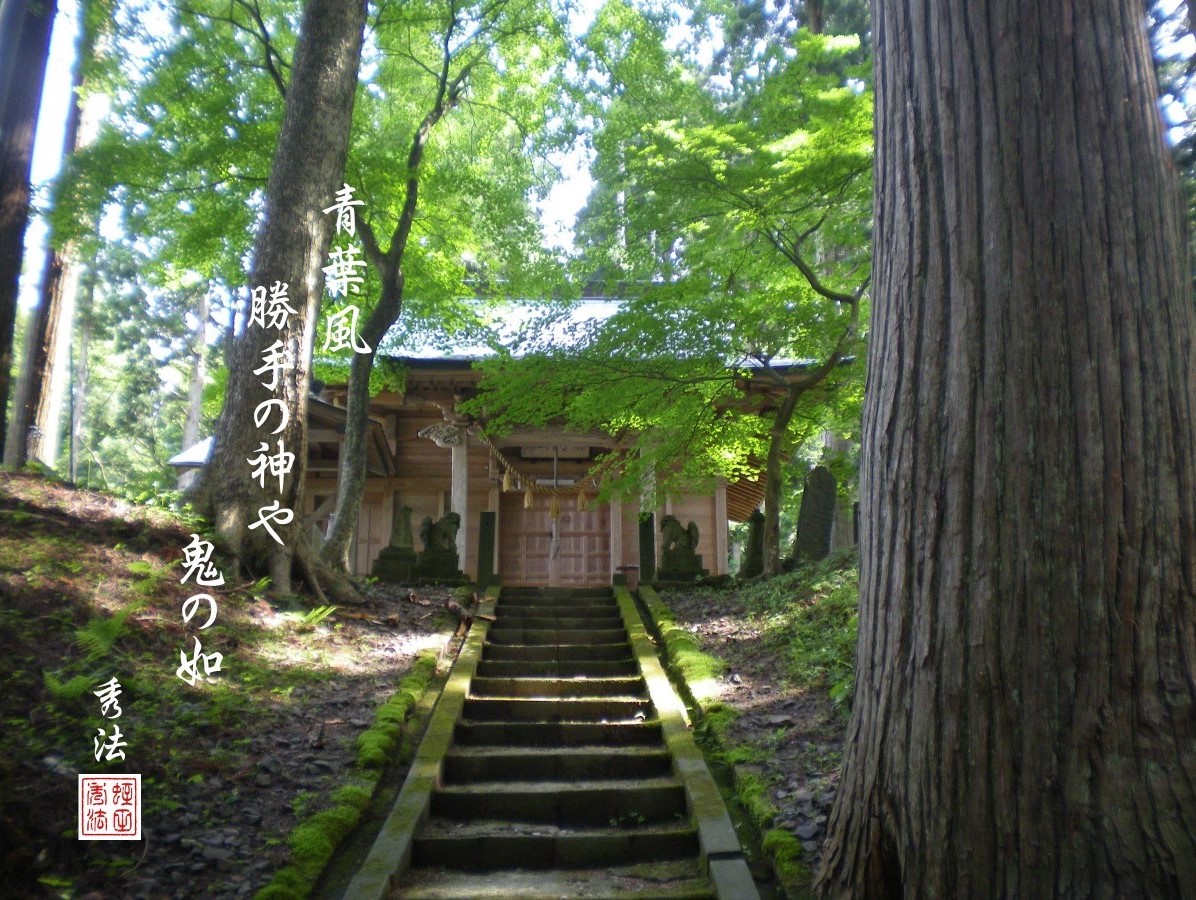
Summer breeze
Kami being enshrined
a demon mask
***
Tsuki no Orochine『月のおろちね』
In August, 1812, Sugae Masumi climbed Mount Taihei in Akita City with his seven companions. Here are a few excerpts from his diary Tsuki no Orochine, Mount Taihei in the Moon.
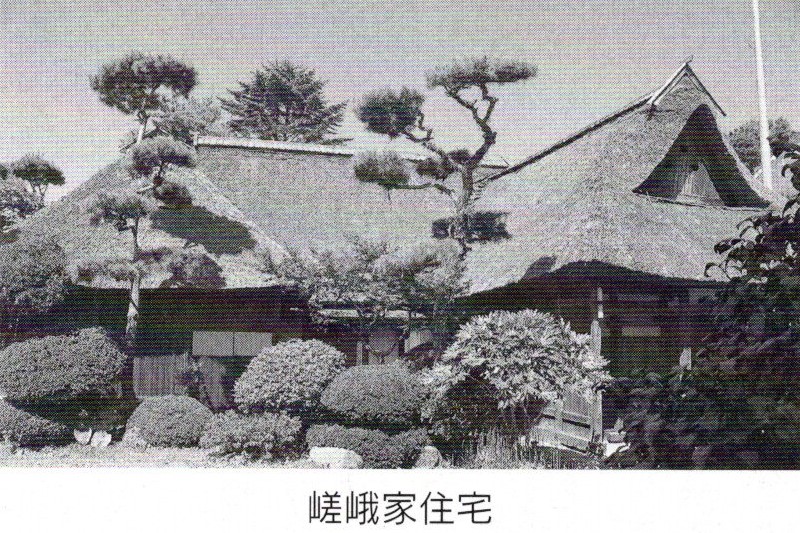
In the morning, Masumi and his party left Saga’s house.
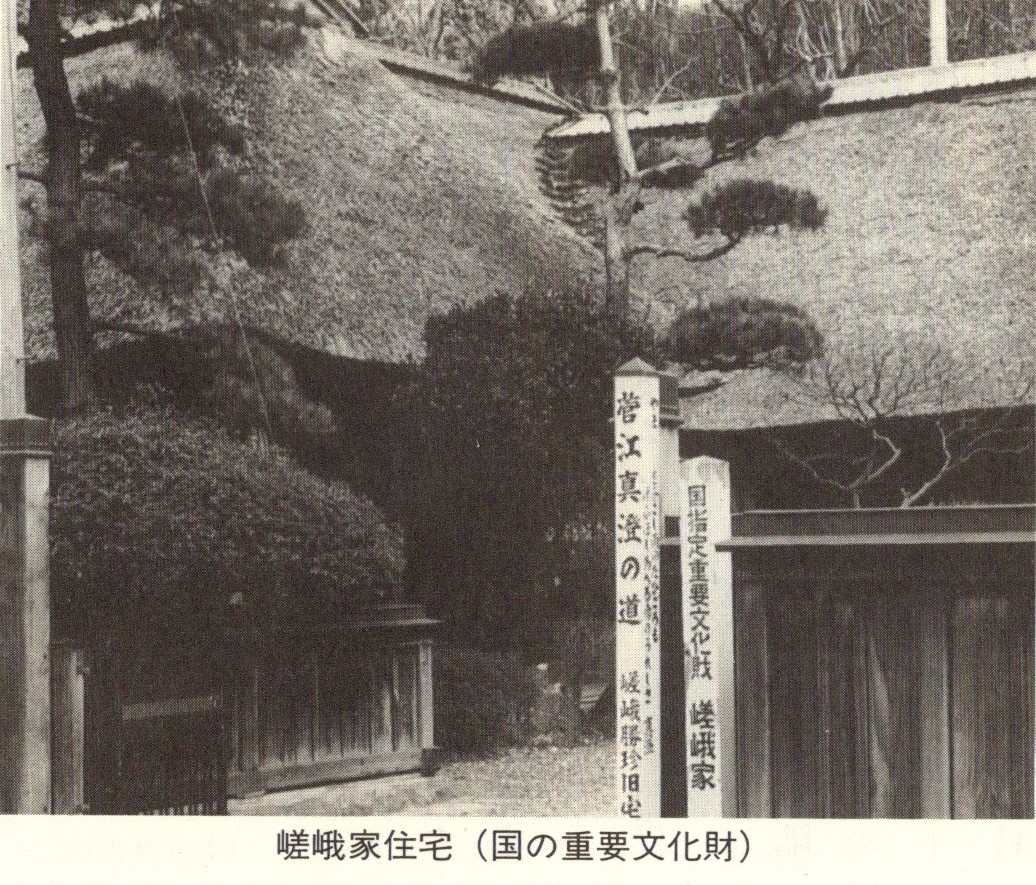
On the way, they passed by Katte Shrine, where they worshipped from nearby. After a while they arrived at Yamaya village. Masumi stopped at the mayor’s house to thank him for letting him stay there last year. Masumi and his party walked on through Noda and arrived at Tōkō-an, or Tōkō hut, where they took a rest for a while.
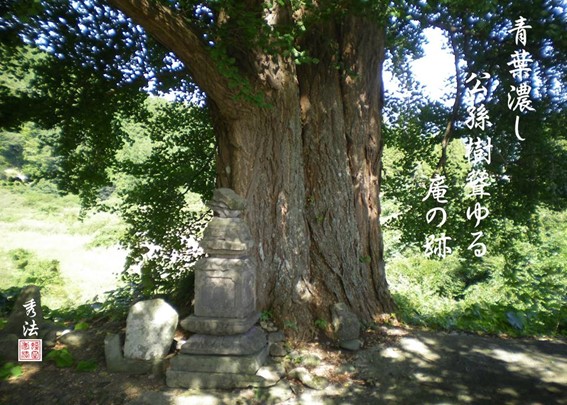
A ginkgo
rises up in green leaves
a resting spot
The ginkgo rises up at the foot of Mount Taihei like a sacred tree, where the resting hut used to be. Today only the ginkgo tree remains.
They climbed up to Fudō no Taki, The Inmovable Falls.
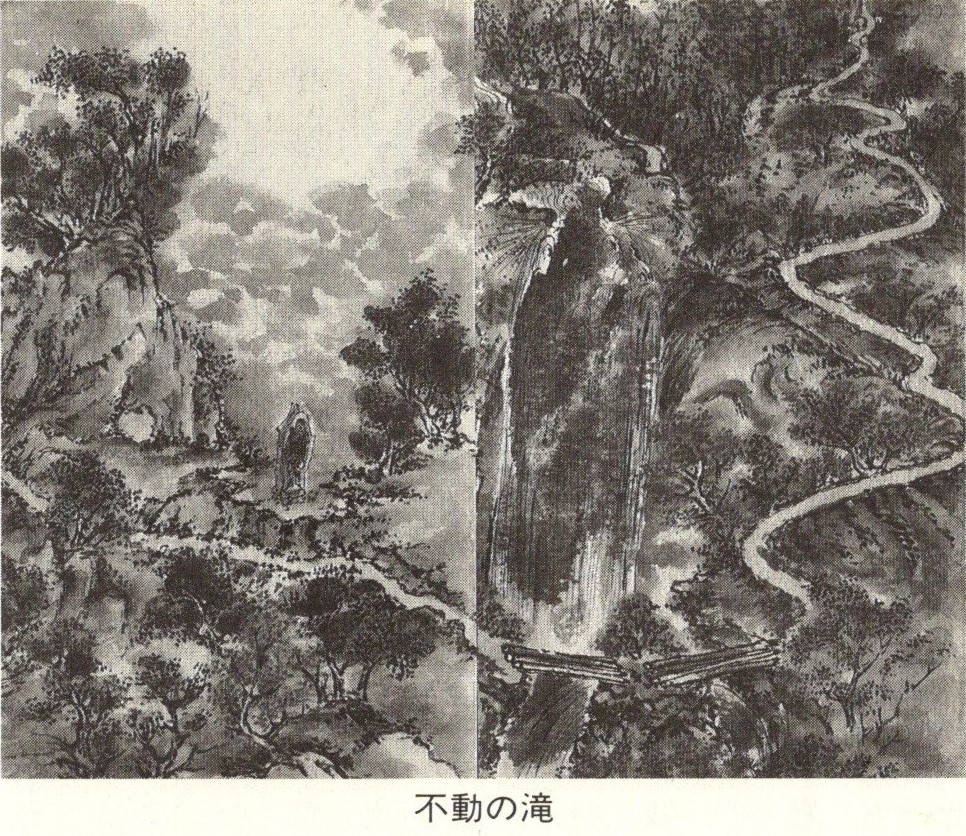
Masumi wrote in his diary, “Fudō Falls fall to the south, and on the high bank is enshrined the god Zaō Gongen, which seems to have been moved here from Mount Kimpu in Yoshino, Nara Prefecture.”
He also wrote about an anecdote about Sankichi (三吉) inhabiting in Mount Taihei, who is Sankichi (山鬼神), Mountain Demonic god.
With the help of a guide, Masumi climbed through the dark rain clouds and finally reached the summit just before dusk.
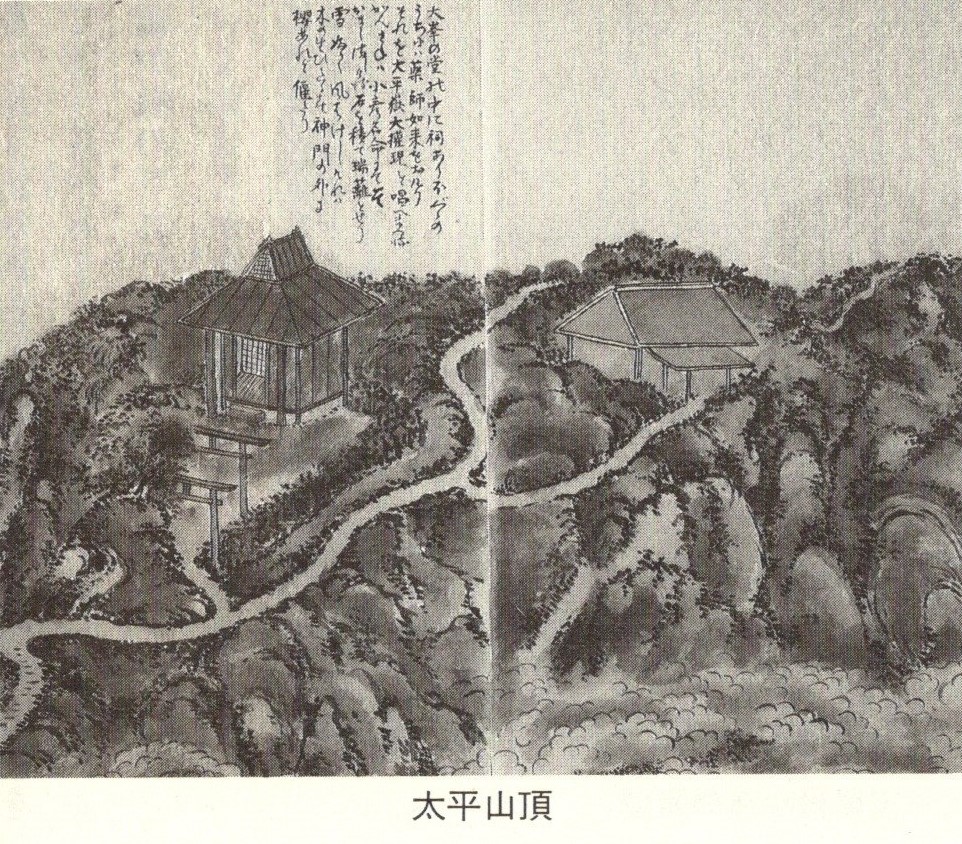
Masumi found two buildings on the mountaintop. He writes as follows.
One is the shrine hall, where the main god is Sukuna bikona (少彦名神), and Yakushi-botoke (薬師仏), the Healing Buddha, is enshrined as Taiheizan-dai-gongen (太平山大権現). The other is a training hall, where some ascetics, or shugenja (修験者) were training by themselves, having no food for seven days.
Note: Dai-gongen (大権現)
Dai-gongen (大権現), or literally “great incarnation”, was believed to be the manifestation of a Buddha in the form of an indigenous kami (神).
Masumi also wrote waka poems.
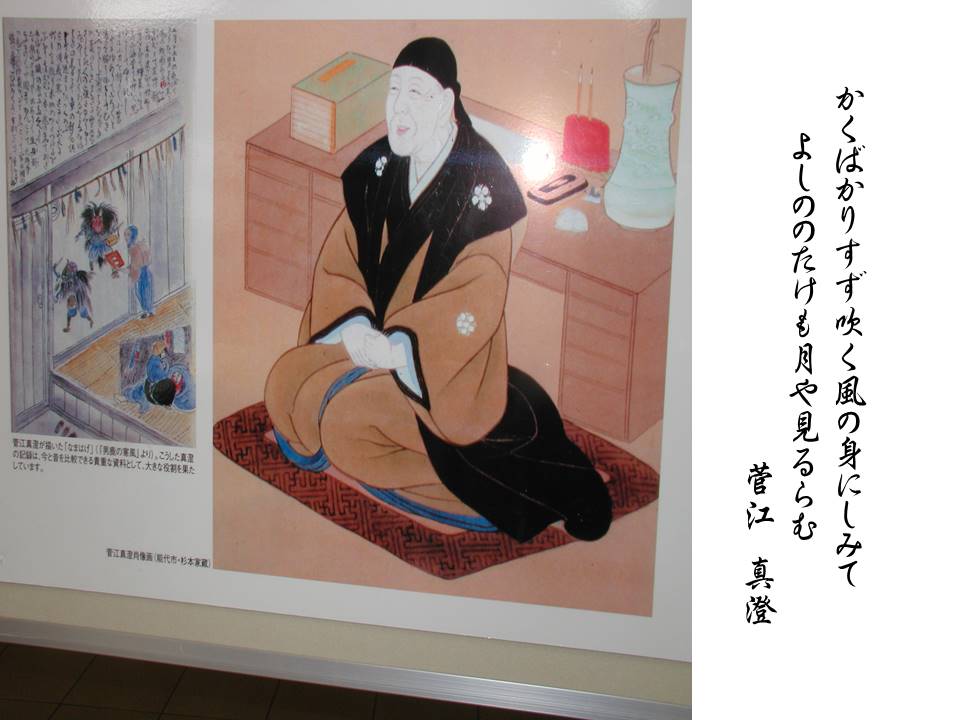
The wind blowing
over small bamboos so hard
is biting me,
and Mount Yoshino also
might be viewing the moon.
On the top of Mount Taihei Masumi was thinking of ascetics, or shugenja(修験者), those who train and test to gain spiritual, mystical, or supernatural powers through asceticism in Mount Yoshino. Some of them must have also been viewing the moon above Mount Yoshino as he was.
The next day, Masumi and his party descended to Nibetsuzawa. They walked along the rainy road at night and arrived at Saga’s house. They shared stories of their hard walking and rested late into the night.
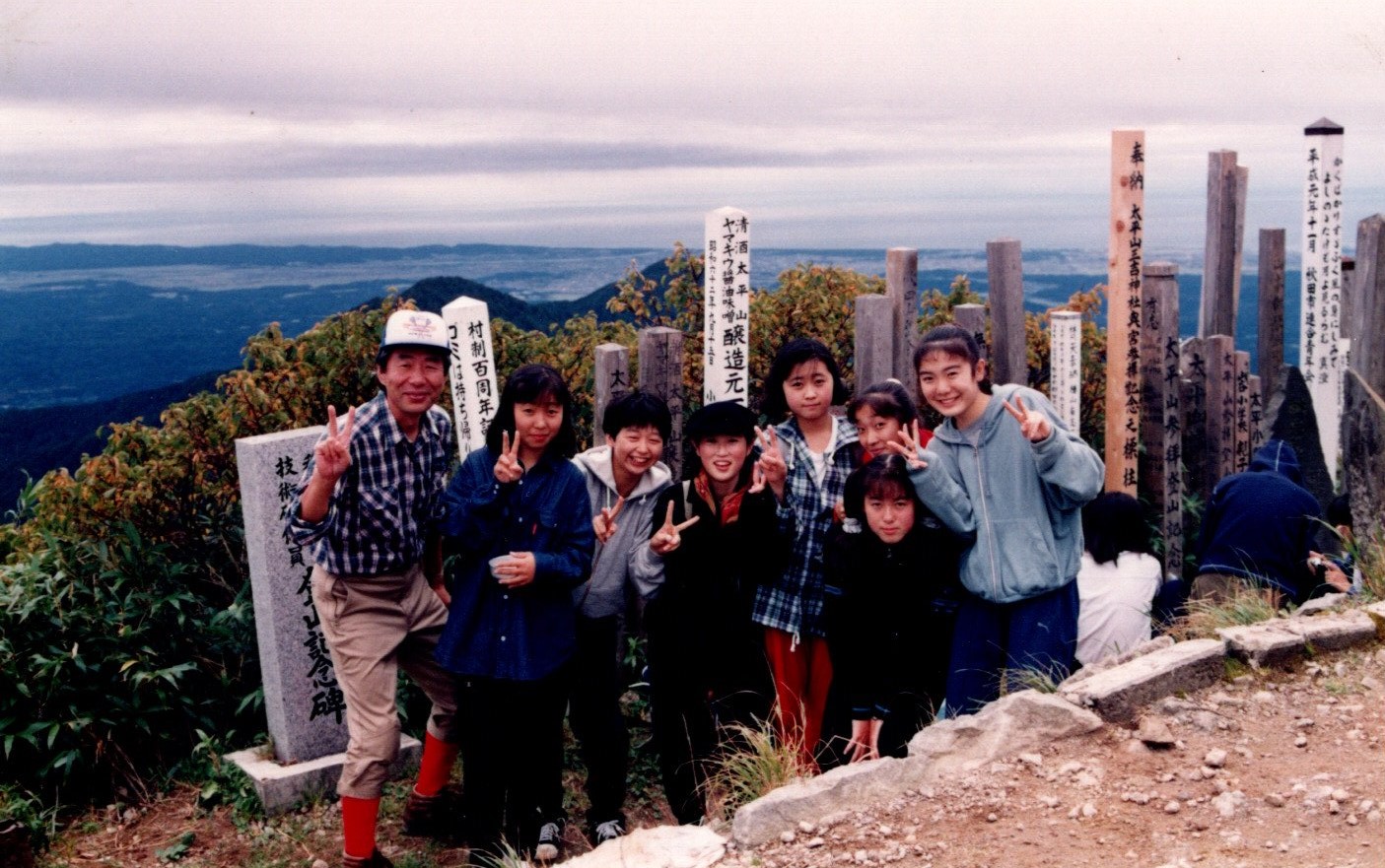
Currently, old and young as well as boys and girls all climb Mount Taihei, wishing for peace. They appreciate Sugae Masumi’s waka poems through the monument standing on the mountain top.
Thoughts
Through two diaries by Sugae Masumi, I have thought what En no Gyōja did in the Taihei area, Akita City. Furthermore, I have thought on through the other referential books what En no Gyōja influenced on this Taihei area.
In May, 673, En no Gyōja successfully reached the top of Mount Taihei and built a little hall of the Ascetic, and practiced asceticism of shugendō. They also founded a temple, where they enshrined the Healing Buddha for those suffering from illness, worshipped there and prayed for their healing. Later, the temple turned into a shrine, where the main god was Sukuna bikona (少彦名神).
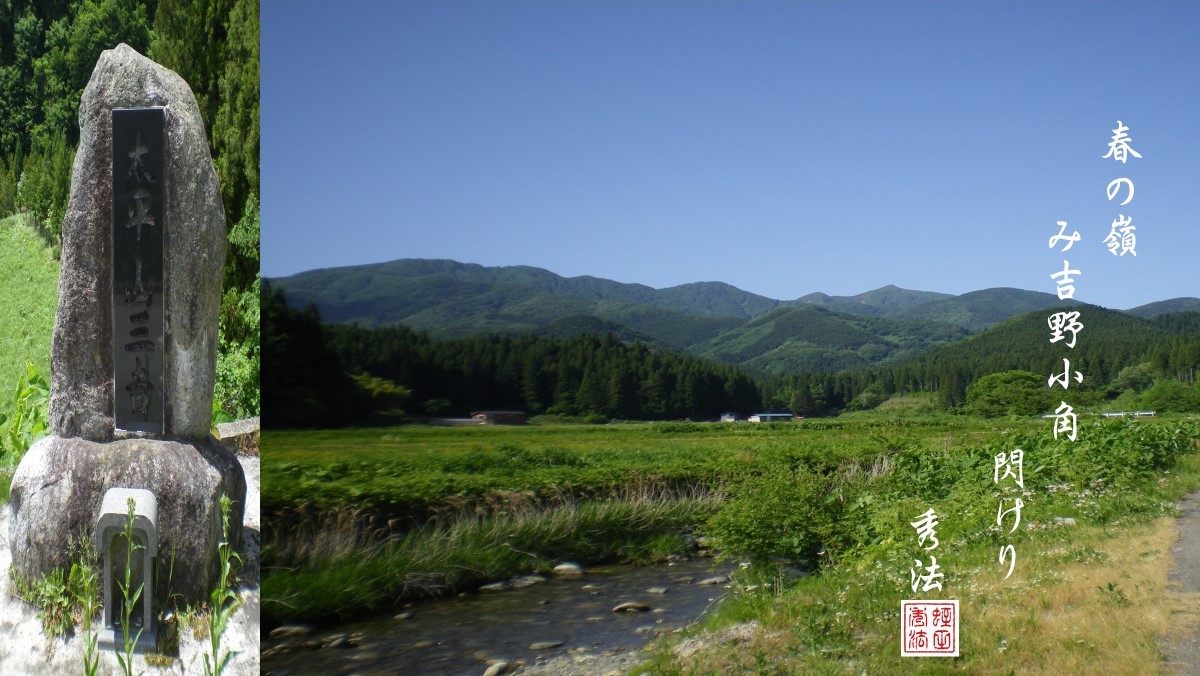
As the monument shows at the foot of the monutain, En no Gyōja was called Sankichi (三吉) after Sankichi (三鬼神), or Miyoshi (三吉) after Mi-yoshino (み吉野).
Katte Shrine (勝手神社) was originally founded near the foot of Mount Taihei as a branch of the temple founded on the mountain top by En no Gyōja. So its name was Kimpusen-Shōjūji temple(金峰山勝重寺).
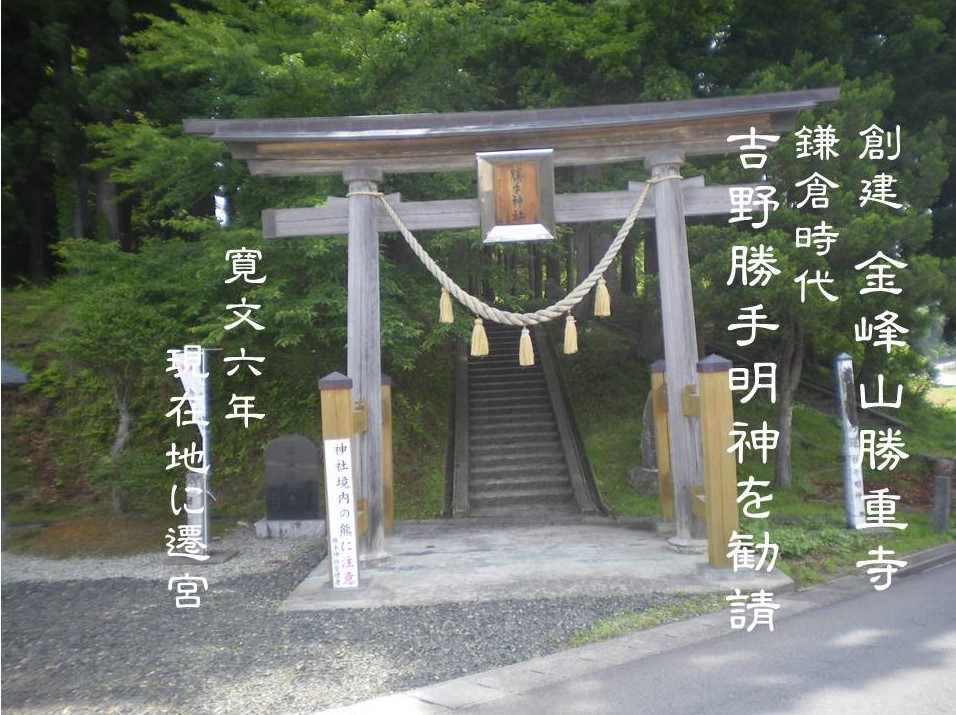
In the Kamakura period, a divided tutelary deity was transferred to Kimpusen-Shōjūji temple from Katte-jinja Shrine located in Mount Yoshino, Nara Prefecture, which was one of the eight Myōjin shrines in Mount Yoshino.
As a result, the name of the temple was changed into Katte Shrine.
In 1666, the shrine was transferred to the present site located at Haraikawa, Kurosawa, Taihei, Akita City.
Around the 9th century, Ennin, or the Great Teacher Jikaku, came to the Taihei area, and visited Kimpusen-Shōjūji temple. Dedicated to the spirits of En no Gyōja as a founder, Ennin carved the statue of a Buddha and offered it to the temple.
Before the Kamakura period, Kimpusen-Shōjūji temple was in reality almost a desolate temple, I wonder. Although Ennin dedicated the statue of a Buddha to the temple, what was remained was only the decayed face of a Buddha, resembling a demon mask. But in truth, it was enshrined in the new shrine as Katte no Kami.
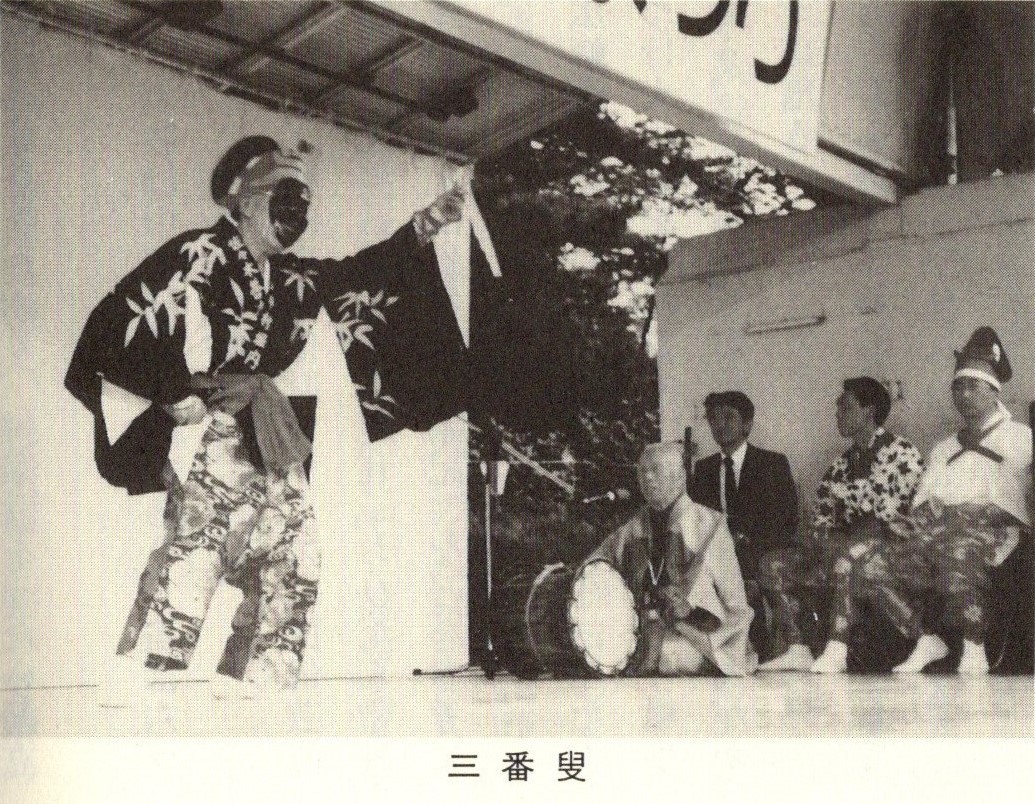
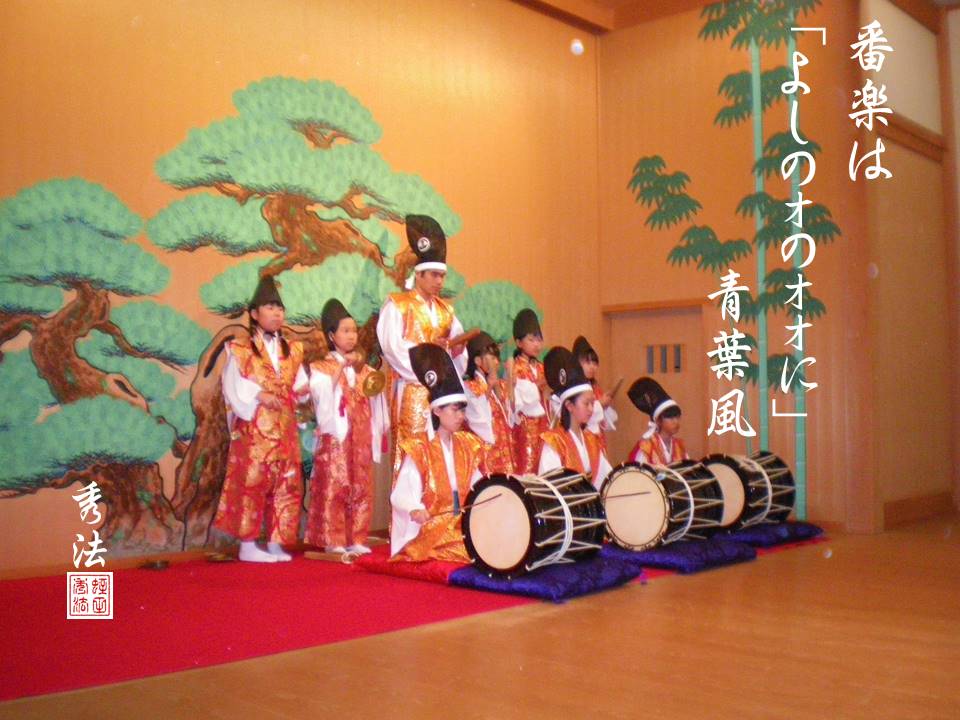
Yamaya Bangaku (山谷番楽) is a unique sacred music and dancing performed at the festival of Ikimen Shrine (生面神社) located at Noda, Yamaya, Taihei, Akita City.
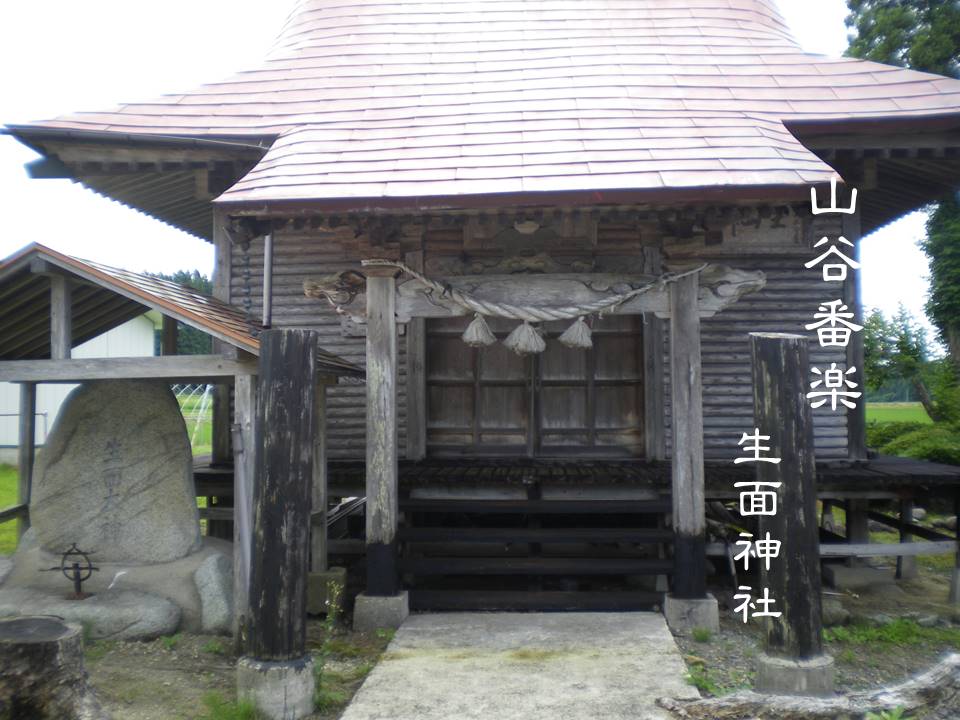
Yamaya Bangaku is said to have been brought to the area by ascetics, or yamabushi (山伏) closely connected to the faith in Mount Taihei from the late Middle Ages to the early modern period.
Ascetics, or yamabushi (山伏) used to get together, climbing and reaching the mountaintop so that they would train to gain spiritual, mystical, or supernatural powers through asceticism. After their training, they used to descend to Yamaya area, performing their sacred music and dancing at the festival of the shrine.
15 beautiful masks were used in performing a sacred music and dancing. They are called Ikimen (生面), or Live masks in Yamaya area. The masks themselves have been deified and worshiped as the deities of Ikimen Shrine. Some of them were carved into in the Kamakura period, so the sacred music and dancing have been passed down to the followers of the shrine from the ascetics in those days.
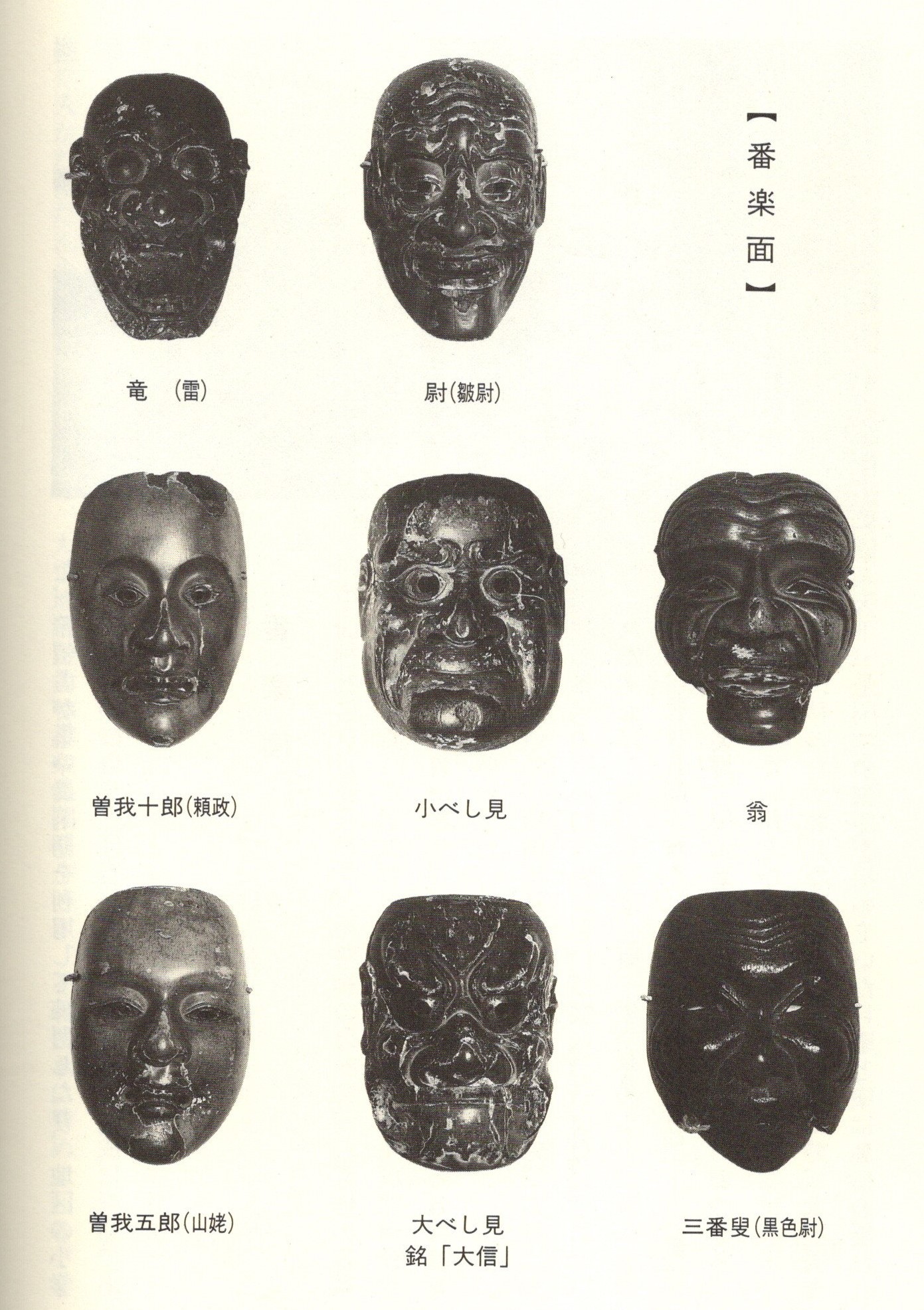
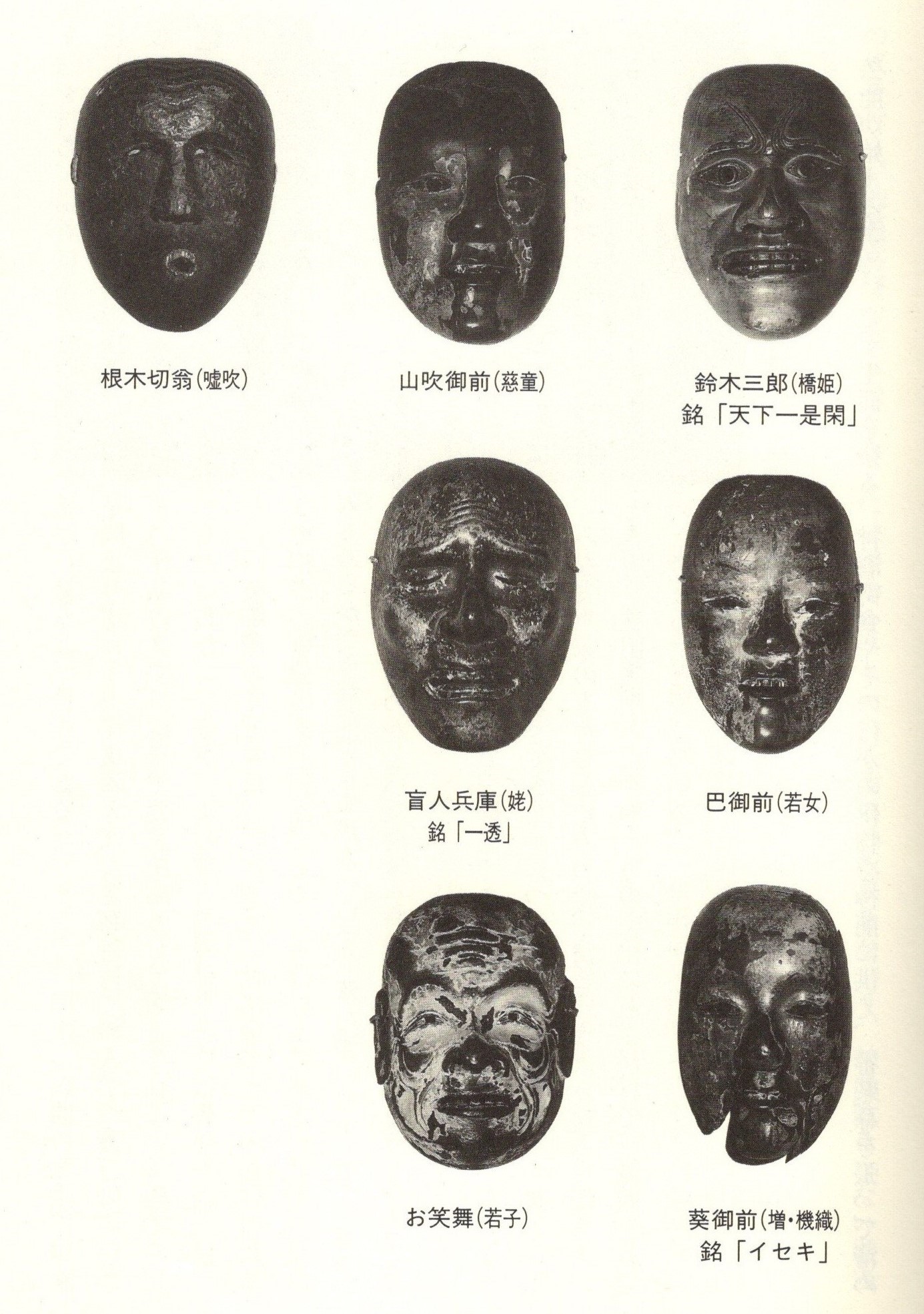
Here is a photo of Bangaku performance called 三番叟 (Sanbasō).
Today, the children in Yamaya area are learning how to perform their sacred music and dancing, giving their performances.
Here is a photo of their performance dedicated to 三番叟 (Sanbasō).
Hidenori Hiruta
蛭田 秀法
Akita International Haiku Network
秋田国際俳句ネットワーク
参考文献
『秋田市太平郷土史』
執筆編集
太平郷土史編集委員 代表 池田 昭治
発行者
太平郷土史発刊委員会 代表 加藤 光俊
平成9年6月1日 発行
真澄による新秋田紀行 『勝手の雄弓』
秋田県立博物館 菅江真澄資料センター
本書執筆者
永井 登志樹・松山 修
平成13年3月30日 発行

 Akita International Haiku Network
Very interesting, Hiruta-san. Those masks look alive.