A Rebirth Story at Kai-no- Sawa
The rebirth story dates back to 1968, when Sekiya Haruo (関谷春雄、1929-2018) became the land owner of Kai-no- Sawa. He was a man of fortune and culture. He was successful in his marketing business.
1968
Sekiya Haruo became the owner of the forest and wild fields of Kai-no-Sawa at Yamaya at the foot of Mount Taihei in Akita City, Akita Prefecture, Japan.
1972
He built Sekiya lodge for his family, and began to plant cherry trees, azalea, Enkianthus perulatus (dodan-tsutsuji), ginkgo trees to turn Kai-no-Sawa into a major tourist attraction.
He also acquired a mountain with a small waterfall and a mountain with a large waterfall, worshipped the nature gods of the two waterfalls as dragon gods, and built a road connecting the two waterfalls. He planned to eventually turn the area into a tourist destination.
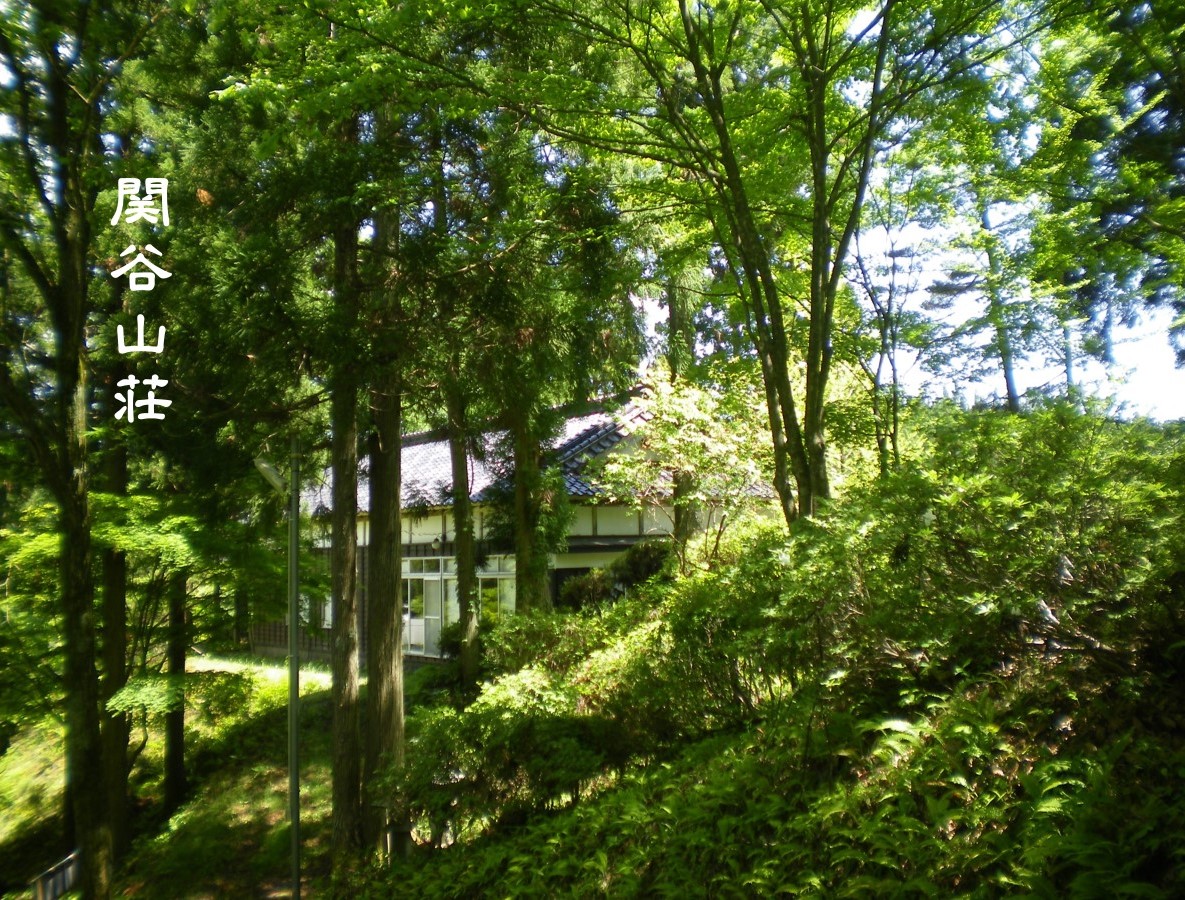
1978
He asked an expert to carry out a geological survey, and they discovered a stone god close to the mountain lodge. There was also a stone of the Great Buddha buried there, as well as stones of two of the Seven Lucky Gods, Ebisu and Daikoku. They enshrined the stone god as the company’s mountain god in the couple cedar tree in the mountain.
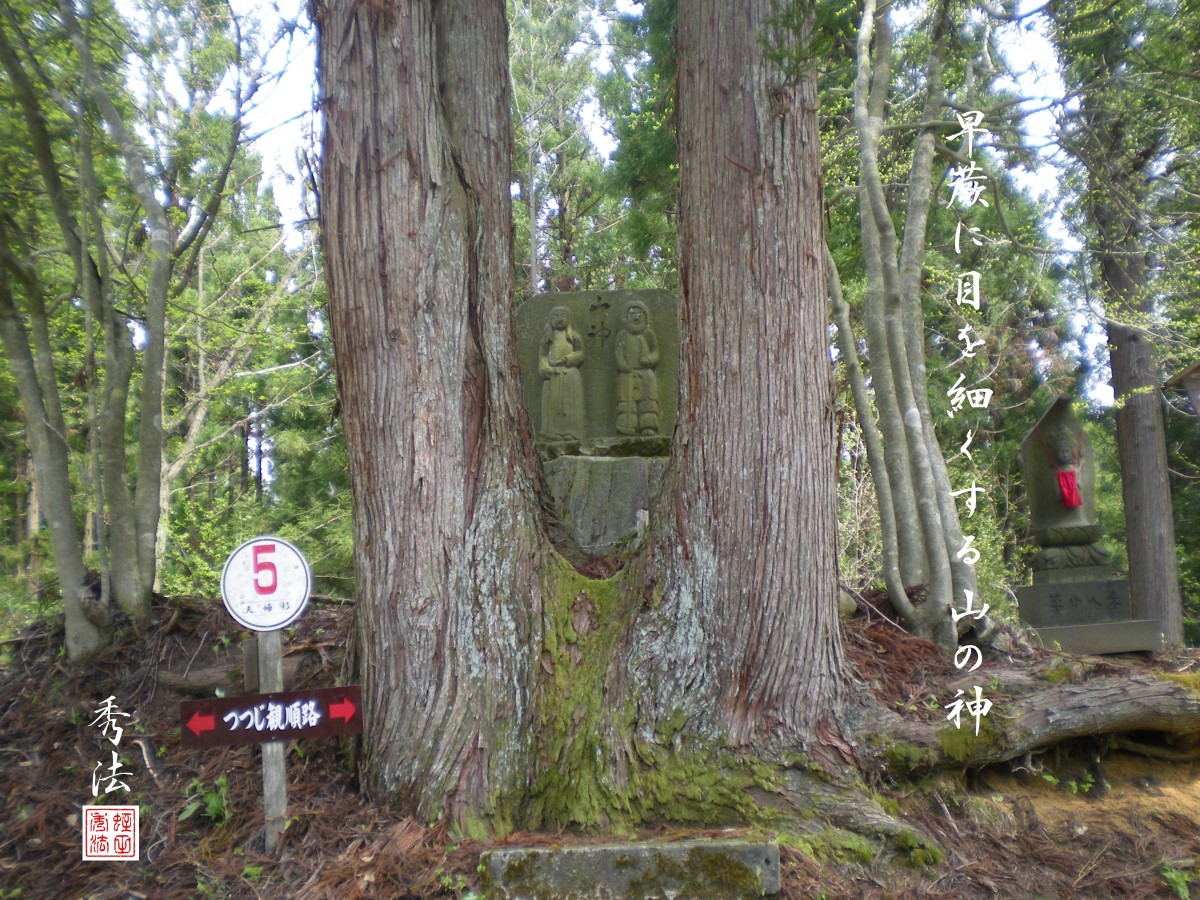
早蕨に目を細くする山の神
Mountain god and goddess
smiling at
freshly budded bracken
1979-1980
In 1979, 30 ares of rice paddy field was completed. There was a stream leading to the field, and while constructing an underground drainage system, a cold spring was discovered gushing out from the outlet. It was a hot spring. In 1980, Kai-no-Sawa Onsen(貝の沢温泉, Kainosawa Hot Spring)was opened.
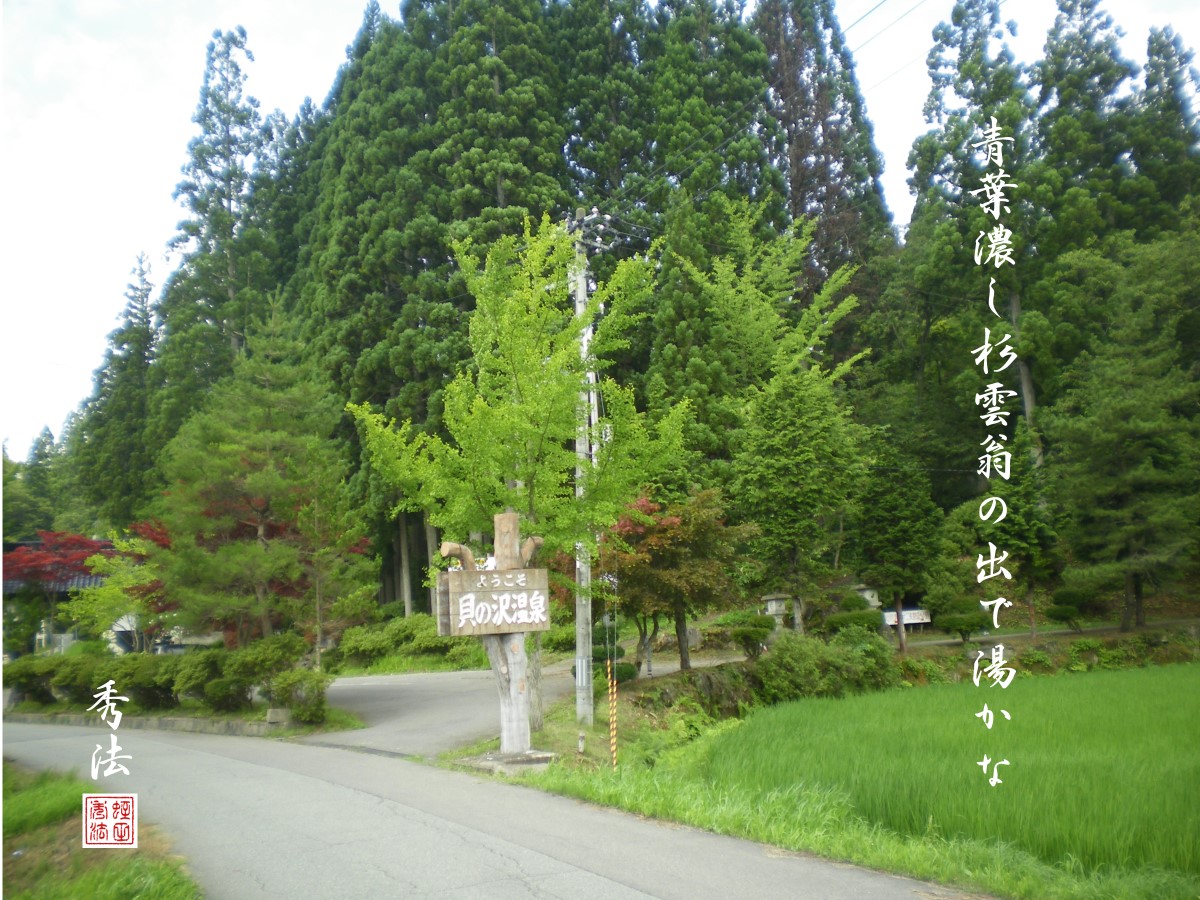
青葉濃し杉雲翁の出で湯かな
Deep green leaves
hot water springing from
San-un’s dream
Sekiya Haruo, whose pseudonym is “San-un”「杉雲, clouds over cedars」, was blessed with two hot springs in his life. One of the hot springs was found at his cultivated rice fields in 1979. The other hot spring was successfully dug below the Sekiya lodge in 1996. It looked like a rebirth of the Kai-no-Sawa Hot Spring.
1981-1983
During a geological survey, stones of a Great Buddha and two of the Seven Lucky Gods, Ebisu and Daikoku, were discovered buried underground. Sekiya Haruo rebuilt the stone statues of the Great Buddha, Ebisu and Daikoku on a high point in the mountains as a sign of his gratitude for the discovery of the hot spring. The construction of these statues was truly a project of rebirth.
Rebirth of a Great Buddha
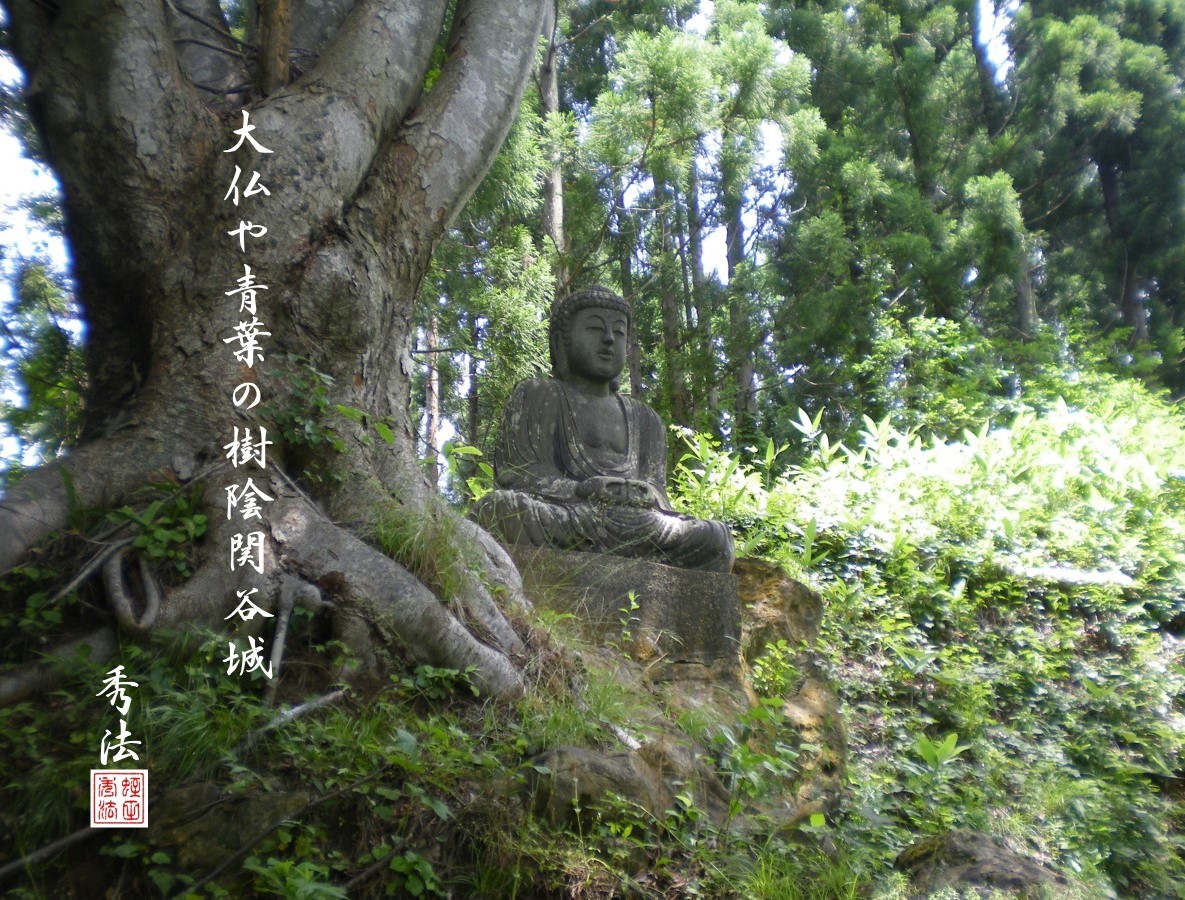
大仏や青葉の樹陰関谷城
A great Buddha
in the shade of green leaves
the Sekiya castle
On May 8, 1983, Sekiya Haruo held the Great Buddha eye-opening ceremony (大仏開眼式典)at Kainosawa Onsen.
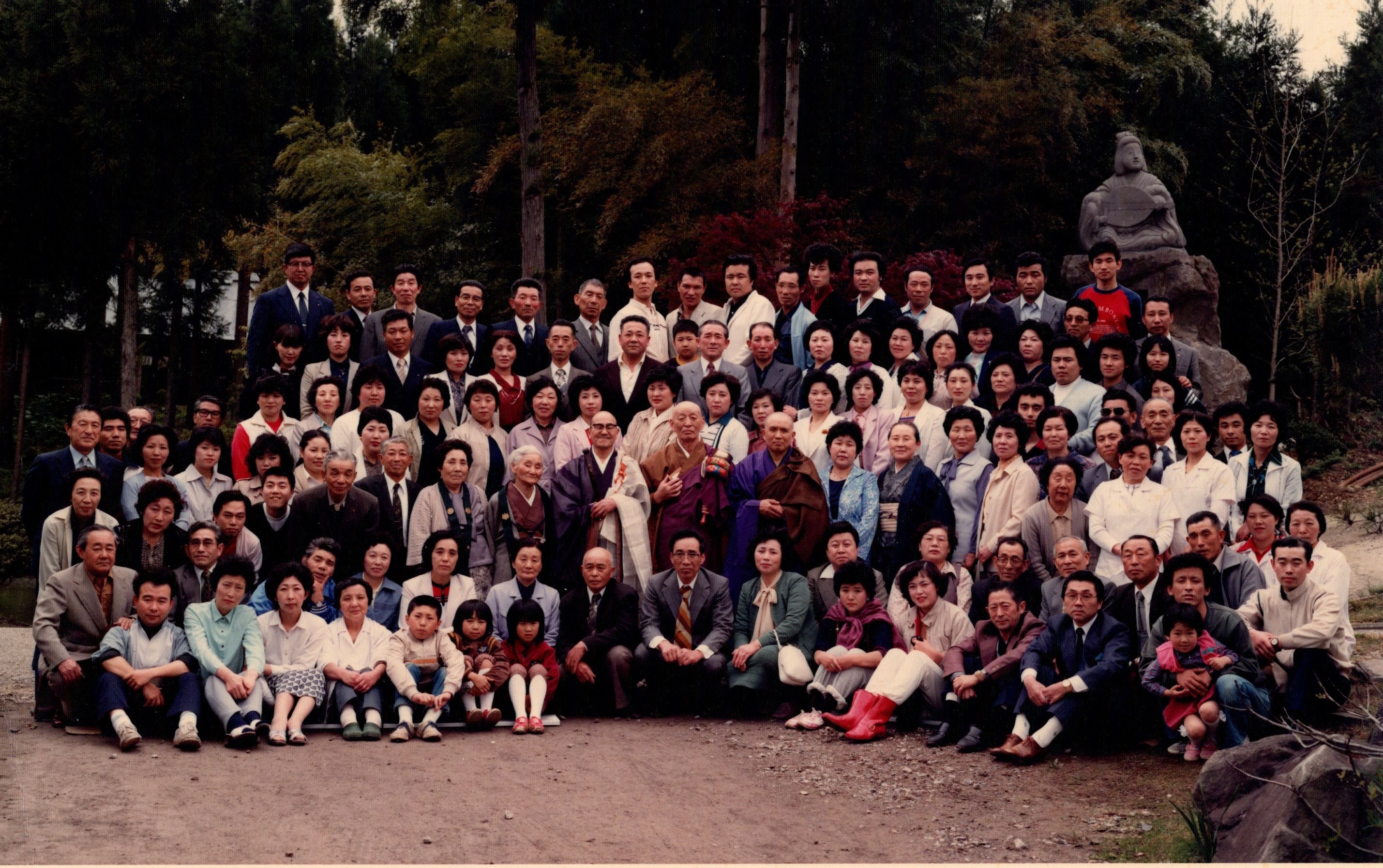
Here are a few haiku and photos about the Great Buddha at Kainosawa Onsen.
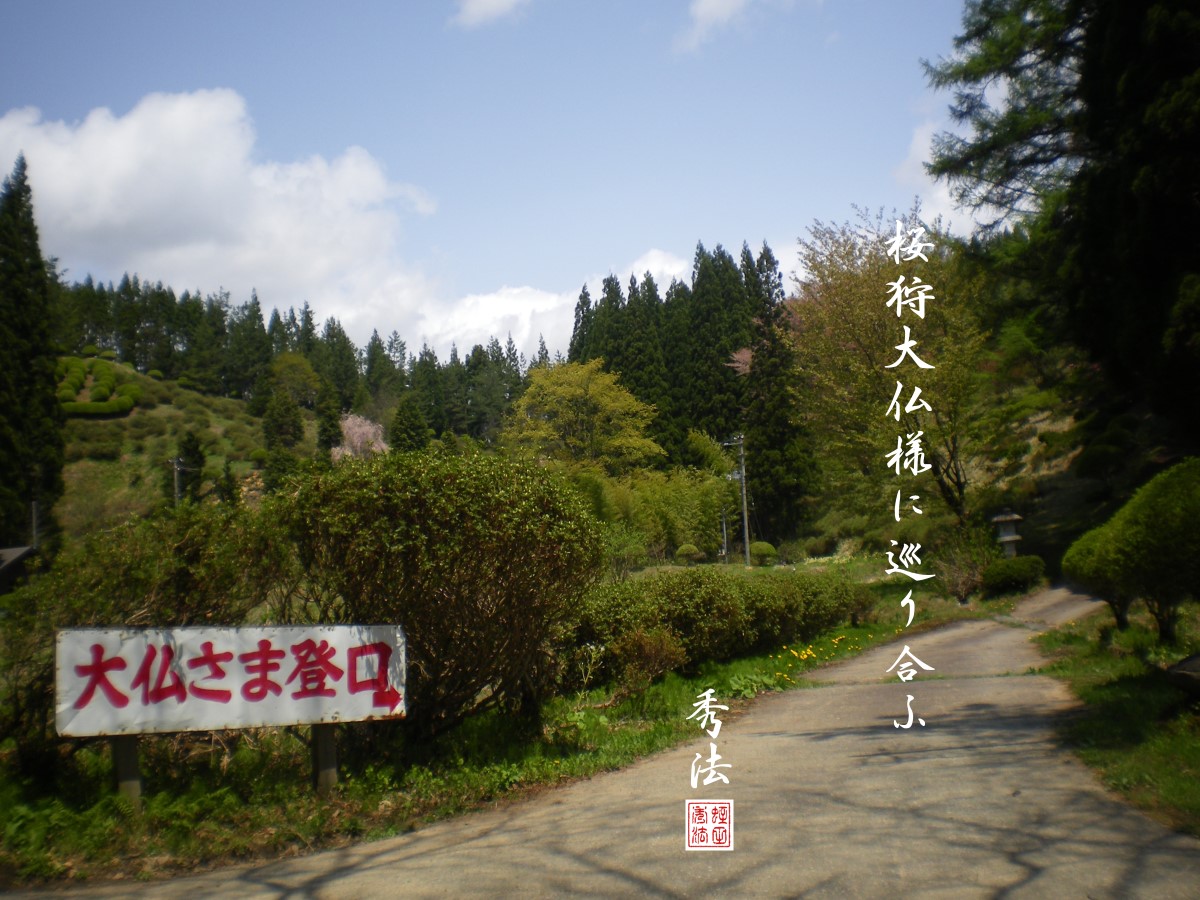
桜狩大仏様に巡り合ふ
Searching
for cherry blossoms first
for the great Buddha last
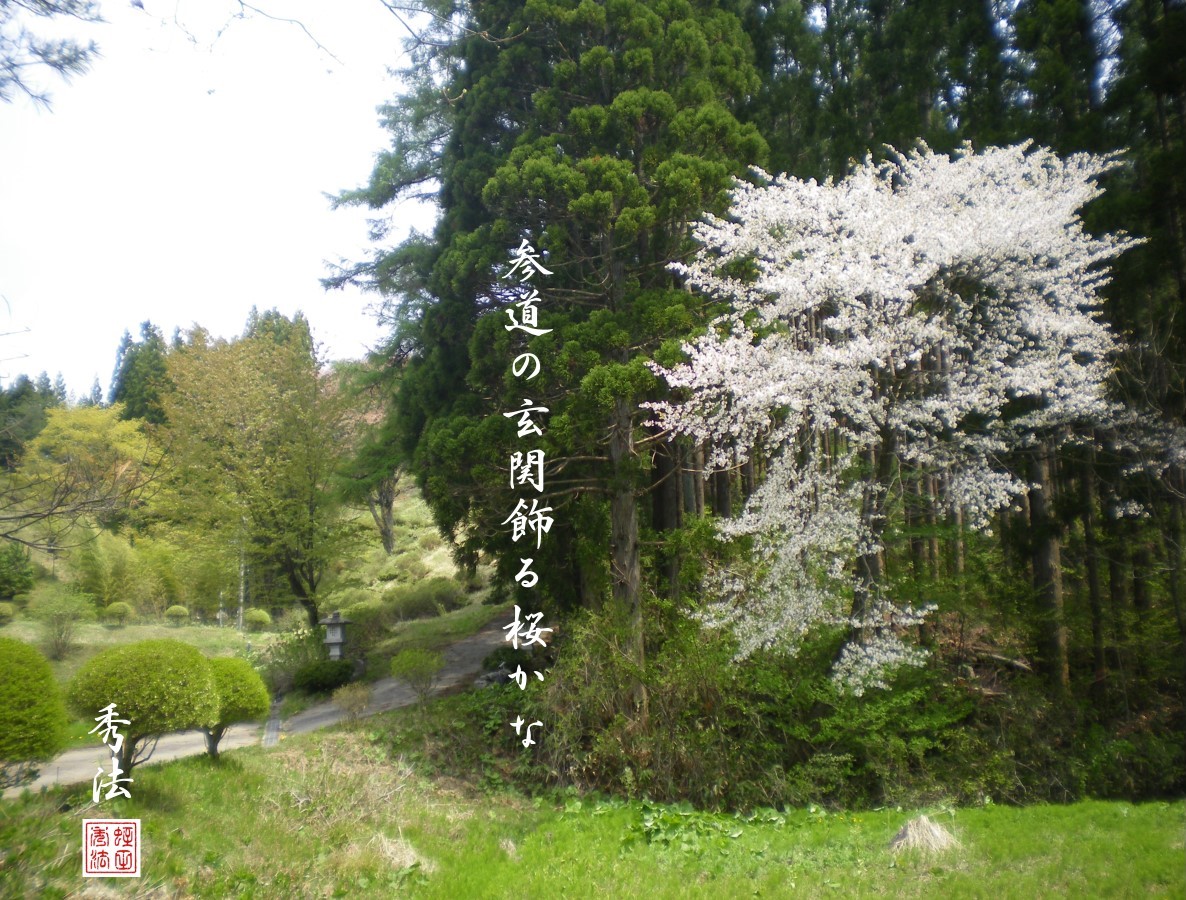
参道の玄関飾る桜かな
The entrance
to Buddhahood
cherry blossoms blooming
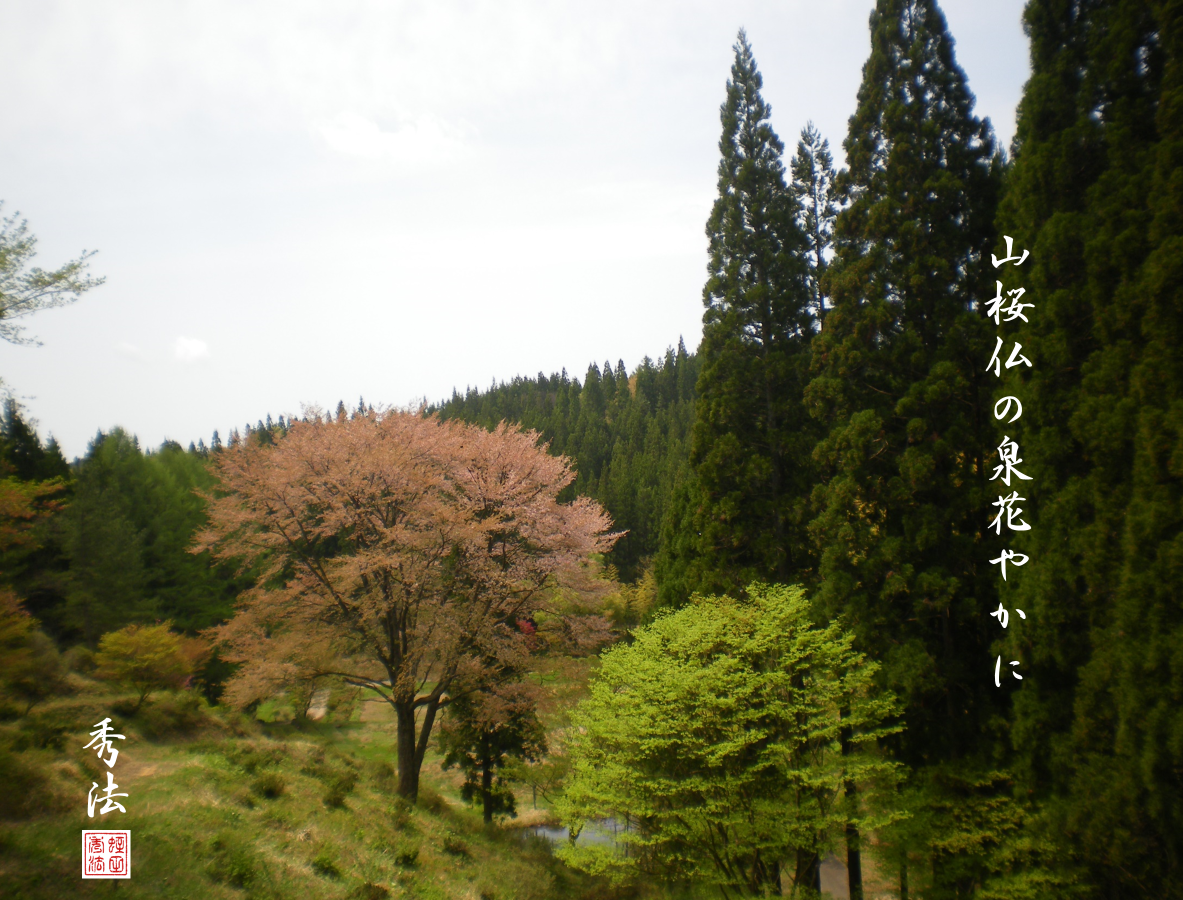
山桜仏の泉花やかに
The wild cherry
blooming beside
the spring of Buddha
Rebirth of the Seven Lucky Gods
Here are seven haiku and photos about the Seven Lucky Gods (七福神)at Kainosawa Onsen.
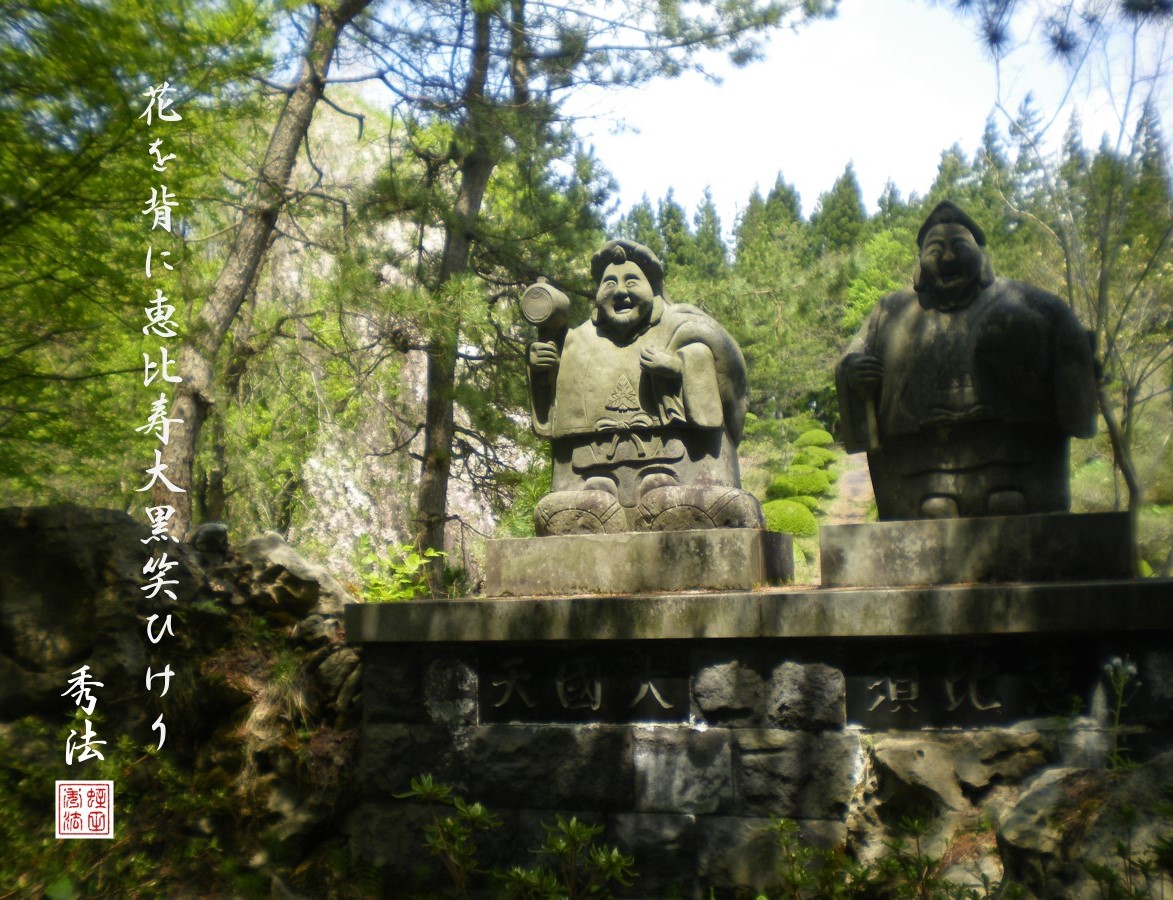
花を背に恵比寿大黒笑ひけり
Cherry blossoms behind
Ebisu and Daikoku
in laughter
Ebisu(恵比寿)is the deity of fishery in Japan, which brings about a plentiful catch. Daikoku(大黒)is the deity of agriculture in India, which brings about a good harvest. In 1983, the statue was rebuilt beside the big stones with relics like shell fossils included in.
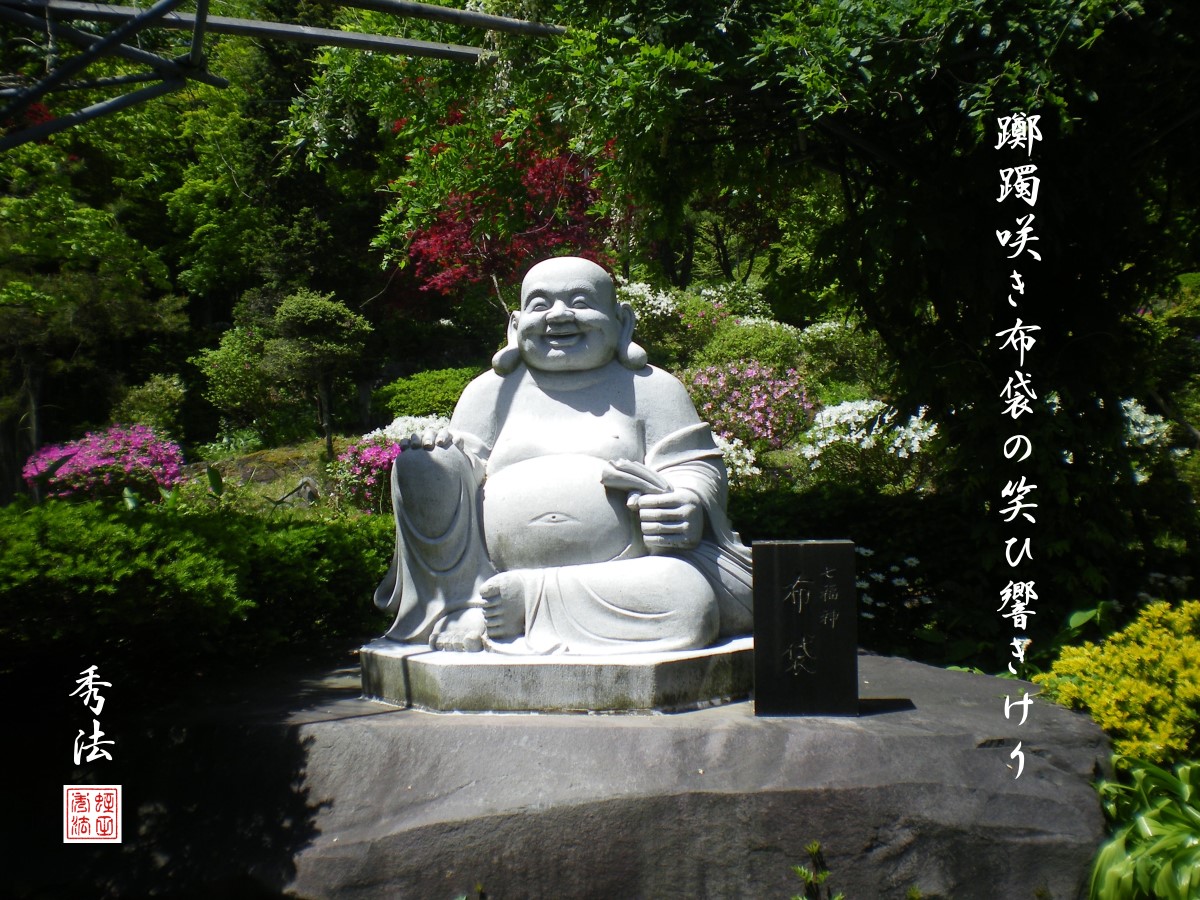
躑躅咲き布袋の笑ひ響きけり
Azaleas blooming
Budai’s laughter resounding
in the garden
Hotei「布袋, Budai」is the god of fortune and guardian of the children. He lived as a Zen priest in China around the 10th century. He is almost always shown smiling or laughing, so his nickname is the “Laughing Buddha” 「Chinese: 笑佛; Pinyin: Xiào Fó」.
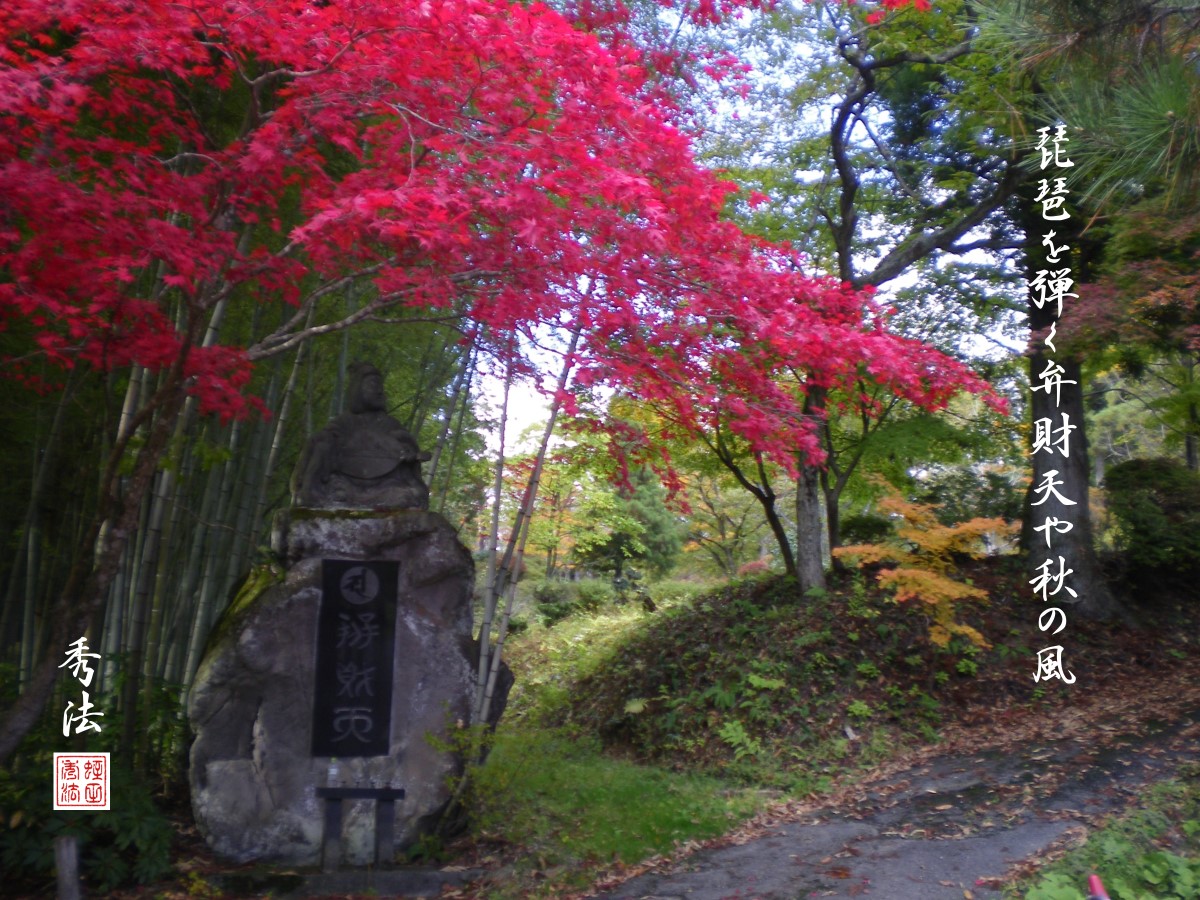
琵琶を弾く弁財天や秋の風
Benzaiten
playing the lute-like biwa
the autumn wind
Benzaiten’s 「弁財天」 origin is found in Hinduism, as she comes from the Hindu goddess Saraswati. When she was adapted from Buddhism, she was given the attributes of financial fortune, talent, beauty and music among others. She is the patron of artists, writers, dancers, and geisha, among others. In short, Benzaiten is the goddess of wealth and performing arts, and her messenger and incarnation is said to be a snake.
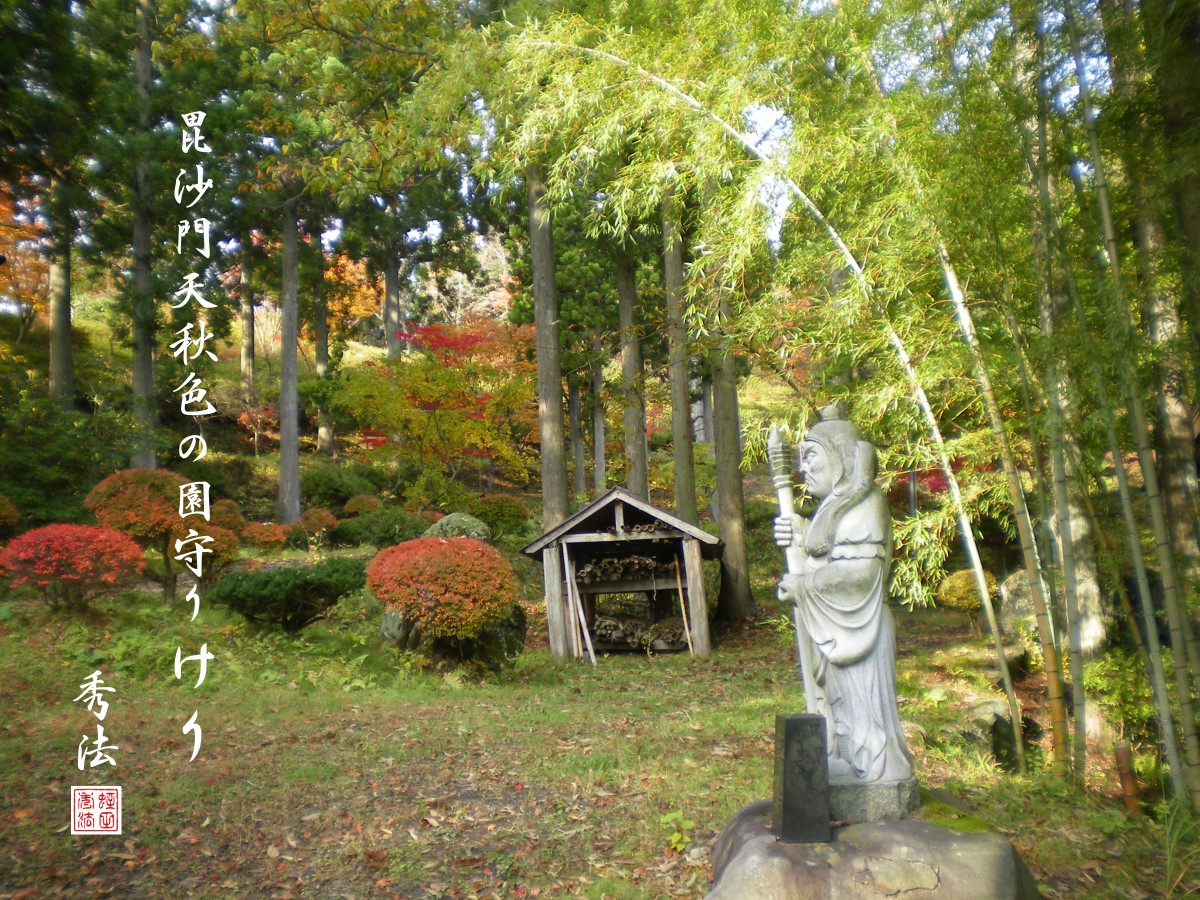
毘沙門天秋色の園守りけり
Bishamonten
guarding the garden in
the autumn hue
Bishamonten’s 「毘沙門天」 origin can be traced back to Hinduism, but he has been adopted by the Japanese culture. He comes from the Hindu god Kubera. He is the god of fortune in war and battles, also associated with authority and dignity. He is the protector of those who follow the rules and behave appropriately.
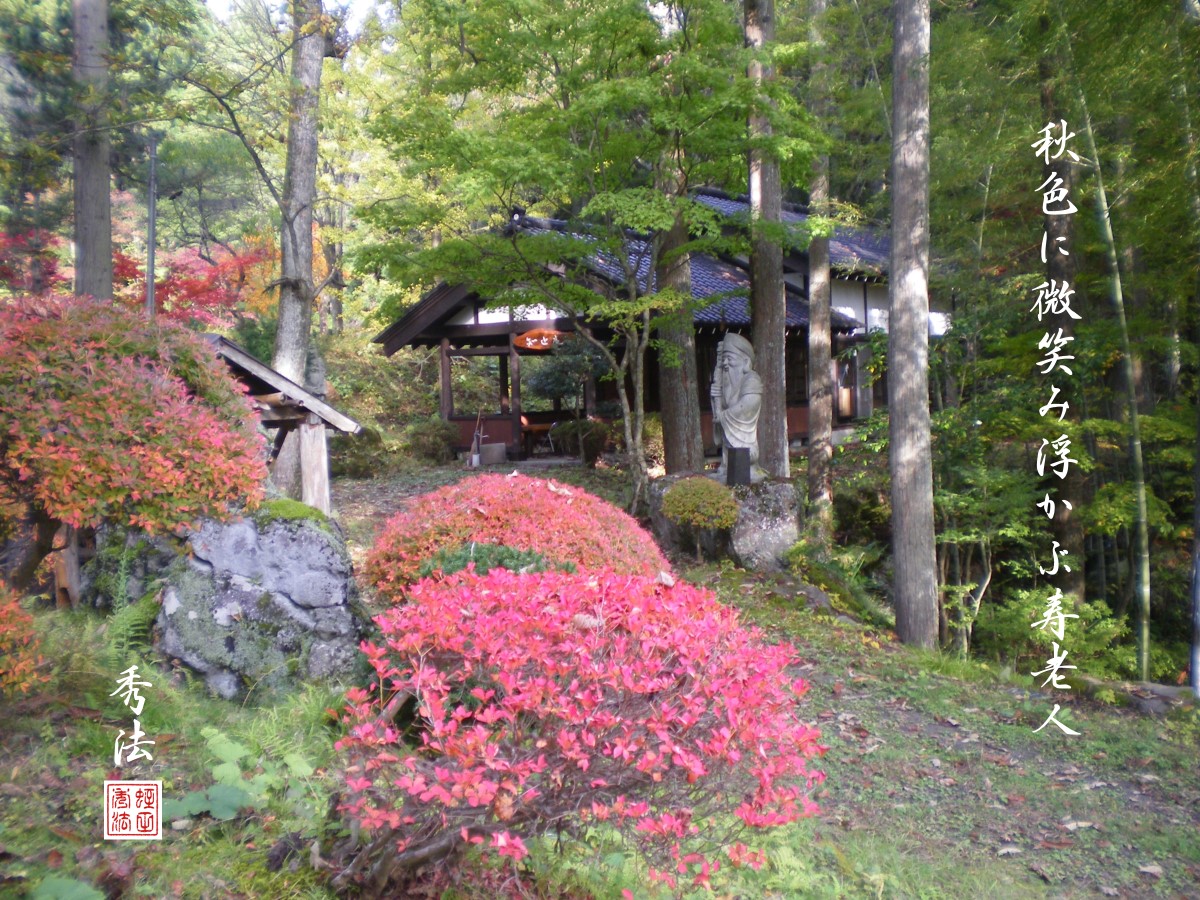
秋色に微笑み浮かぶ寿老人
Jurojin
smiling in
the autumn hue
Jurōjin「寿老人」is the God of the elderly and longevity in Japanese Buddhist mythology. Jurōjin originated from the Chinese Taoist god is a popular subject of Japanese ink wash paintings. He was introduced into the Japanese art tradition by Zen Buddhist painters.
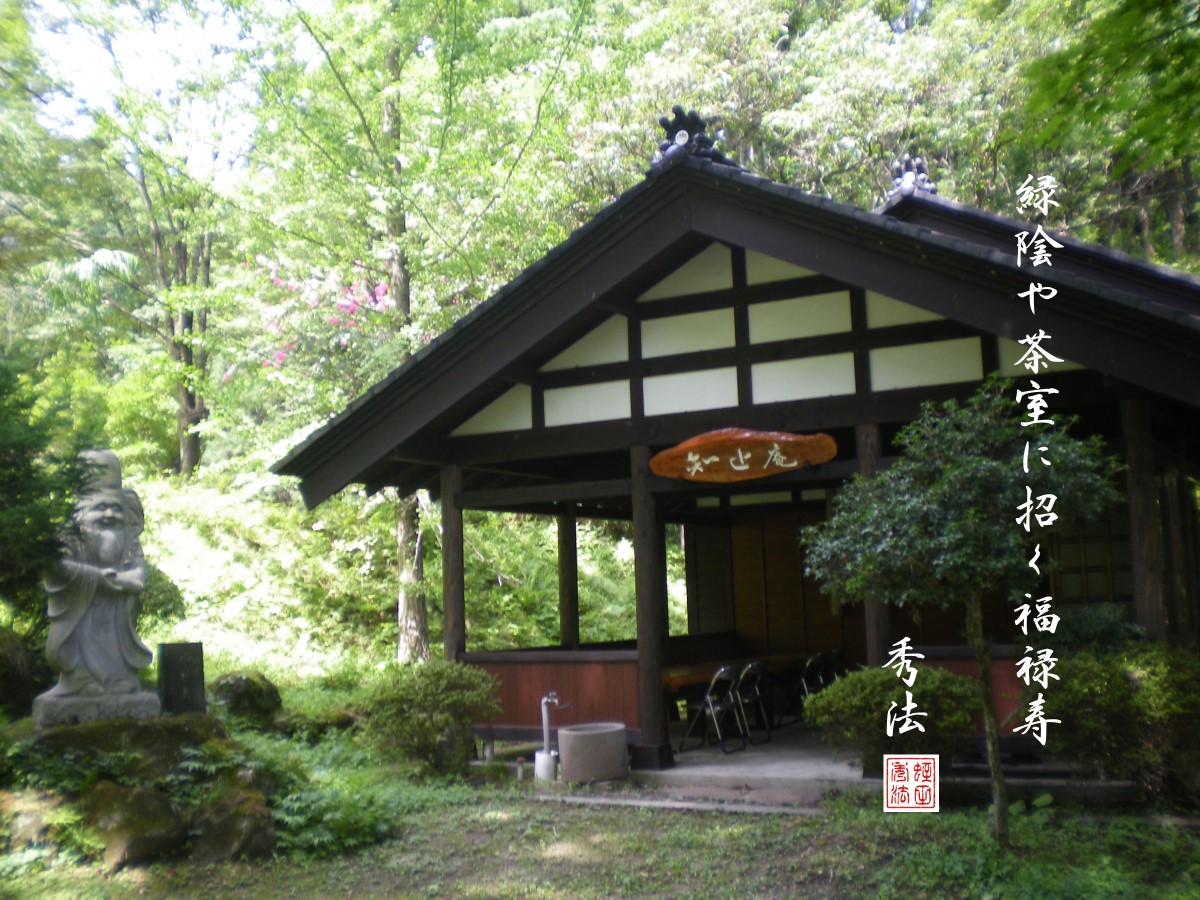
緑陰や茶室に招く福禄寿
A tea break
in the shade of green trees
with Fukurokuju
Fukurokuju 「福禄寿, happiness, wealth, and longevity」 is one of the Seven Lucky Gods. Chi-shi-an「知止庵」is a tea house, where we stop our steps to more prosperity and we take a tea break as Fukurokuju used to do during the Chinese Song dynasty.
Happy New Year 2025 from the Mountain God of Kainosawa
Happy New Year 2025 from the Great Buddha of Kainosawa
Happy New Year 2025 from the Seven Lucky Gods of Kainosawa
秋田国際俳句ネットワーク
蛭田 秀法
Hidenori Hiruta
Akita International Haiku Network
参考文献
『年輪』―関谷一族盛衰伝承記―
発行 平成二十年十二月五日
著者 関 谷 春 雄
印刷 株式会社 三戸印刷所
題字 藤 崎 由 次 書
撮影協力 フォトックス 菅 野 証

 Akita International Haiku Network
Every time I revisit this story, I want to hear it again. The story of the beautiful grounds is inspiring. Thank you so much.