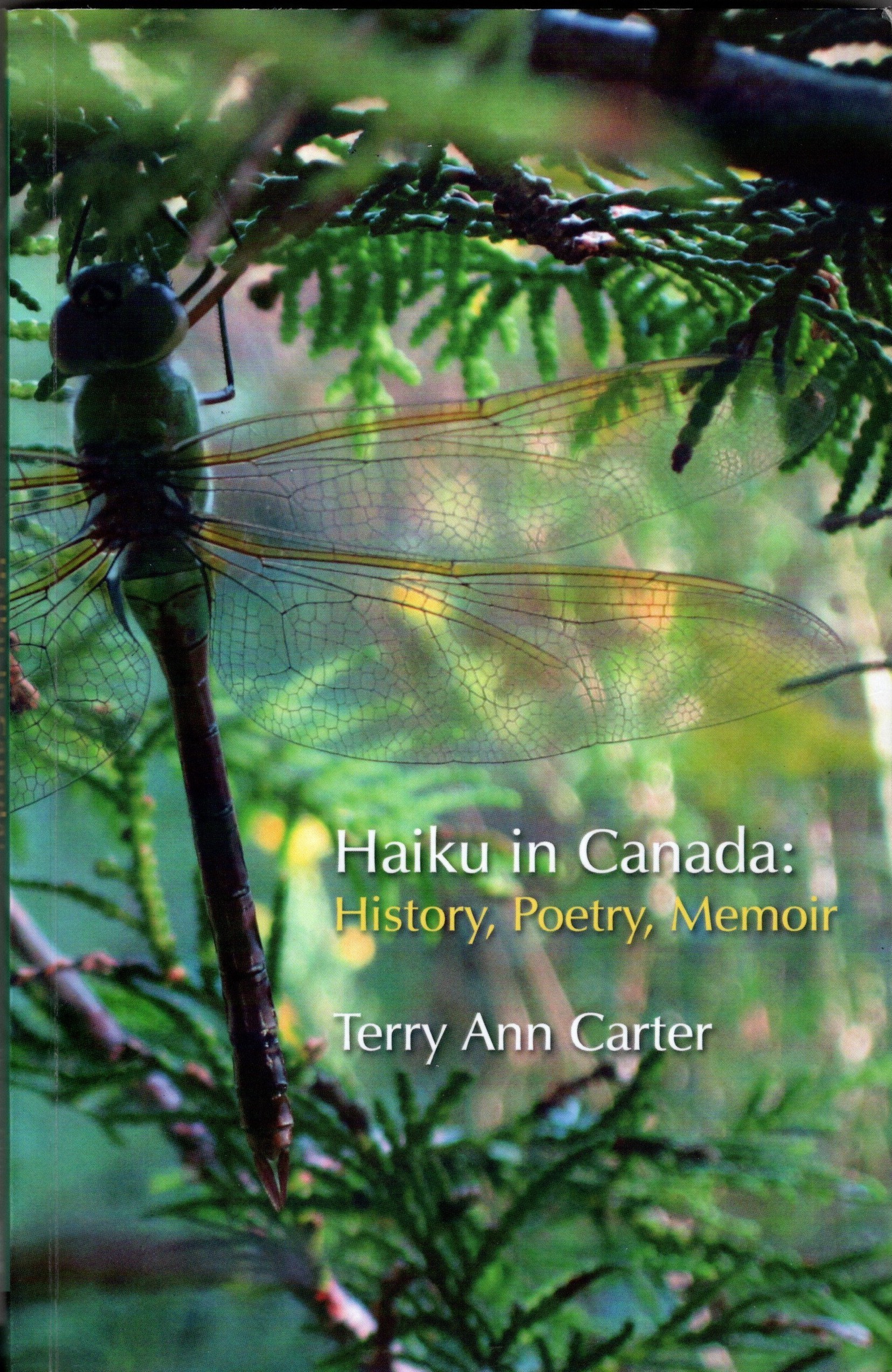
Haiku in Canada:
History, Poetry, Memoir
Terry Ann Carter
For my haiku family in Canada and around the world
When all is said and done,
we’re really just walking each other home…
Ram Dass (1931-2019)
Chapter 6: Regional Groups of Haiku Canada (2)
Haiku Arbutus – Victoria
Haiku by Dr. Susumu (Sus) Tabata
spring thaw
the ball
on the front lawn
雪解けに芝生のボール目に入る
yukidoke ni shibafu no bōru me ni hairu
Haiku by Peter Levitt
within each petal
the sound of rain
花びらの一枚毎に雨の音
hanabira no ichimai goto ni ame no oto
Vancouver Haiku Group
Haiku by Kozue Uzawa
white hydrangea whiter at dusk
夕暮れに白き紫陽花より白し
yūgure ni shiroki ajisai yori-shiroshi
Haiku by Anne Dunnett
after the downpour
a scent of lilies
lingers in the air
土砂降り後百合の香りの漂へり
doshaburi-go yuri no kaori no tadayoe-ri
Haiku by James Mullin
the curves and hollows
of her face
harvest moon
名月を祭る彼女の顔に皺
meigetsu wo matsuru kanojo no kao ni shiwa
Joy Kogawa and Fred Wah: The Influence of Haiku
Historic Joy Kogawa House is the childhood home of Canadian author Joy Kogawa, who wrote the ground-breaking novel Obasan, a fictional story based on Joy’s memories of being interned as a child during WW II, along with thousands of other Canadians of Japanese descent. Located in the Marpole neighbourhood of Vancouver, the house was built in 1912-13. Joy and her family lived there from 1937 until they were interned in 1942. During the war, the house was confiscated and sold, and Joy’s family was not able to return to Marpole. Years later, however, Joy lent her support to a community campaign that saved the house from demolition. Today, the house is a space for author residencies, literary events, as well as remembering the injustices experienced by Japanese Canadians during the Second World War, and moving toward healing and reconciliation.
Jacqueline Pearce’s year of Joy Kogawa House and Haiku
For her, 2017 has been a year connected to Joy Kogawa House.
Note: “From the website” below,
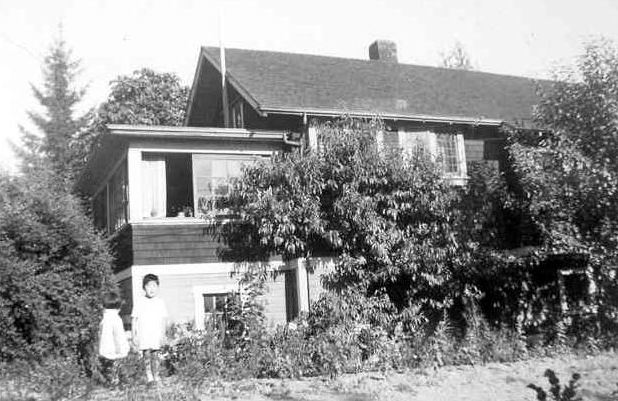
Joy and her brother at the front (west side) of the house c. 1938
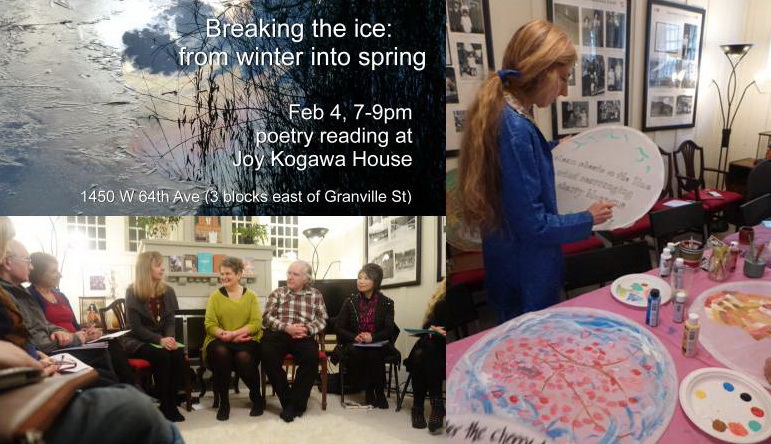
February poetry reading, plus haiku workshop & koi scale painting
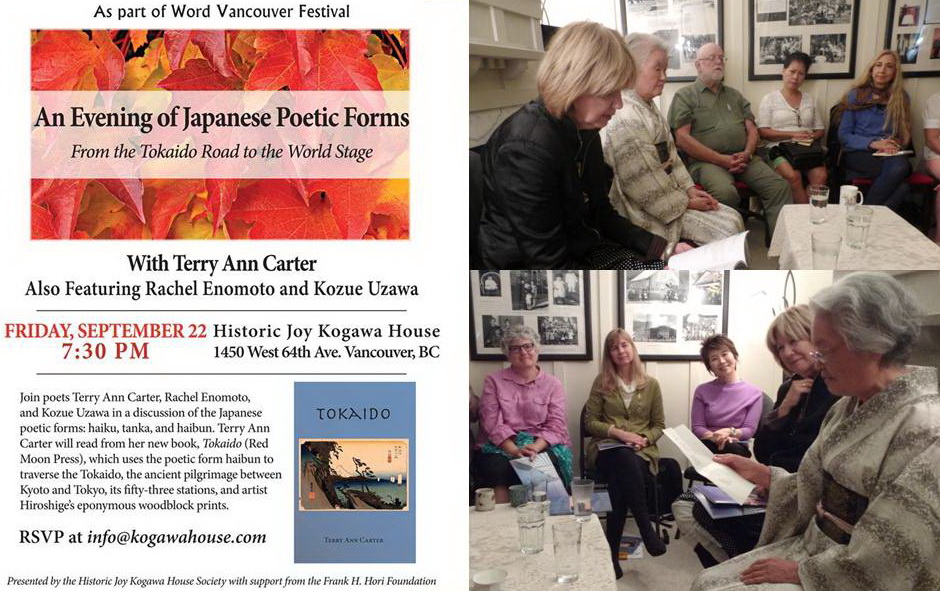
An Evening of Japanese Forms, a Word Vancouver event (with thanks to Tracey Wan for the bottom right photo)
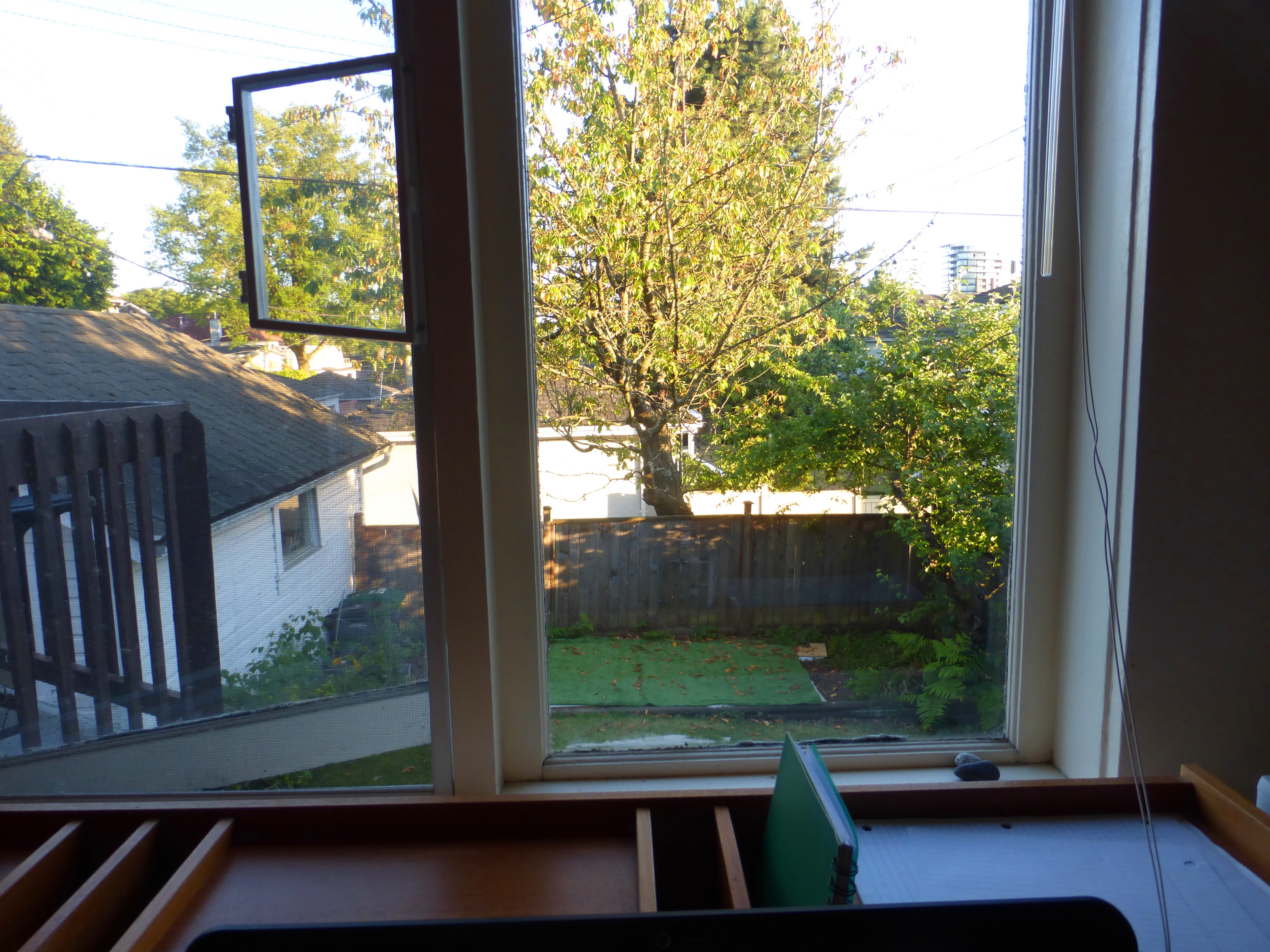
Her workspace while in residence at Joy Kogawa House (looking out at the old cherry tree behind the back fence)
Haiku by Jacqueline Pearce
Here are a few simple haiku written during her stay:
no need
for an alarm clock
early morning crows
早朝の烏の声や目覚ましに
sōchō no karasu no koe ya mezamashi ni
picking the last
ripe raspberry
evening robin
夕方のラズベリー摘むロビンかな
yūgata no razuberī tsumu robin kana
And from her evening walk past the elementary school young Joy Kogawa attended:
fading daylight
the empty swing
still swinging
黄昏に空のブランコ揺れている
tasogare ni kara no buranko yure te iru
Solstice Haiku – Whitehorse, Yukon Territory
Haiku by Susan Clark
dancing together
on the longest night
moonlight and aurora
冬至の夜月光踊るオーロラと
tōji no yo gekkō odoru ōrora to
Haiku by Kathy Munro
snowflake
the lost child
in the group
雪片や行方不明の子の如し
seppen ya yukue fumei no ko no gotoshi
-Interpreted into Japanese by Hidenori Hiruta
秋田国際俳句ネットワーク
蛭田 秀法
Hidenori Hiruta
Akita International Haiku Network

 Akita International Haiku Network