Five English Haiku
(1)
windy autumn day
I sweep away the leaves
of my neighbor’s tree
風の強い秋の日
隣の木の葉を掃き払う
(2)
blind night
even the shadows
become invisible
何も見えない夜
影さえも
見えなくなる
(3)
vast plain
the river’s far end
lost in clouds
広大な平原
川の向こう端
雲に消えた
(4)
side-sleeping
my left eye’s tears roll
to my right one
横向きに寝る
左目の涙が
右目に流れ落ちる
(5)
long long kiss
he gets on the train
as it is starting
長い長いキス
彼は電車に乗り込む
発車する
Three Japanese Haiga

げんとうにみずがんきょうにたちあがる
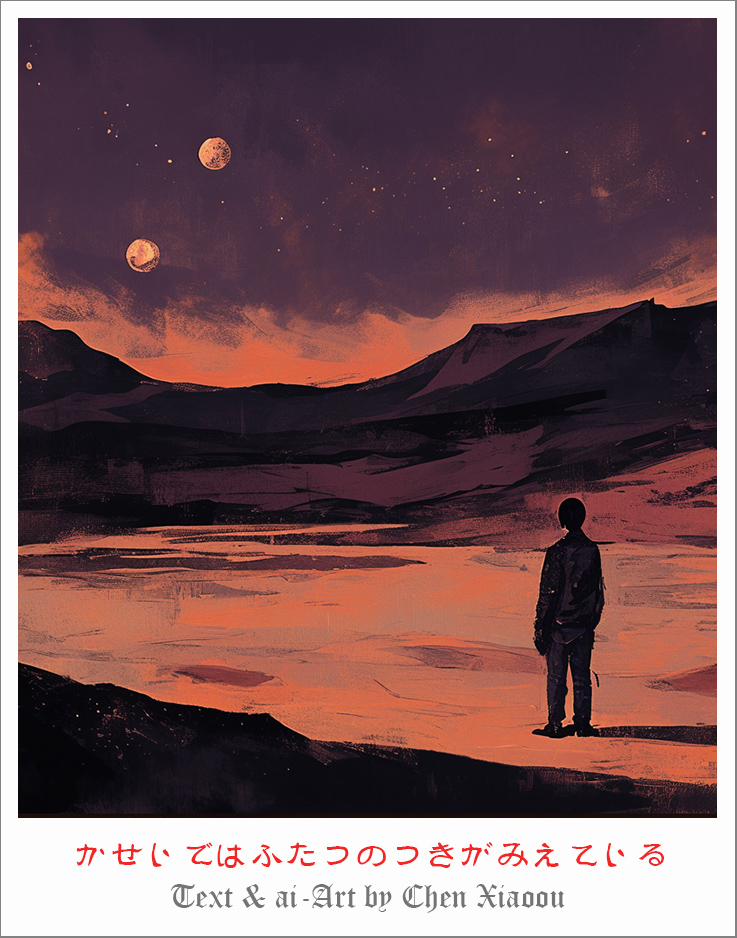
かせいではふたつのつきがみえている
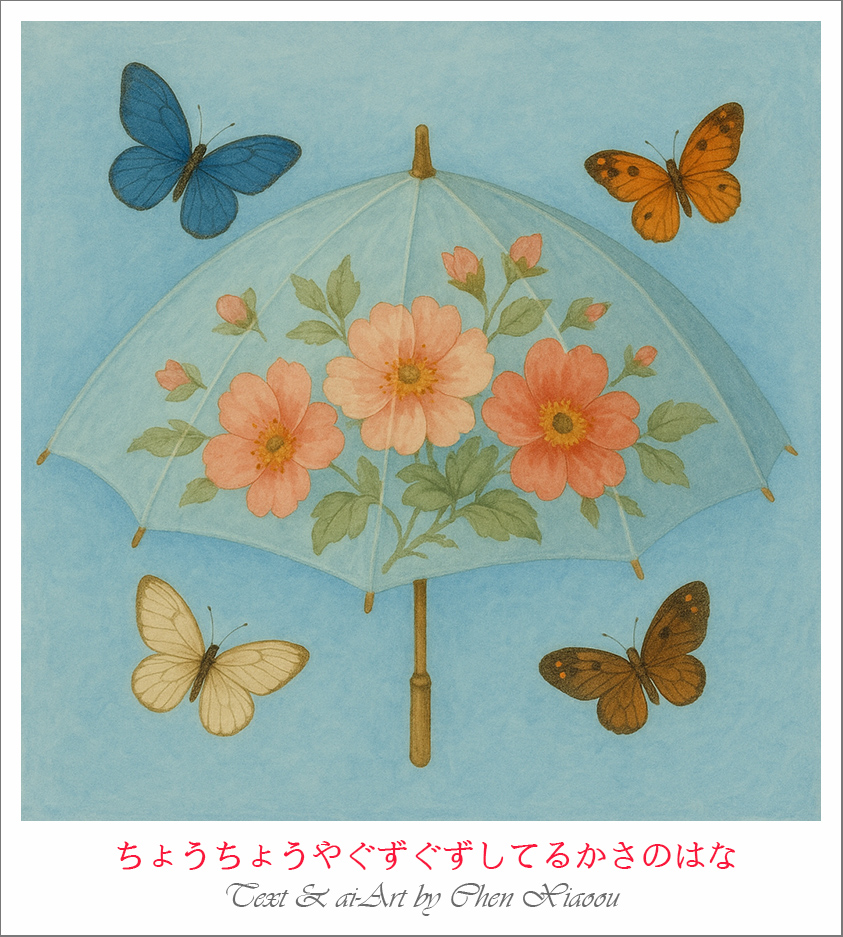
ちょうちょうやぐずぐずしてるかさのはな
Two Chinese Haiku
江南春将尽
萍满汀州人未归
斜日杏花飞
when spring is coming
to its end in the south of
the river and the pond is
already full of floating weeds
you are not yet beheld to be
back home, all I can see is
the apricot petals fluttering
in the setting sun
NOTE:
This haiku took its inspiration from a poem written by Kou Zhun, a Chinese poet of Song Dynasty.
春が訪れ
川の南側では春が終わりに近づき
池はすでに浮草でいっぱいになっている
あなたはまだ家に帰っていない
目に見えるのは
夕日に照らされて
ひらひらと舞う
杏の花びらだけ
夜静春山空
月出惊飞山间鸟
时鸣春涧中
in the depths of
the mountains and
the still of night, some
birds are scared into flight
by the rising moon making
twittering sounds now
and then that fill the
spring mountain
streams
NOTE:
This haiku is based upon a poem written by Wang Wei, a Chinese poet of Tang Dynasty.
山奥の夜の静寂の中
鳥たちは
昇って来る月の光に驚いて飛び立ち、
時折
春の山の渓流に
鳥のさえずりが響き渡る
-Translated into Japanese by Hidenori Hiruta


 Akita International Haiku Network
very much enjoyed these