1200 years after the Tencho Earthquake
Of the 39 damaging earthquakes that have occurred in and around Akita Prefecture since recorded history, including those with a magnitude (M) of 6 or less, the Tencho earthquake that occurred in 830 is the oldest. The earthquake was a shallow-type earthquake with a magnitude of 7.0 to 7.5.
The Tencho earthquake was a massive earthquake that struck on the morning of January 3, 830, passing through Akita Castle with its epicenter approximately 5 km northeast of it. The castle collapsed in an instant, and buildings within the castle also toppled. There were deaths and injuries. The Omono River, which flowed near the castle, and the upstream Asahi River and Taihei River were also affected. Katsuhira-yama, a nearby hill, was also devastated, and the settlements built at its base were completely destroyed. It was a great disaster that occurred amidst heavy snowfall.
三が日天変地異の秋田城
New Year’s third day
finding natural disaster
in Akita Castle
余りにも長き試練や雪の出羽
Such a great trial
to overcome
the snow province
Approximately 1200 years have passed since the Tencho earthquake, but it continues to have a significant impact on a wide range of aspects of the lives and culture of the local people. In this series, Hidenori Hiruta firstly begins by focusing on Akita Castle and the Tencho earthquake.
風化せぬ地震ありけり雪の出羽
The earthquake
unforgettable at all
the snow province
秋田城
Akita Castle
Akita Castle was an ancient fortified residence located in what is now Akita City, Akita Prefecture, from the Nara period to the mid-10th century during the Heian period.
The founding of Akita Castle dates back to 733 AD, when the Dewa Fort was relocated from the Shonai region to Takashimizuoka in Akita Village.
Later, during the Tempyo-Hoji era, it was renamed Akita Castle and played a central role as the administrative, military, diplomatic, and cultural center of northern Dewa Province.
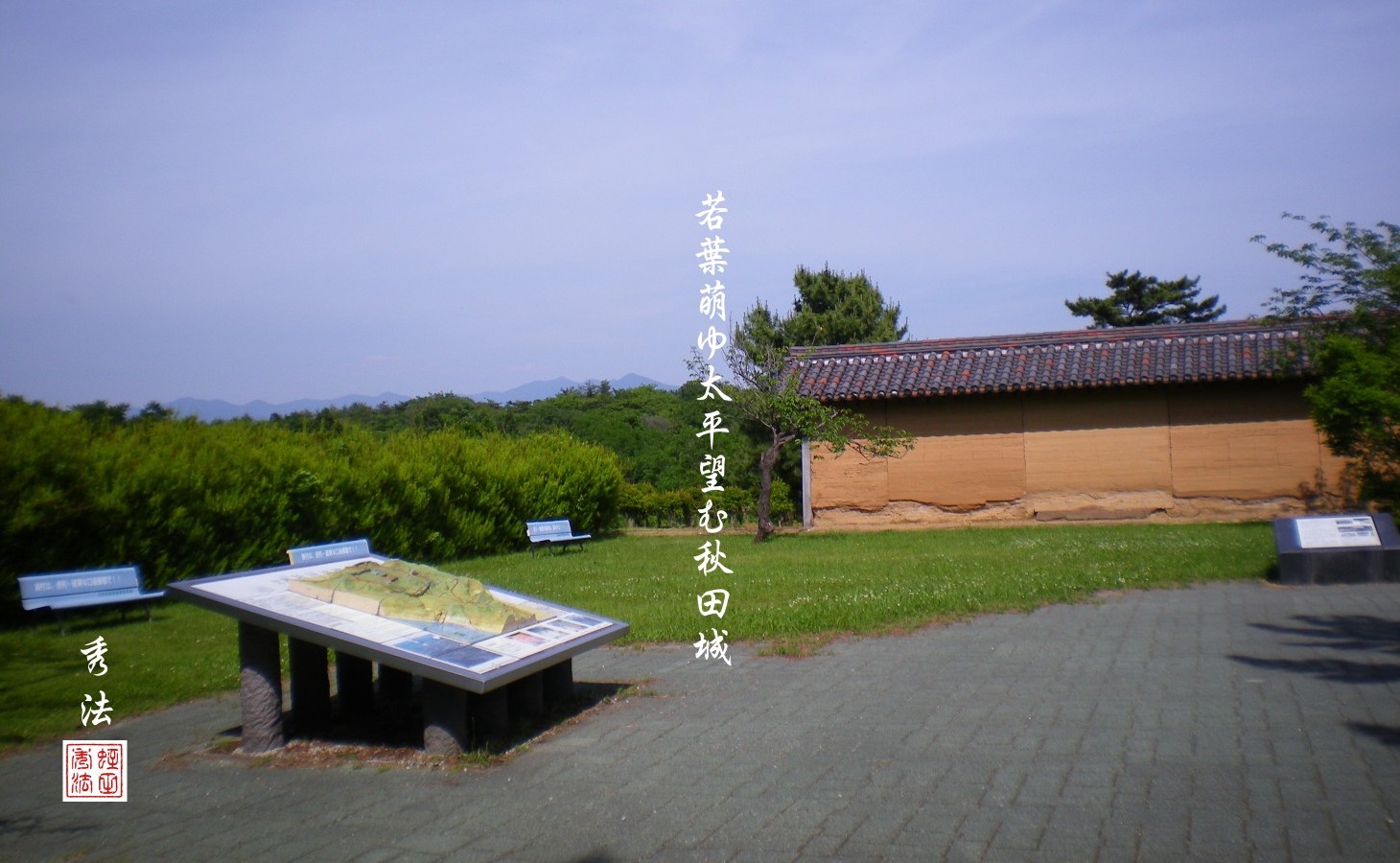
若葉萌ゆ太平望む秋田城
Mount Taihei
seen in young foliage
Akita Castle
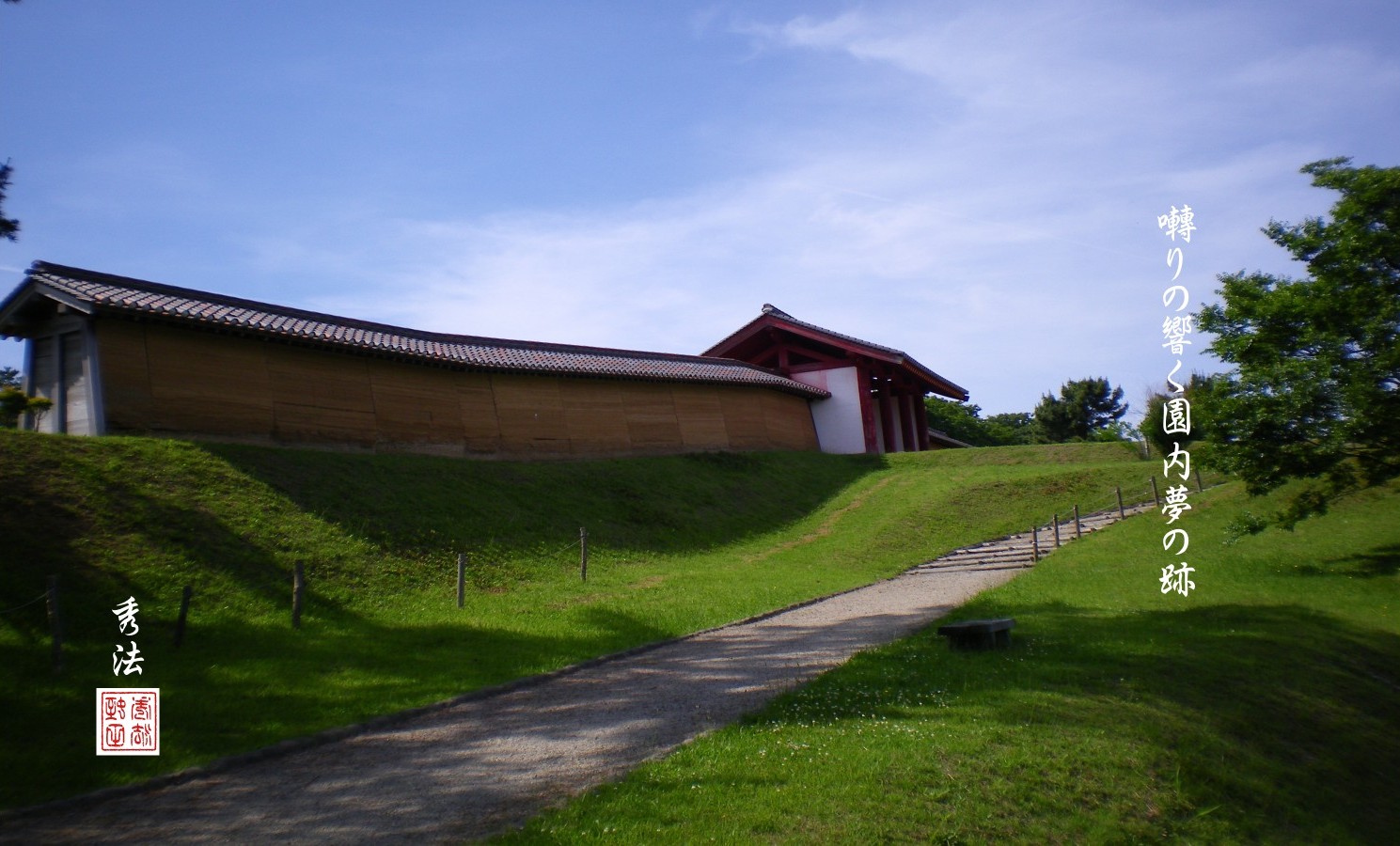
囀りの響く園内夢の跡
Birdsongs
resounding in the park
the aftermath of dreams
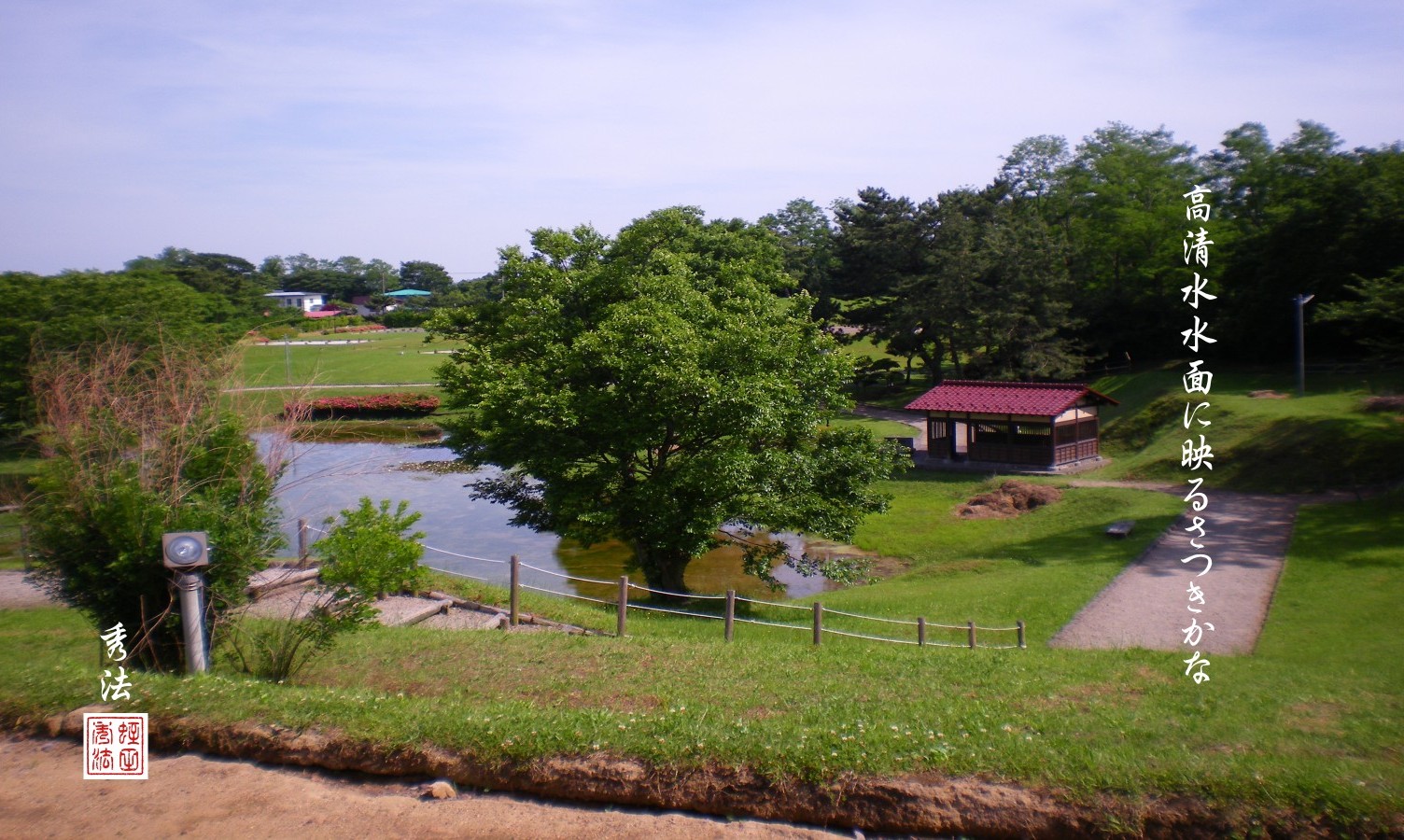
高清水水面に映るさつきかな
Azaleas
reflected on the waters
highly clear pond
秋田城の構造
Basic Structure of Akita Castle
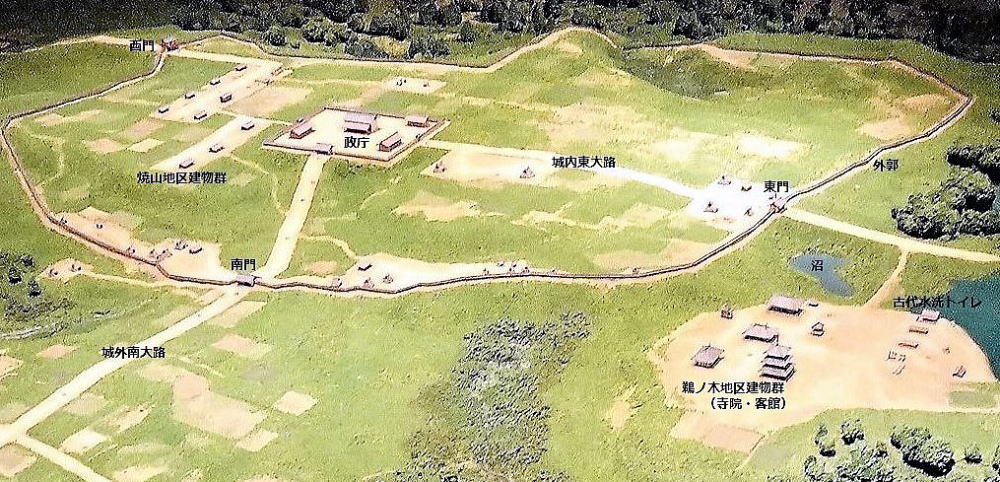
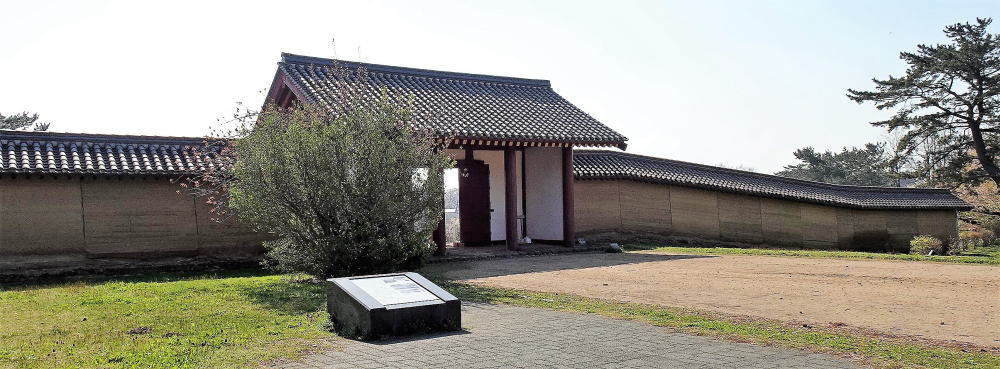
外郭東門
Outer East Gate
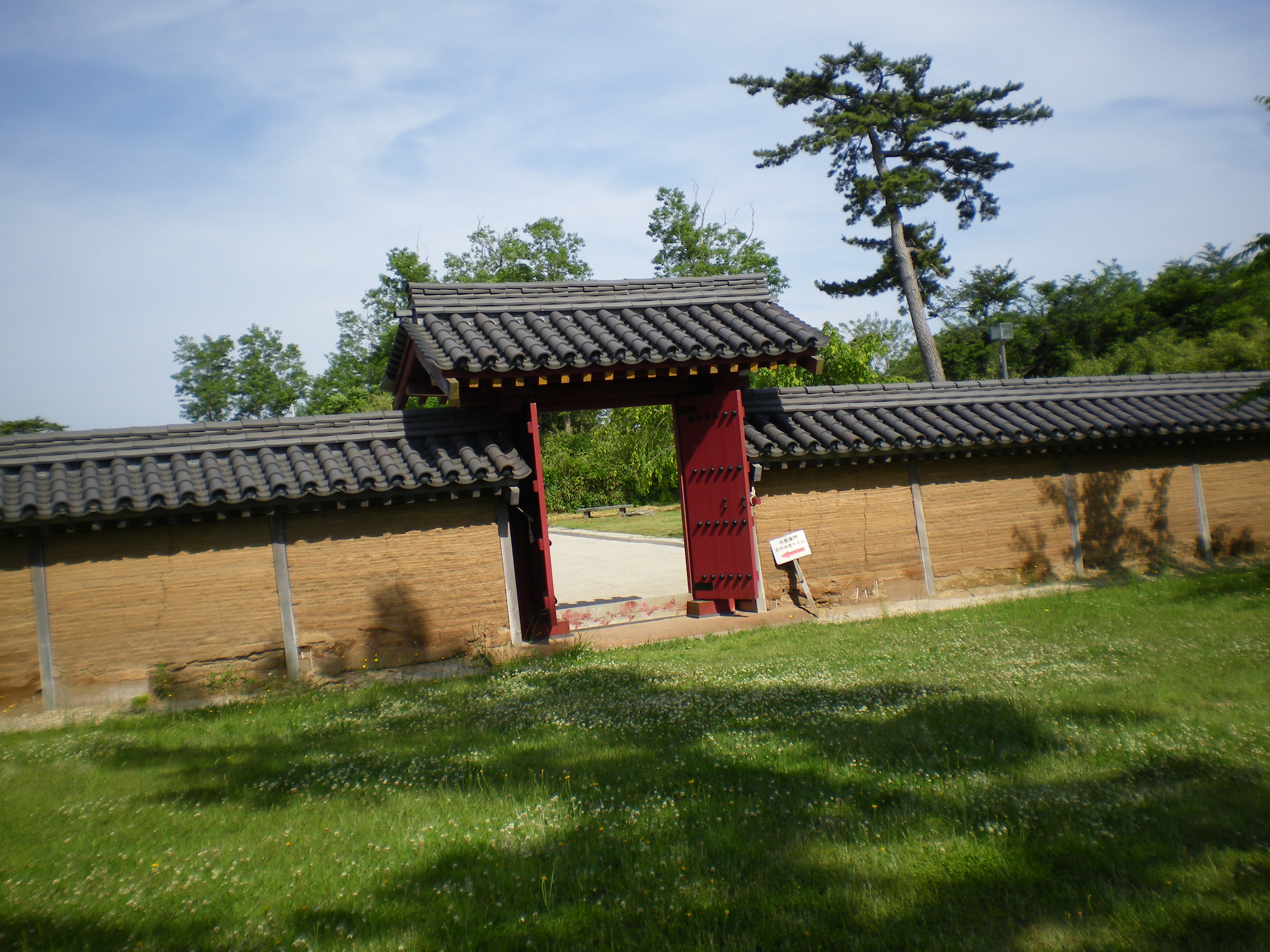
政庁門
Government Office Gate
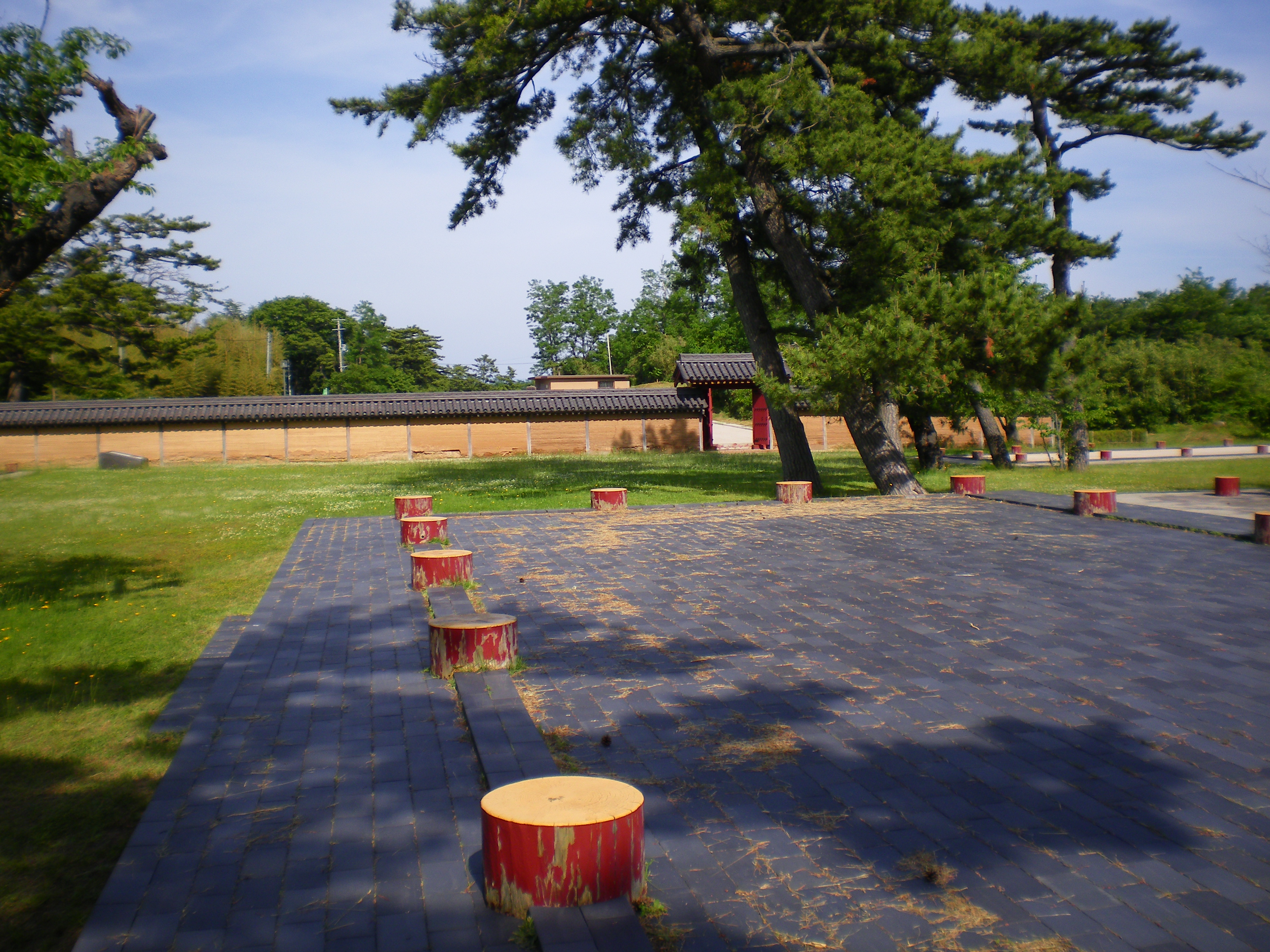
政庁跡地
Former Government Office Site
政庁第1期復元模型(733年~770年頃)
First-phase reconstruction model of the government building (circa 733-770)
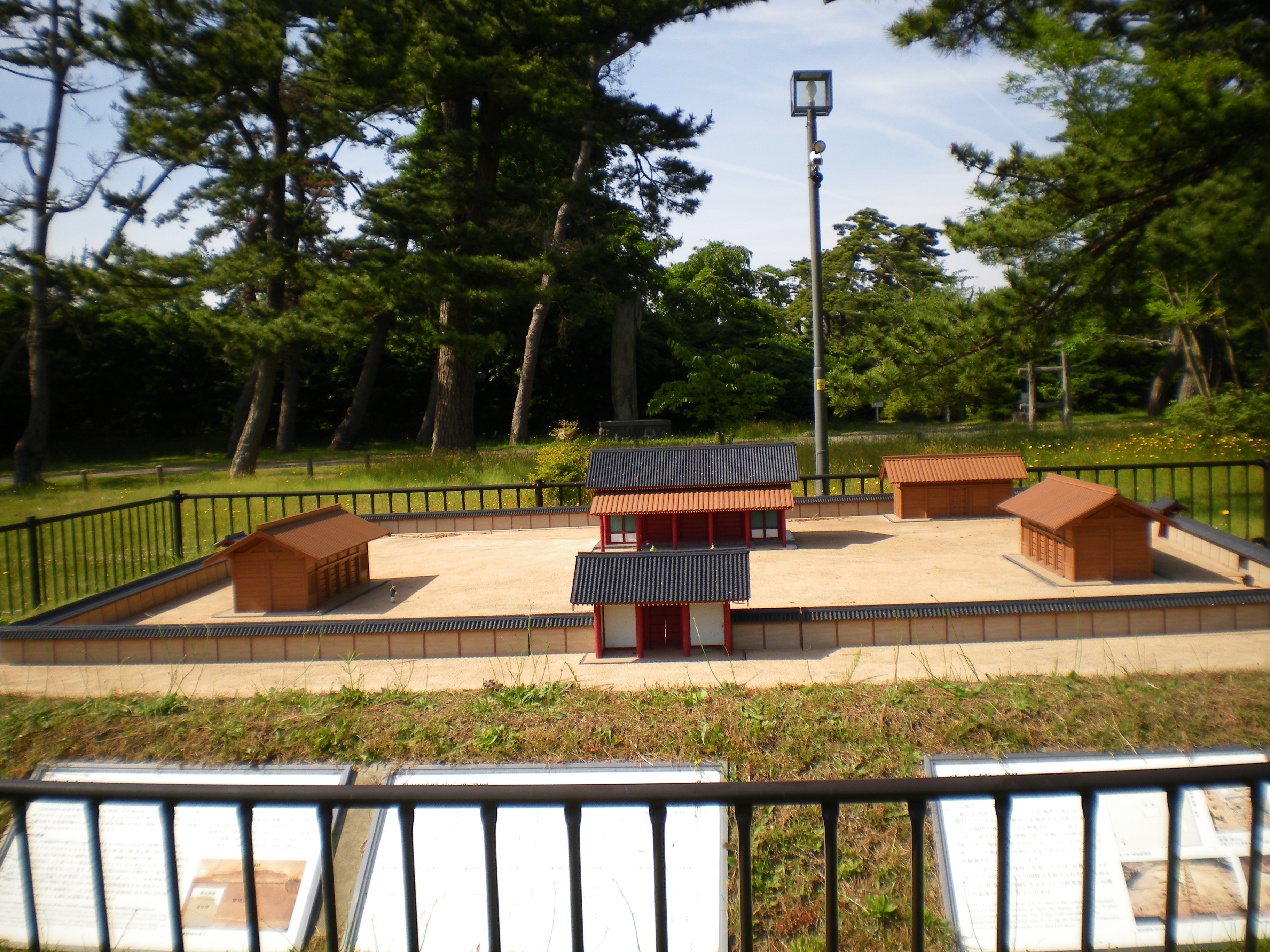
Located on the Sea of Japan side of the Tohoku region, Akita Castle was the northernmost of the fortified settlements established by the Yamato Imperial Court. As a center of governance under the Ritsuryo state, it played an important role as a base for exchanges with the Emishi people of Tsugaru and Watarishima, as well as for diplomacy with Bohai.
渤海国との交流遺跡・復元された水洗厠舎
Relics of exchange with Bohai: a reconstructed flush toilet
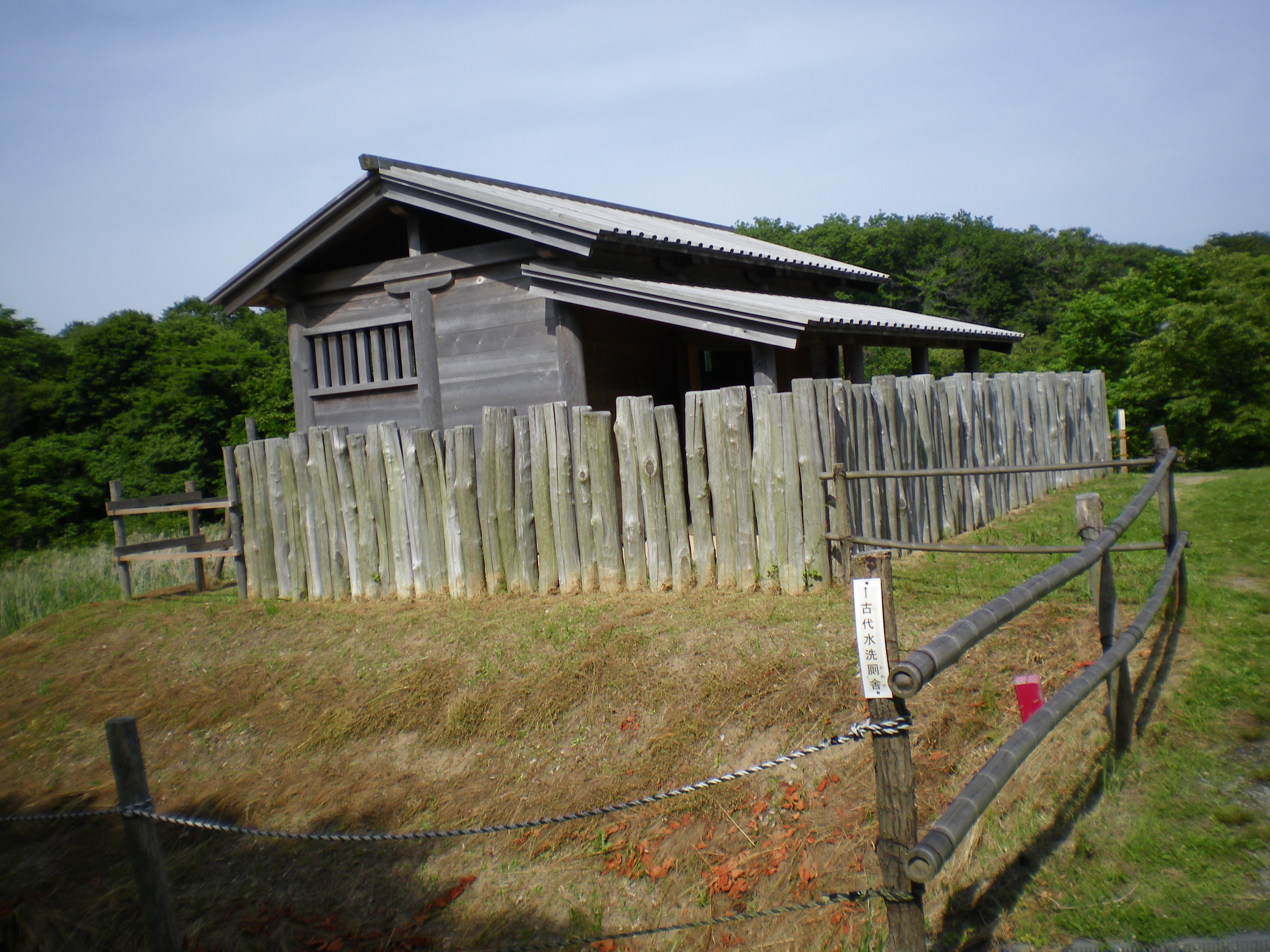
古代水洗厠舎跡・検出寄生虫卵
Ancient flush toilet site: Parasite eggs detected
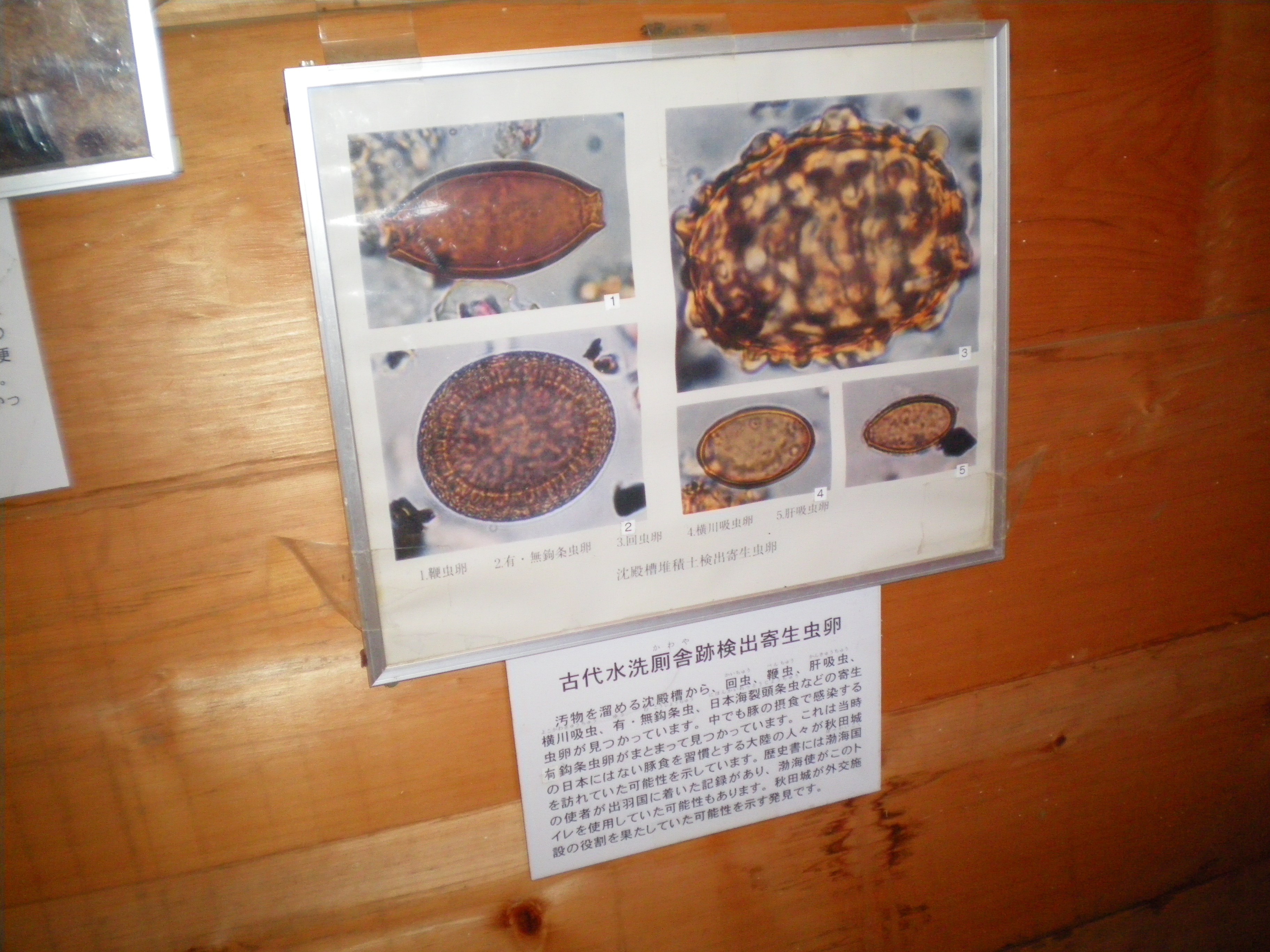
Various parasite eggs have been found in the sedimentation tanks used to collect waste, but a large number of eggs of the Taenia solium, a parasite transmitted through the consumption of pigs, have been found. This suggests that people from the continent, who had a custom of eating pork which was not common in Japan at the time, may have visited Akita Castle. It is possible that envoys from Bohai used this toilet, indicating that Akita Castle served as a diplomatic facility.
天長地震
The Tencho Earthquake
According to a report from Dewa Province that arrived in Kyoto on January 28th, 830, a major earthquake struck Akita Castle on the morning of January 3rd, shortly after the New Year. The castle collapsed in an instant, buildings within the castle toppled, resulting in 15 deaths and over 100 injuries. Among those that collapsed were Shitennoji Temple and Shio-do Hall. The Omono River, also known as the Akita River, apparently had its riverbed split open, reducing the water to a mere stream. This was partly due to the collapse of both banks of the Asahi River and Taihei River, tributaries then known as the Soegawa and Habetsu Rivers, upstream, which dammed up the water.
The tragedy occurred amidst heavy snowfall, making it impossible to investigate and confirm the details. However, in Dewa Province, an epidemic had been raging since November of the previous year, resulting in situations where entire families lay bedside together, without anyone to care for them, or where entire families died together. This natural disaster not only bewildered and worried the castle governor and the provincial governors, but also deeply shocked the imperial court.
On April 25th, Emperor Junna issued an edict stating, “I have heard that there has been an earthquake in Dewa Province, which has altered the mountains and rivers, destroyed castles and buildings, resulted in casualties, and caused great misfortune to the inhabitants. Therefore, I order that an envoy be sent to provide relief and care. If the inhabitants’ homes or livelihoods are affected by the earthquake, the envoy and the officials residing in Dewa should consult with each other to resolve the situation. They should be exempted from the annual taxes and tribute, and regardless of whether they are farmers or Emishi, the public storehouses should be opened to provide relief, and their houses should be repaired so that they do not lose their jobs. Those who have been crushed to death should be buried quickly, and every effort should be made to show leniency and fulfill my wishes.”
They were told that the earthquake during the New Year caused widespread damage not only within the small Akita Castle area but throughout the Akita region. The epidemic continued to spread, and it became necessary to select more than 20 Buddhist monks from various provinces to perform three days of chanting at the provincial temples.
勝平
Katsuhira
The foot of Katsuhira-yama, a hill located in the sand dunes between the Sea of Japan and the Omono River, had been settled since the Jomon period.
In the Nara period, people settled there, forming a community and making a living by fishing and hunting in the abundant natural environment, gathering wild vegetables in the spring and mushrooms and nuts in the autumn.
Furthermore, in the early Heian period, the people participated in festivals at Hiyoshi Shrine and Katsuhira Shrine, as well as events such as the Higan-e (spring and autumn equinox) services at Katsuhira Temple.
However, in January, 830, a great earthquake struck that completely devastated this peaceful village. The residents left Katsuhira and moved a little further south, where they laid the foundation for the present-day Araya.
秋田公立美術大学
Akita Public University of Arts
This university was established in 2013 when Akita Public College of Arts and Crafts transitioned to a four-year university.
It is the only art-focused public university in the Tohoku region and is a single-faculty university with only one department: the Faculty of Fine Arts.
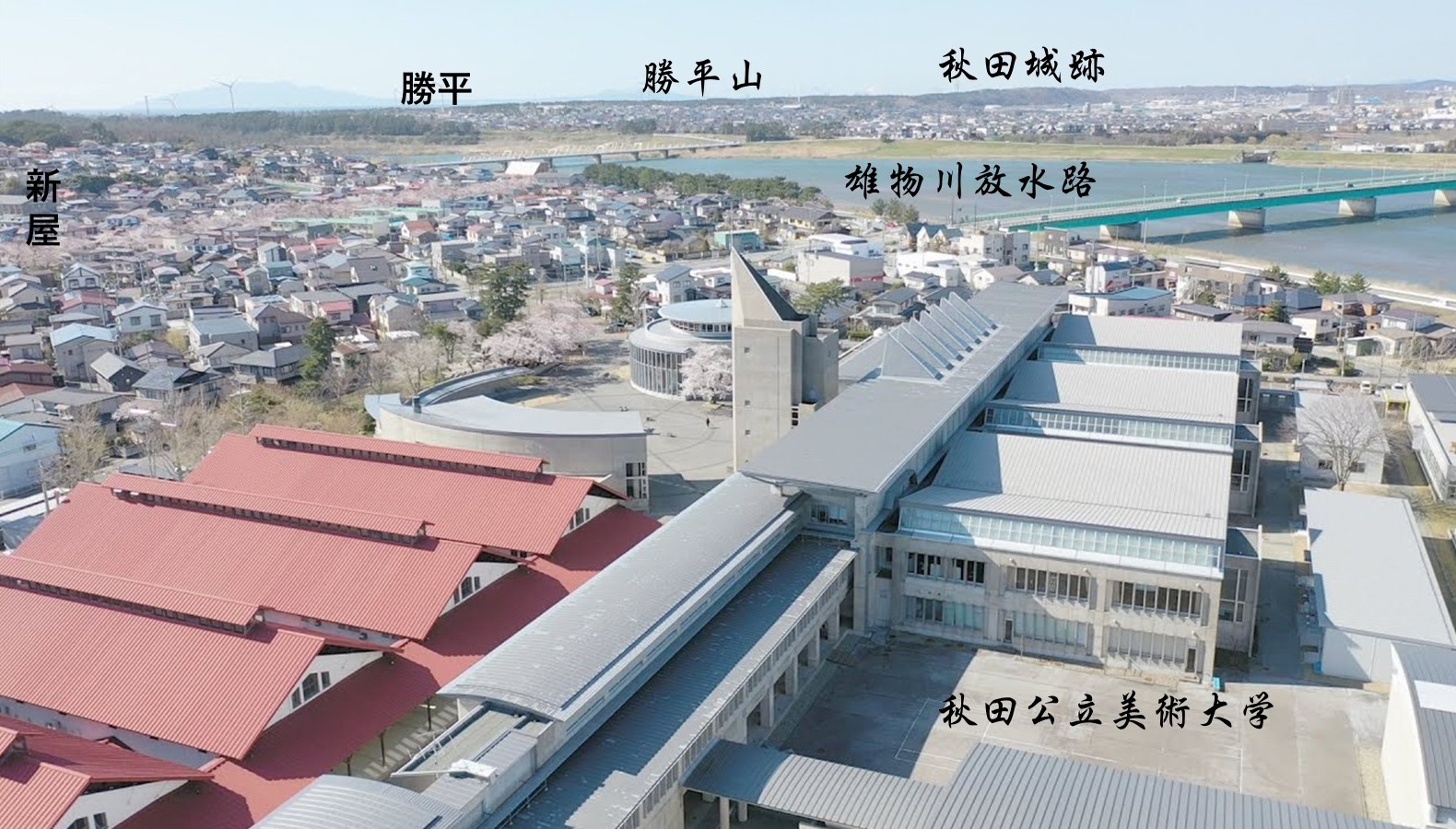
Located in Araya-Okawa-machi, Akita City, it offers a panoramic view of the Akita Castle site, Katsuhira-yama Hill, and Omono River Discharge Channel.
Both Japanese and English haiku by Hidenori Hiruta
Akita International Haiku Network
参考資料
・秋田の歴史 改訂版 新野直吉著
発行所 秋田魁新報社
・秋田城とは?
秋田市観光文化スポーツ部
秋田城跡歴史資料館
・最北の古代城柵官衙遺跡 秋田城
・秋田県における主な地震・津波による災害
(1949年以前)
・秋田公立美術大学

 Akita International Haiku Network